

Stripe
The Colours


About Stripe Mosaic
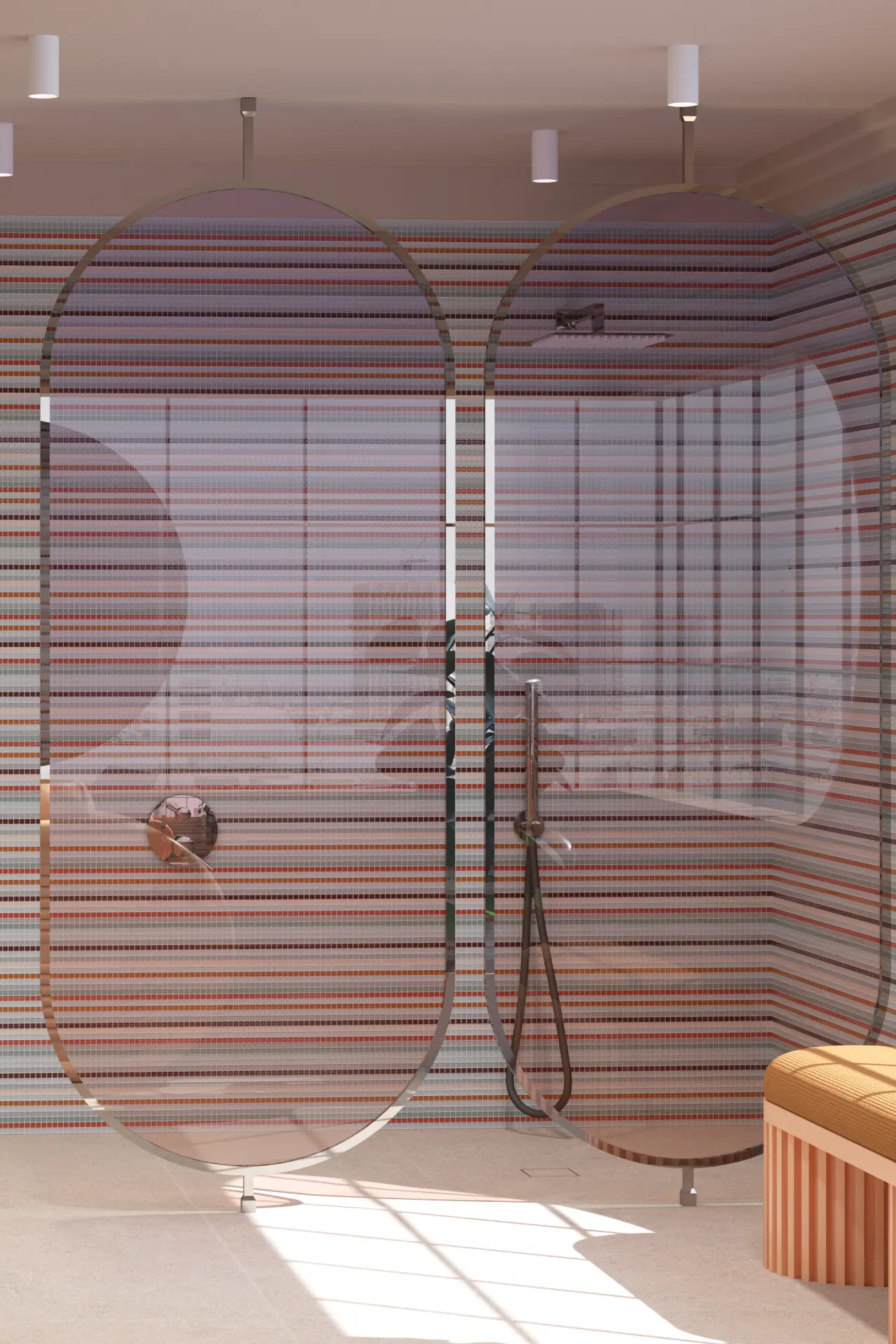
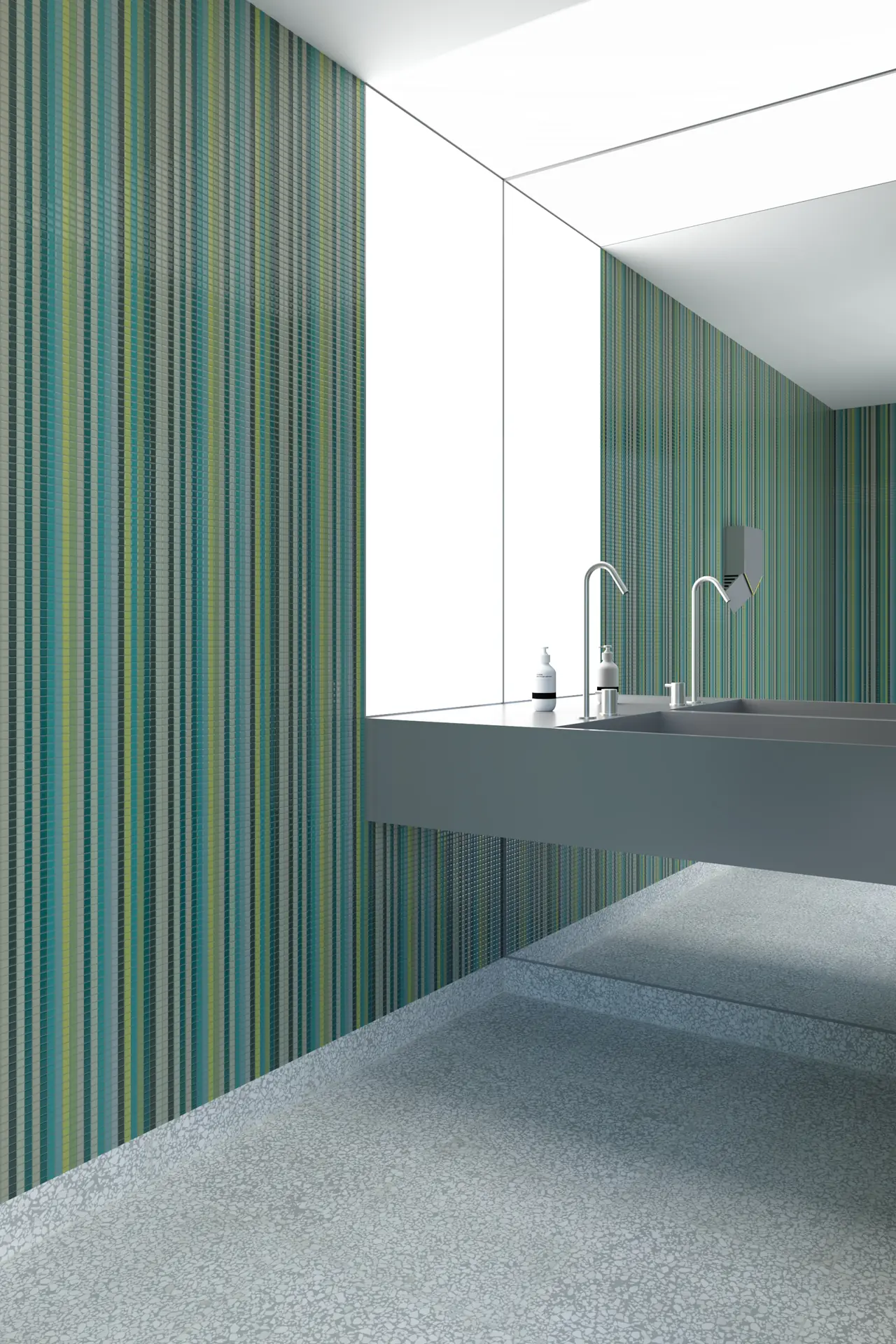
A stripe is perhaps the simplest form of decoration. One line follows another and, almost immediately, a surface has direction. There is little ambiguity to it. Stripes lead the eye somewhere, whether vertically, horizontally or across the length of a floor.
There is a long decorative history behind such a simple device. Stripes move easily between textiles, interiors, architecture and fashion. They can feel formal or playful, restrained or exuberant. Much depends on proportion and colour, which perhaps explains why the idea remains so useful. The structure stays familiar while everything around it can change.
Mosaic feels particularly suited to this way of thinking. Its grid already provides the discipline needed to draw a line, while individual tesserae introduce small shifts across its surface. The result sits somewhere between graphic precision and material texture.
What Stripe cannot do is remain neutral about direction. It introduces an axis and makes that decision visible across the entire surface. That can alter how a space is read, drawing the eye upwards, outwards or onwards.
Within such a simple framework, colour is left to do much of the talking. That is where Stripe becomes less about geometry and more about relationships.
Availability and Sales enquiries to Tessere Mosaico
Burano 12mm Mosaic
