
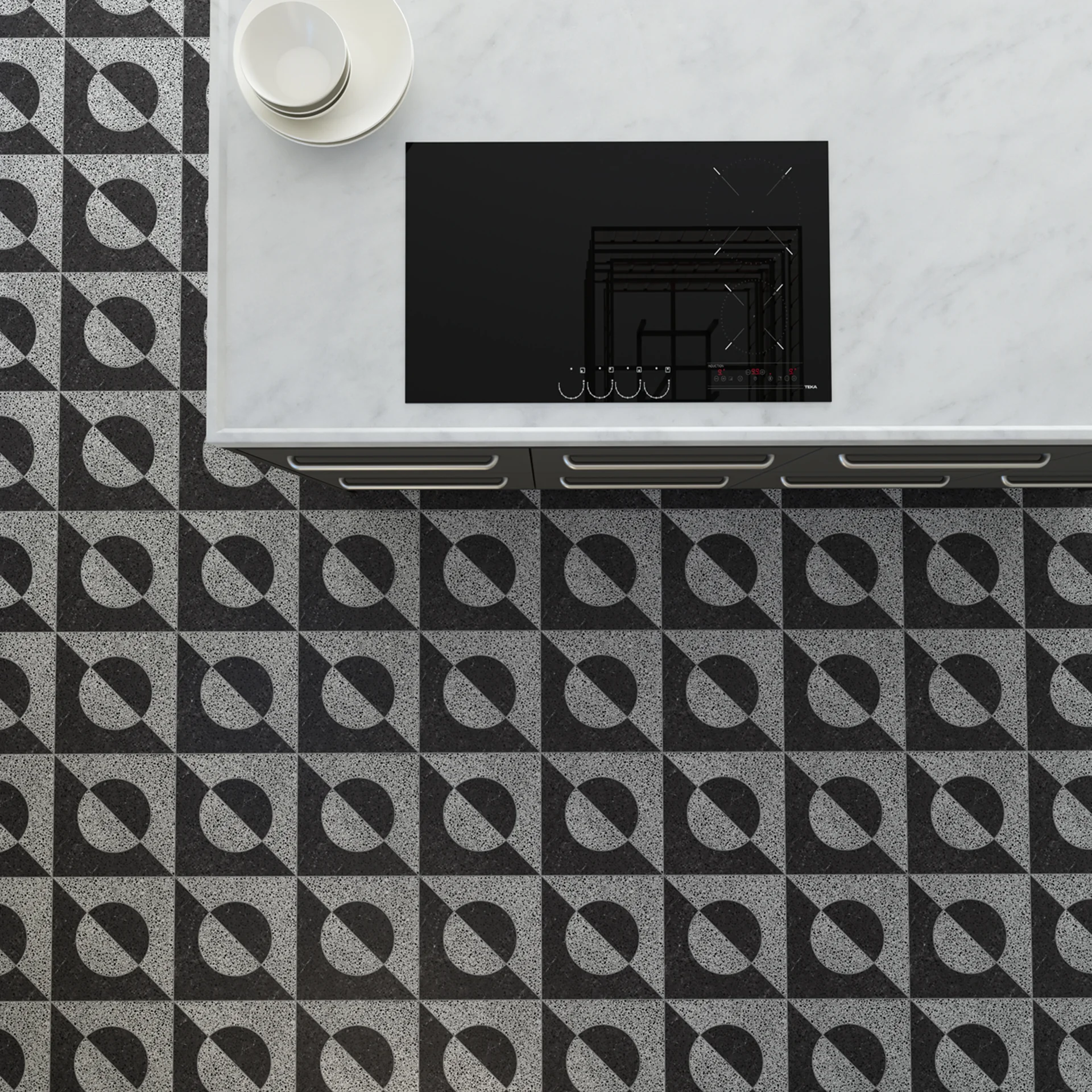
Portico
The Material
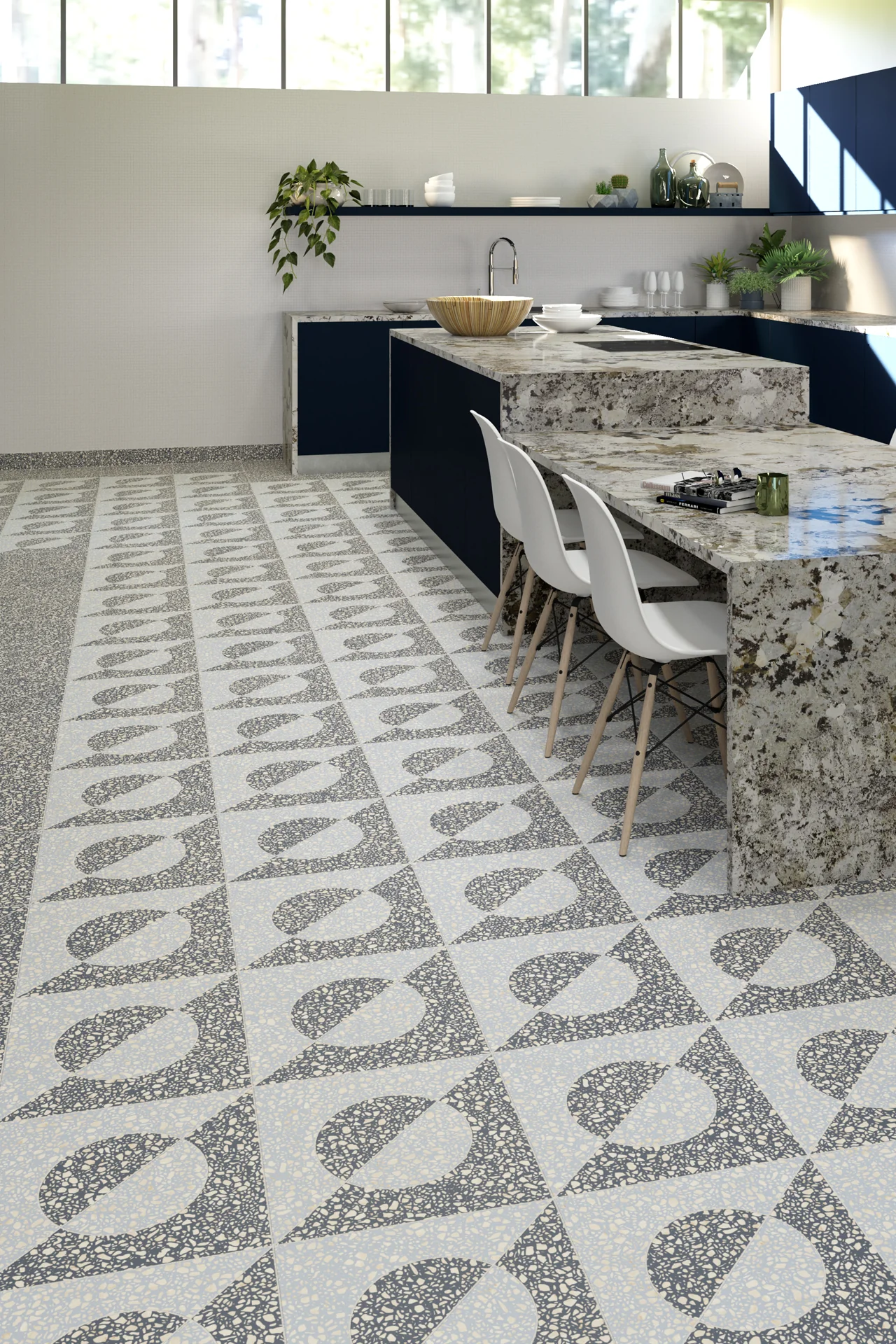
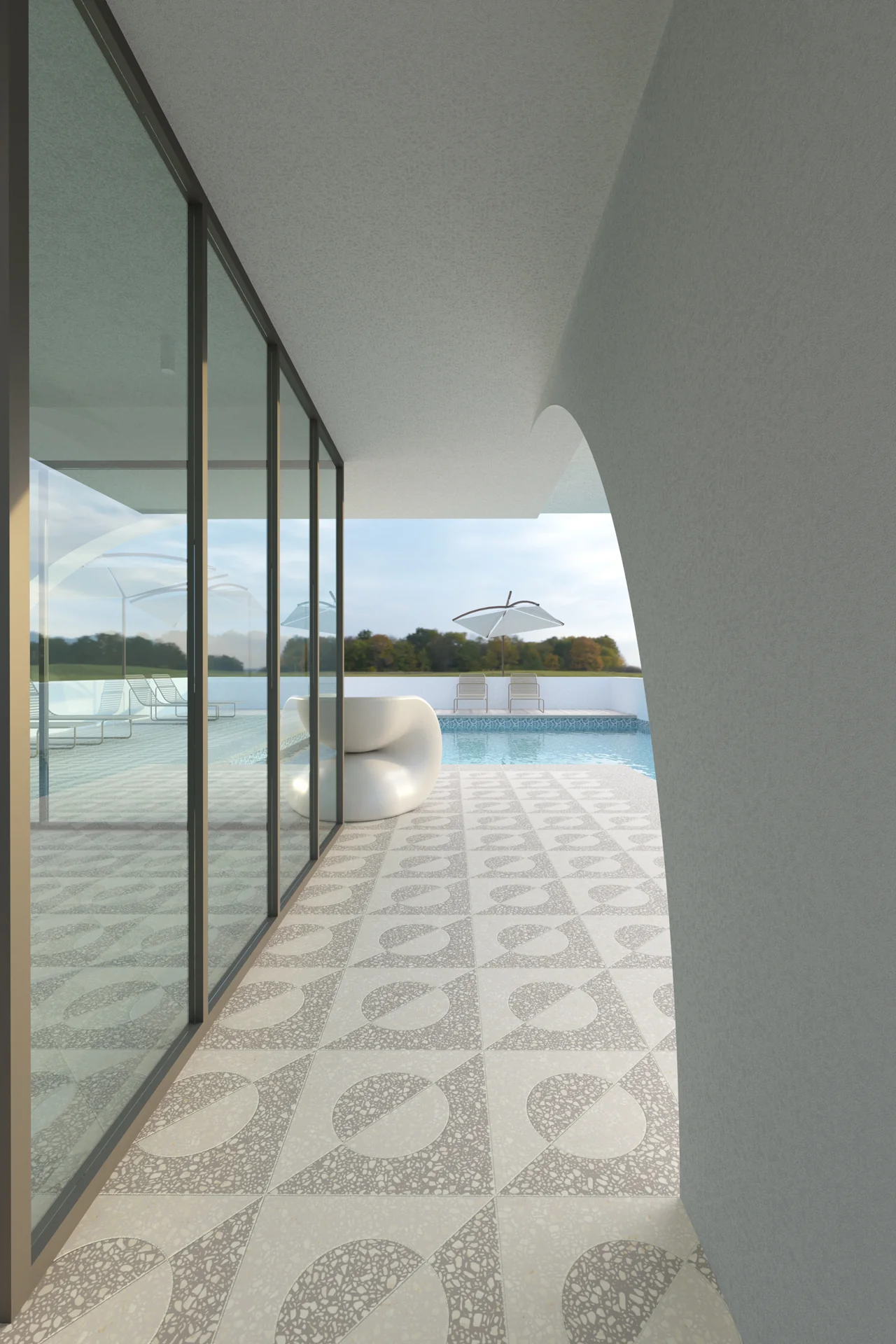
Portico has very little to prove at first glance. Two simple pieces provide everything the pattern needs, each pared back to a few lines, curves and angles. There is an appealing economy to it, particularly when those modest beginnings start producing results that seem far more complicated than they ought to be.
Neither piece is really intended to be understood alone. Place them together and their edges start completing one another. A curve continues, an angle changes direction and shapes appear in the spaces between. Repeat the process and the original components gradually become less important than the pattern developing around them.

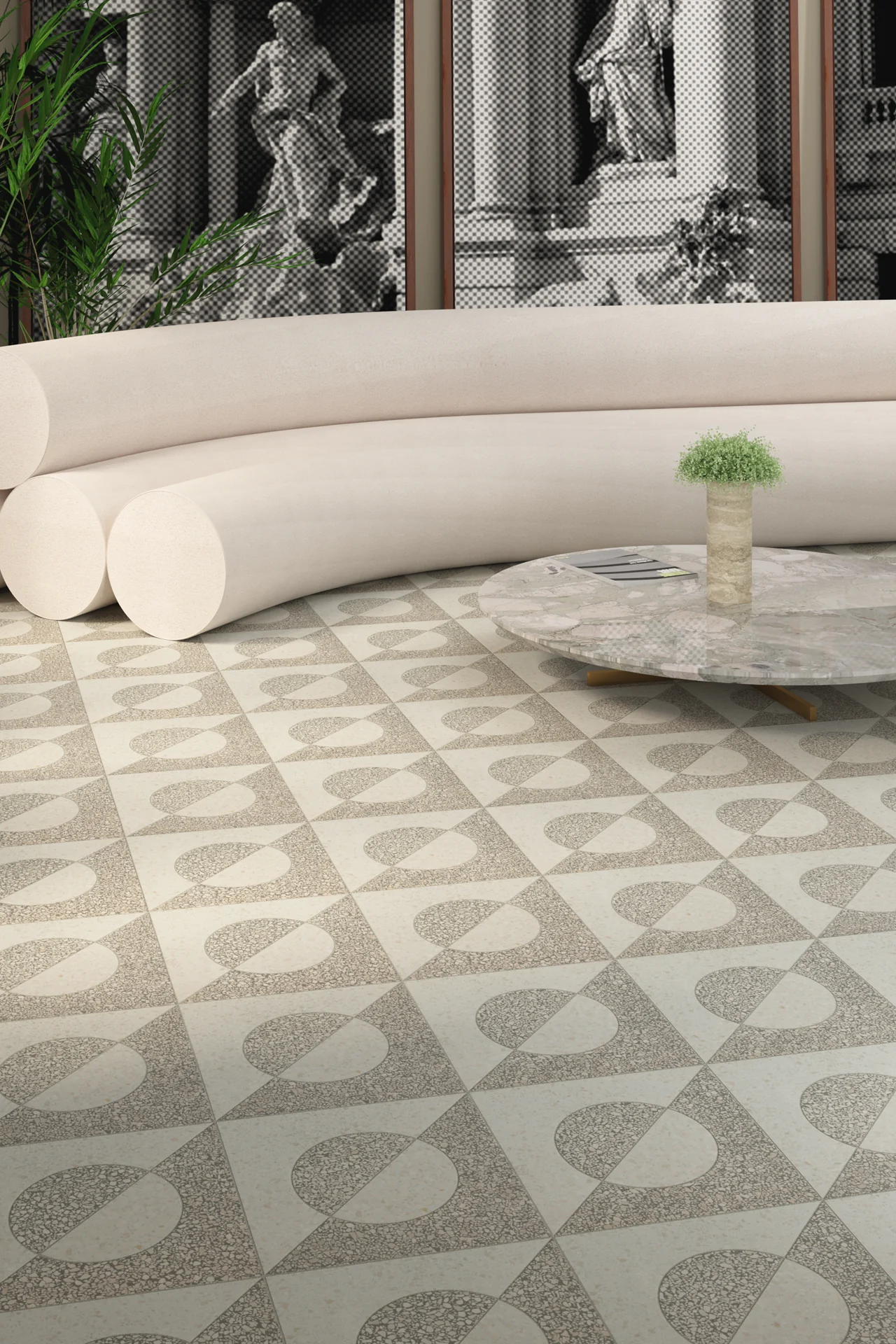
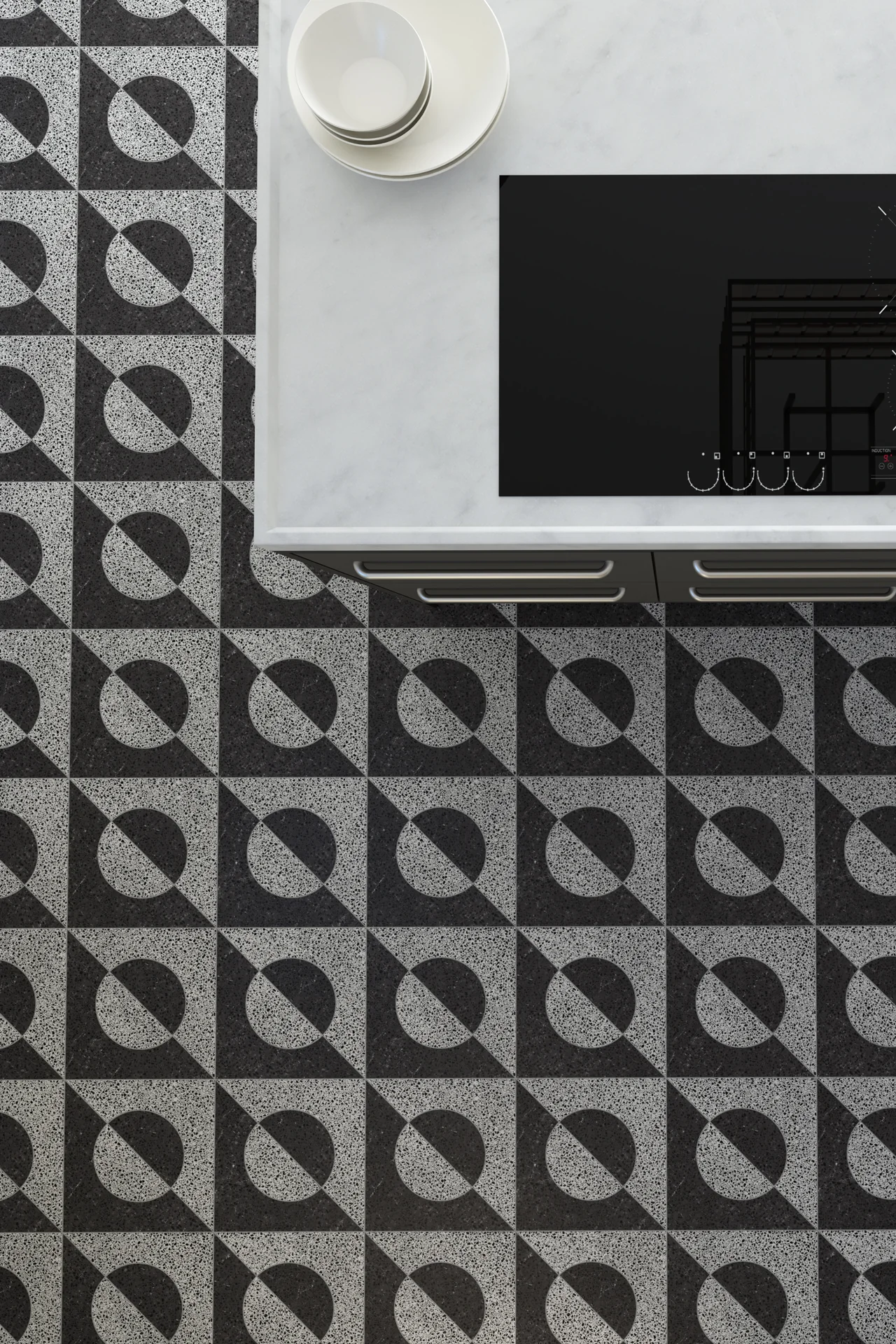
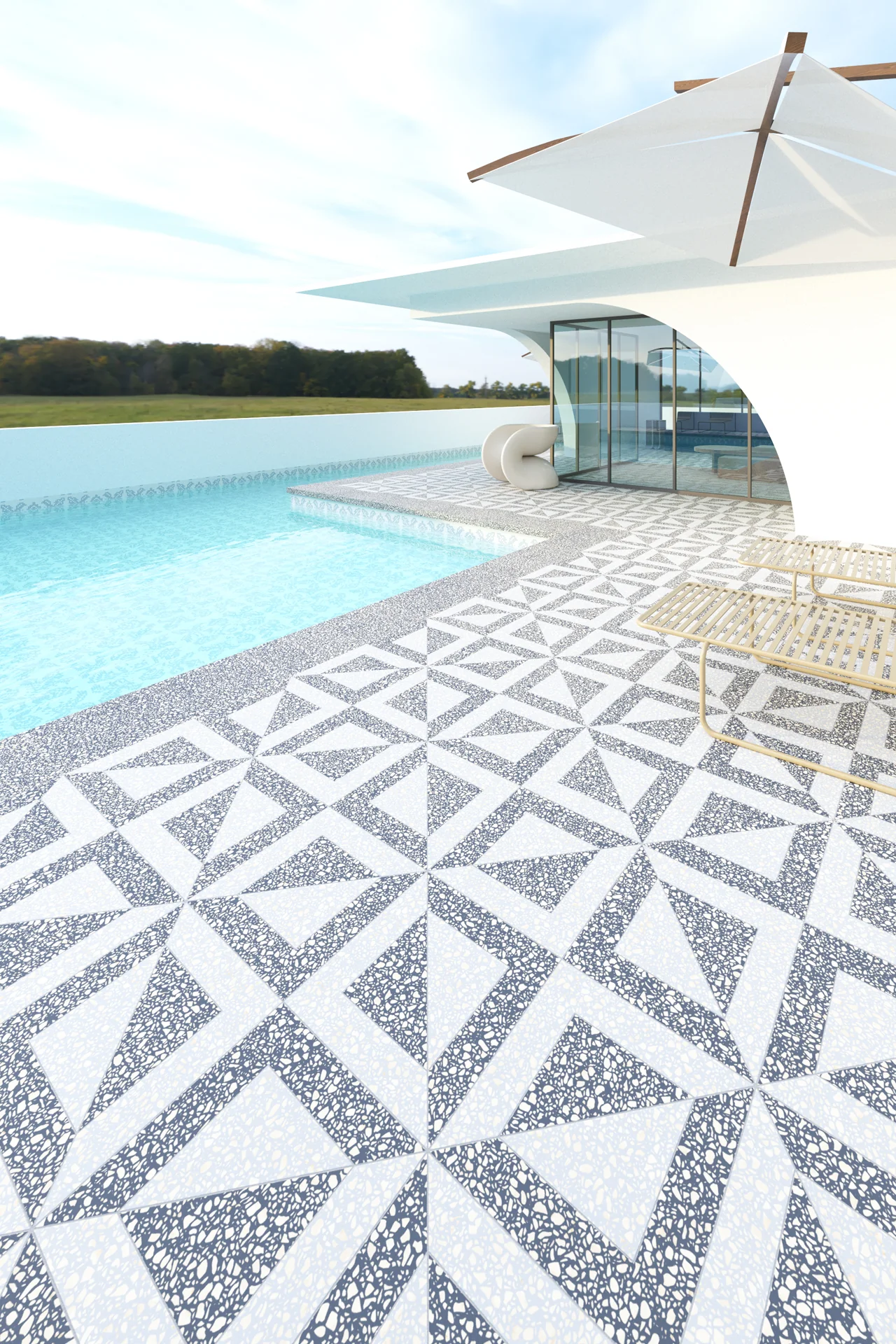
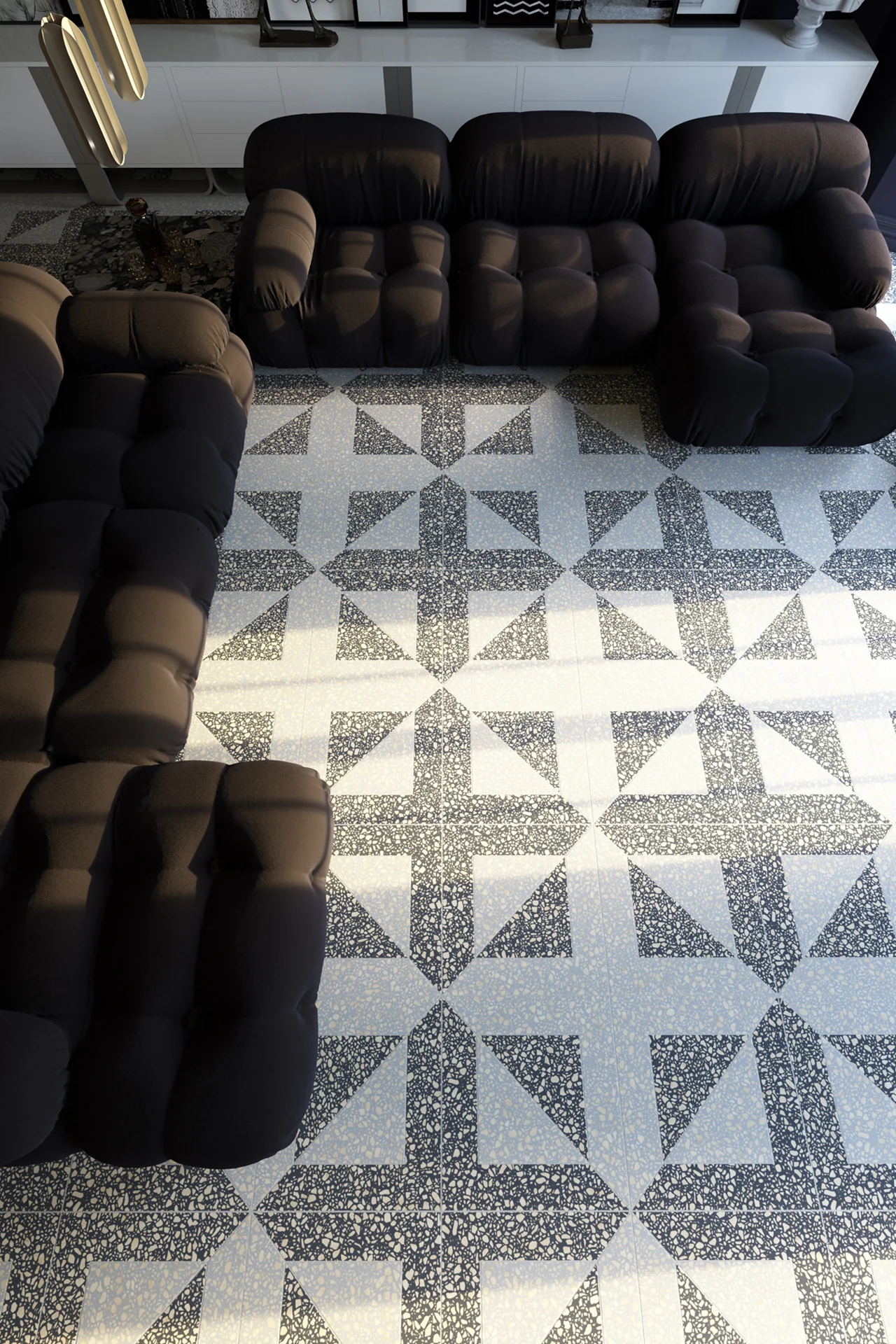
This is where simplicity becomes surprisingly productive. Portico does not rely on elaborate shapes to create interest. Instead, it leaves room for repetition to do the work. The same two pieces can establish order in one arrangement, then become much more animated when their relationship changes.
There is something satisfying about a pattern that reveals its complexity slowly. At first, the geometry appears straightforward. Spend a little longer with it and secondary shapes begin to emerge, connections become apparent and the eye starts moving beyond the individual repeat.
Terrazzo suits this economy particularly well. The shapes may be reduced, but the material within them never is. Marble fragments, tonal shifts and natural irregularities provide a quiet counterpoint to the clarity of the cut geometry, so even the simplest arrangement retains plenty to look at.
Portico is ultimately an exercise in doing more with less. Its pared back approach is not the destination but the mechanism, giving two uncomplicated pieces enough freedom to become part of something considerably richer.
The Patterns


Availability and Sales enquiries to Veniston Crafted Nature