
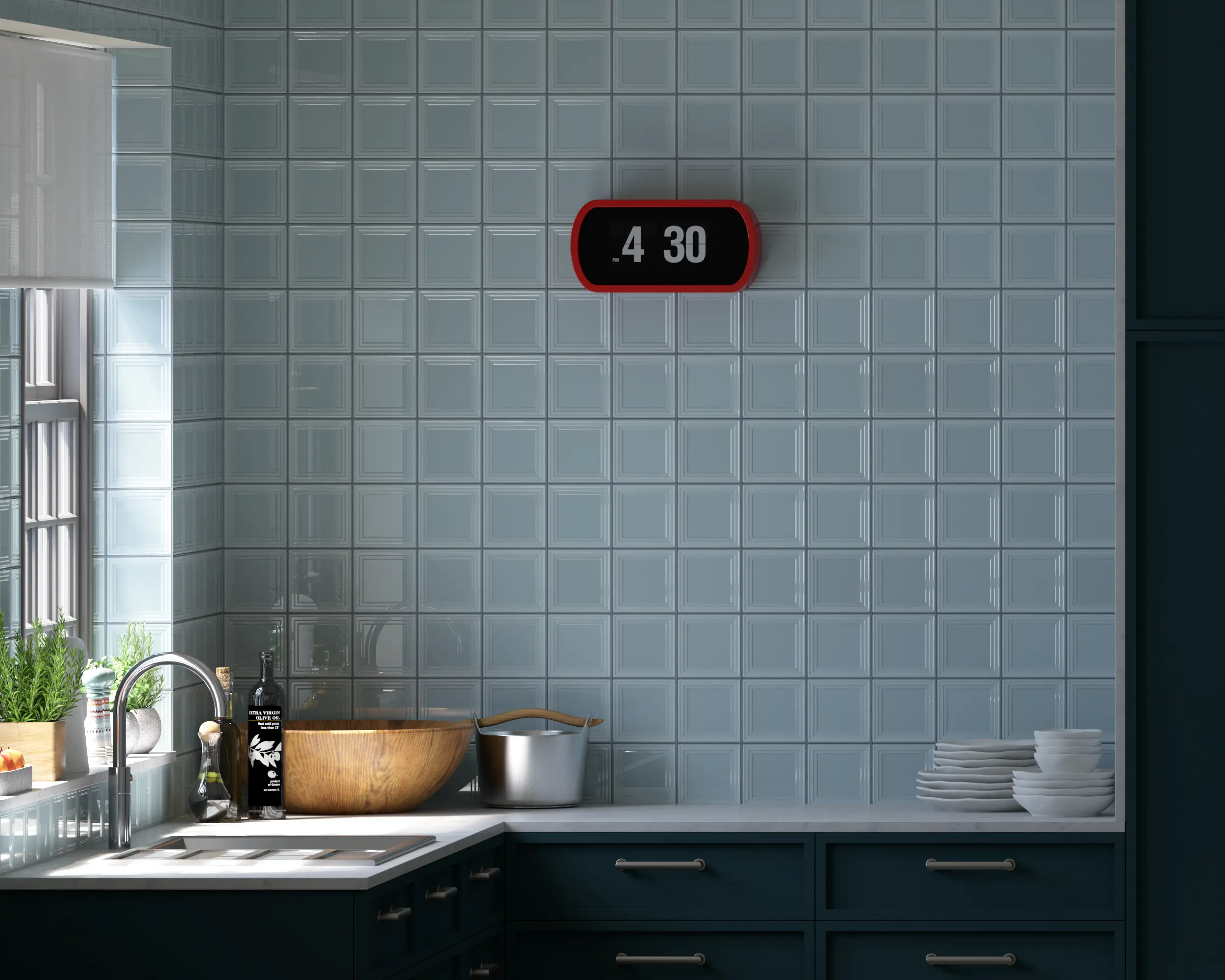
Carlo
Wall Tiles
Carlo
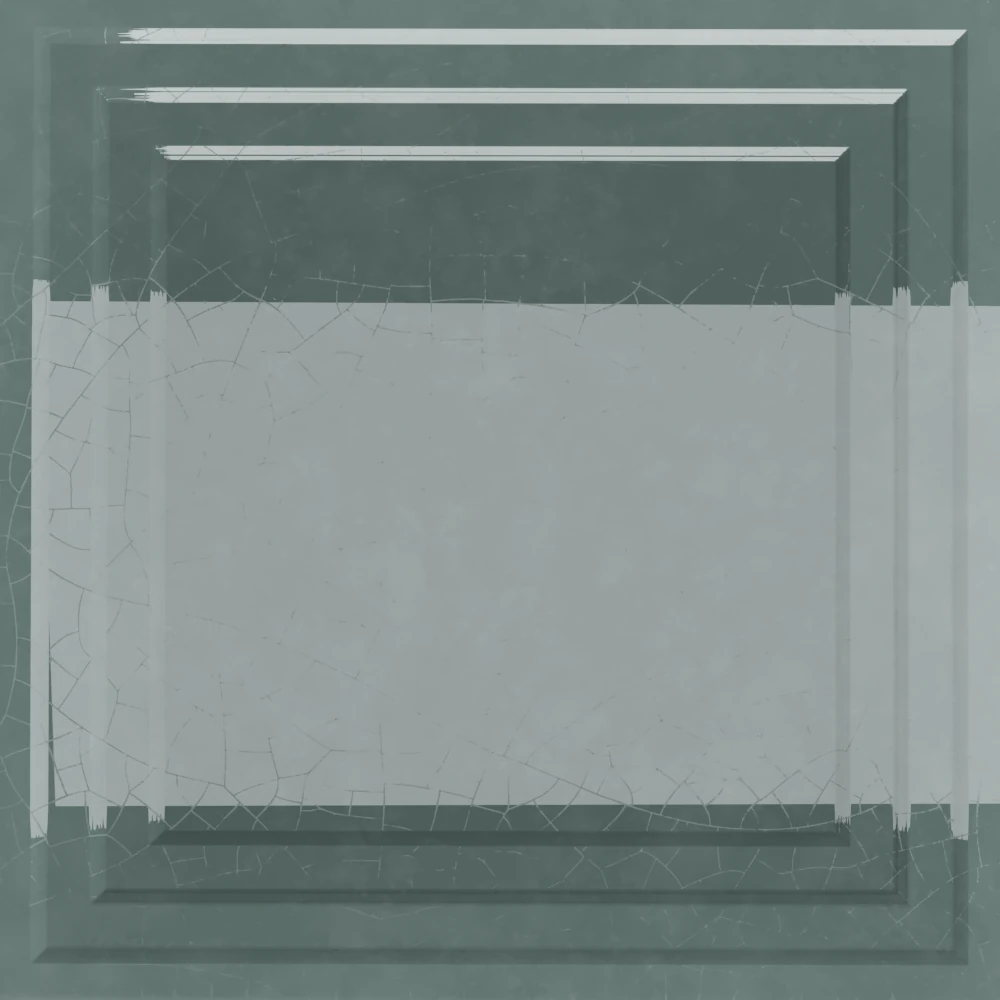
Carlo grew from an interest in the stepped edges that appeared so often in modernist architecture. There is a wonderful confidence to these details. A succession of small changes in level could give a piece of stone or concrete an unexpected richness, turning something as ordinary as an edge into an integral part of the design.
It is an approach to decoration that still looks remarkably fresh. Nothing has been added to the surface. Instead, the interest comes from the way the material itself has been shaped. Repetition gives the steps rhythm, while depth creates shadow and definition. The distinction between structure and ornament becomes pleasantly unclear.
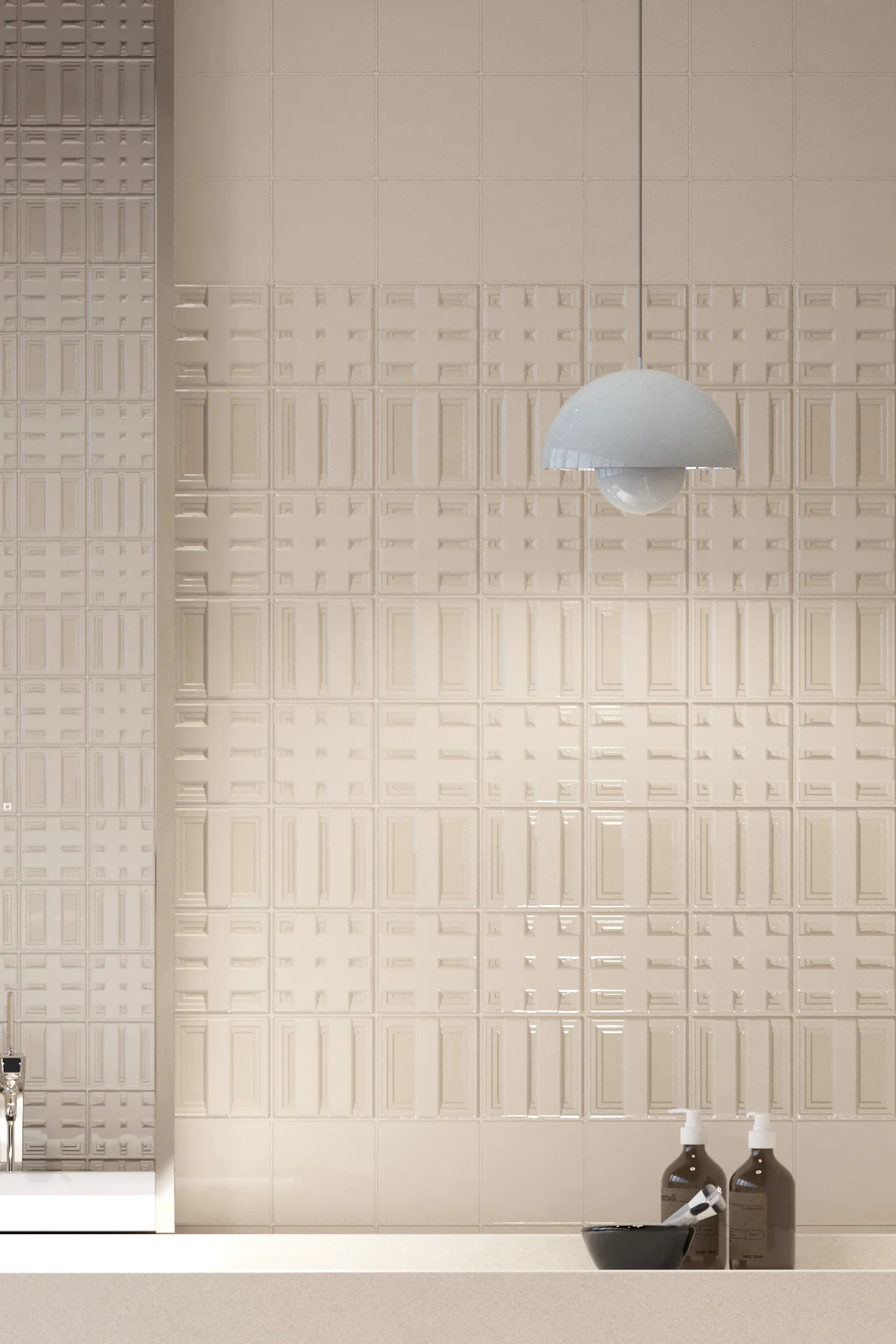
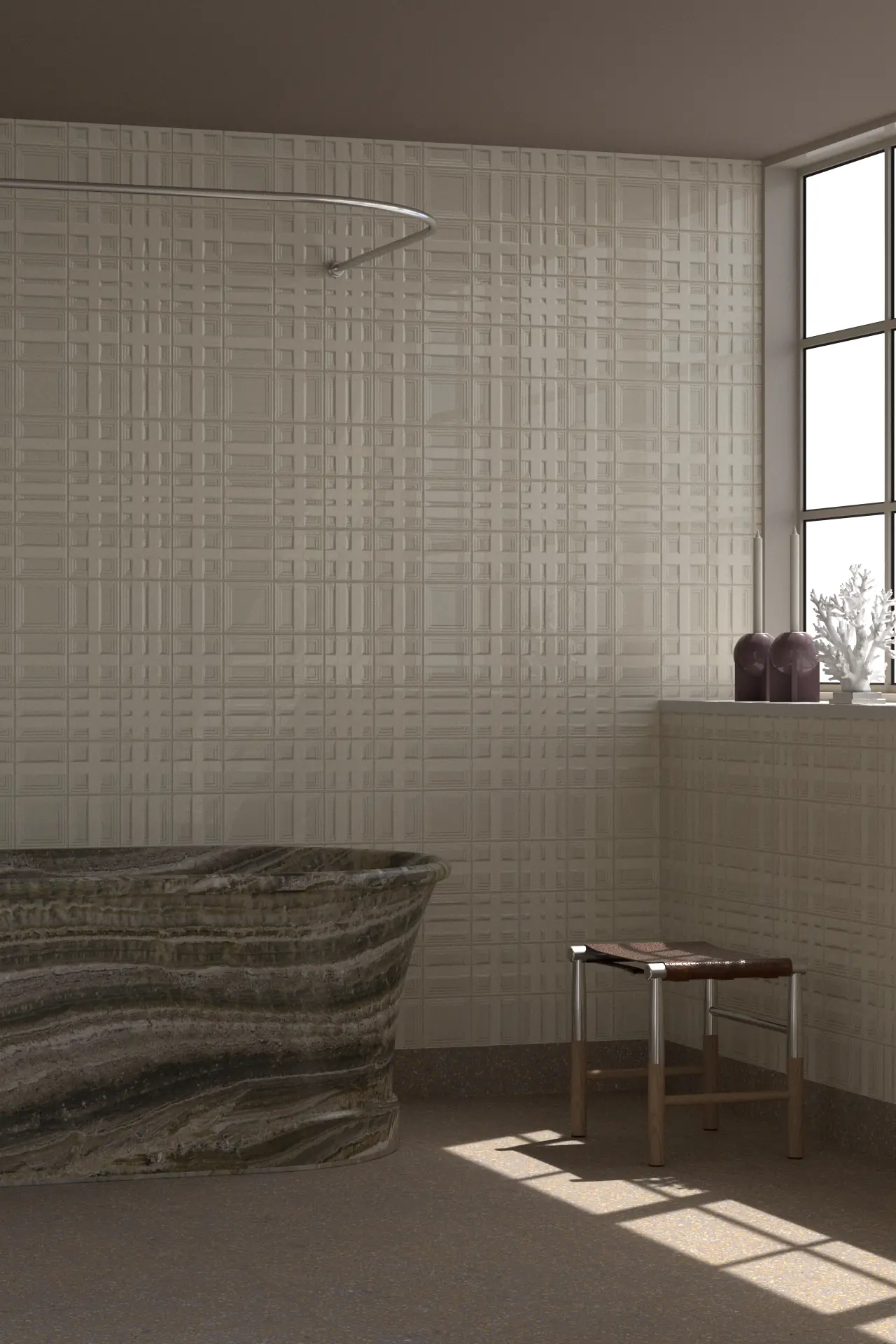
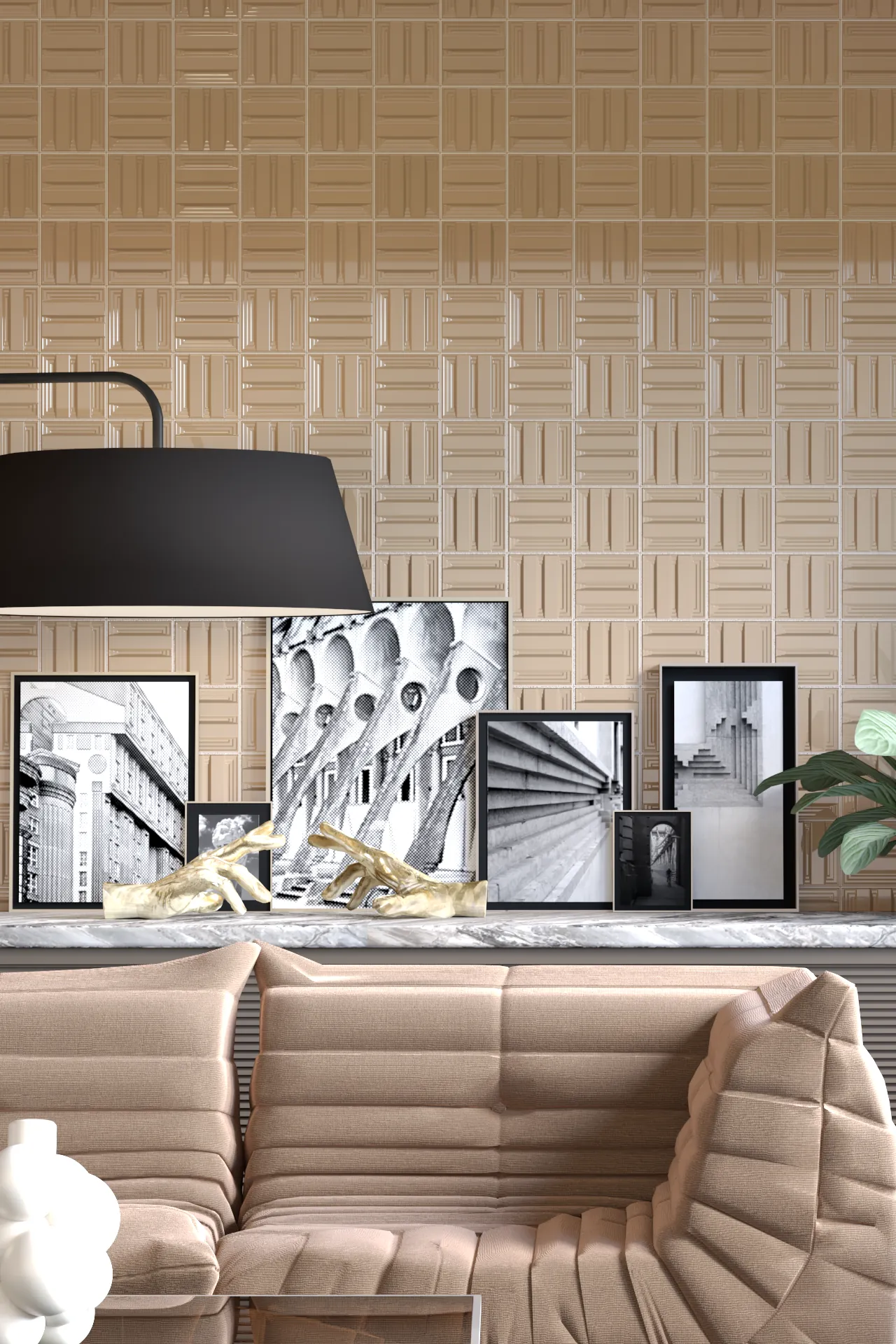
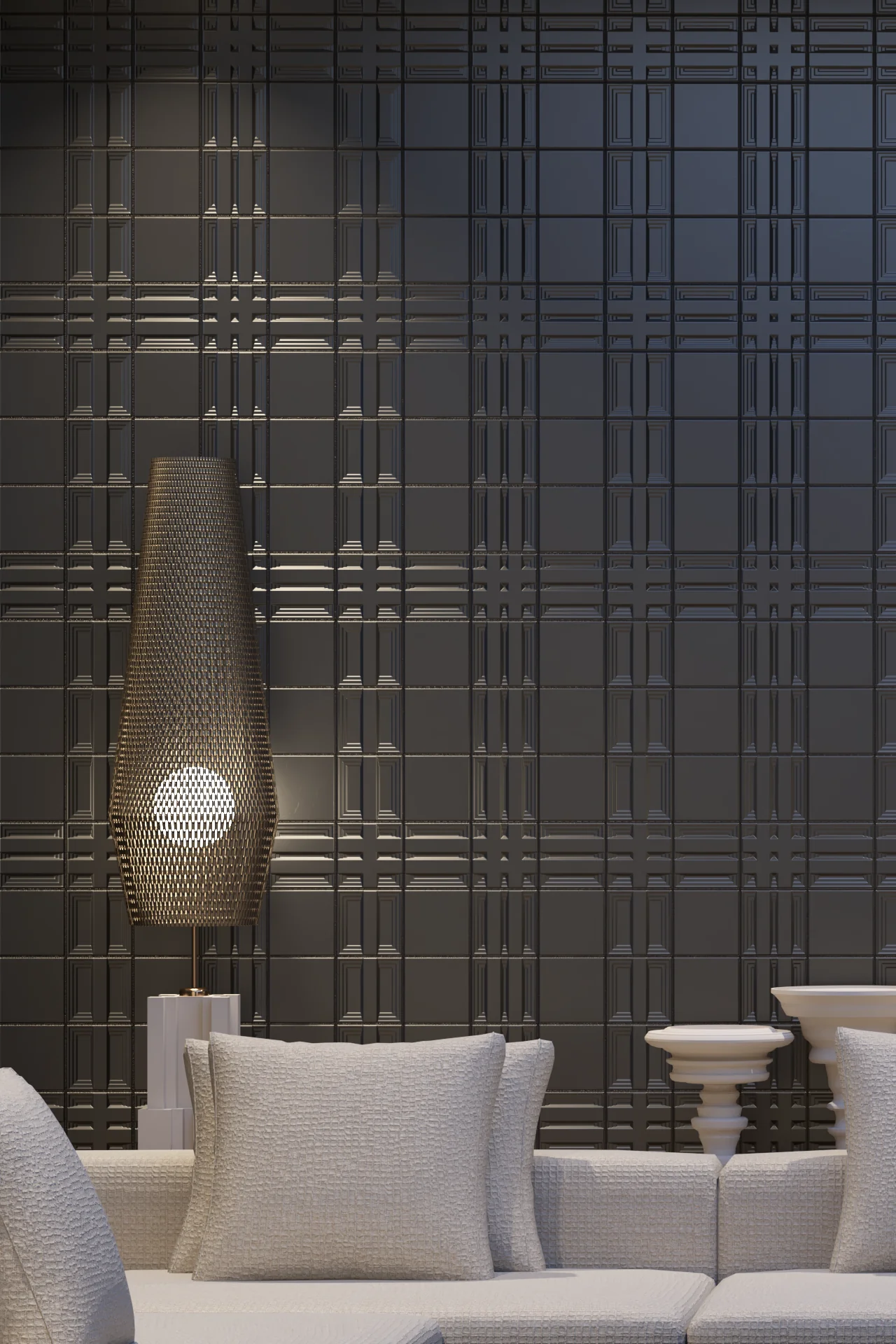
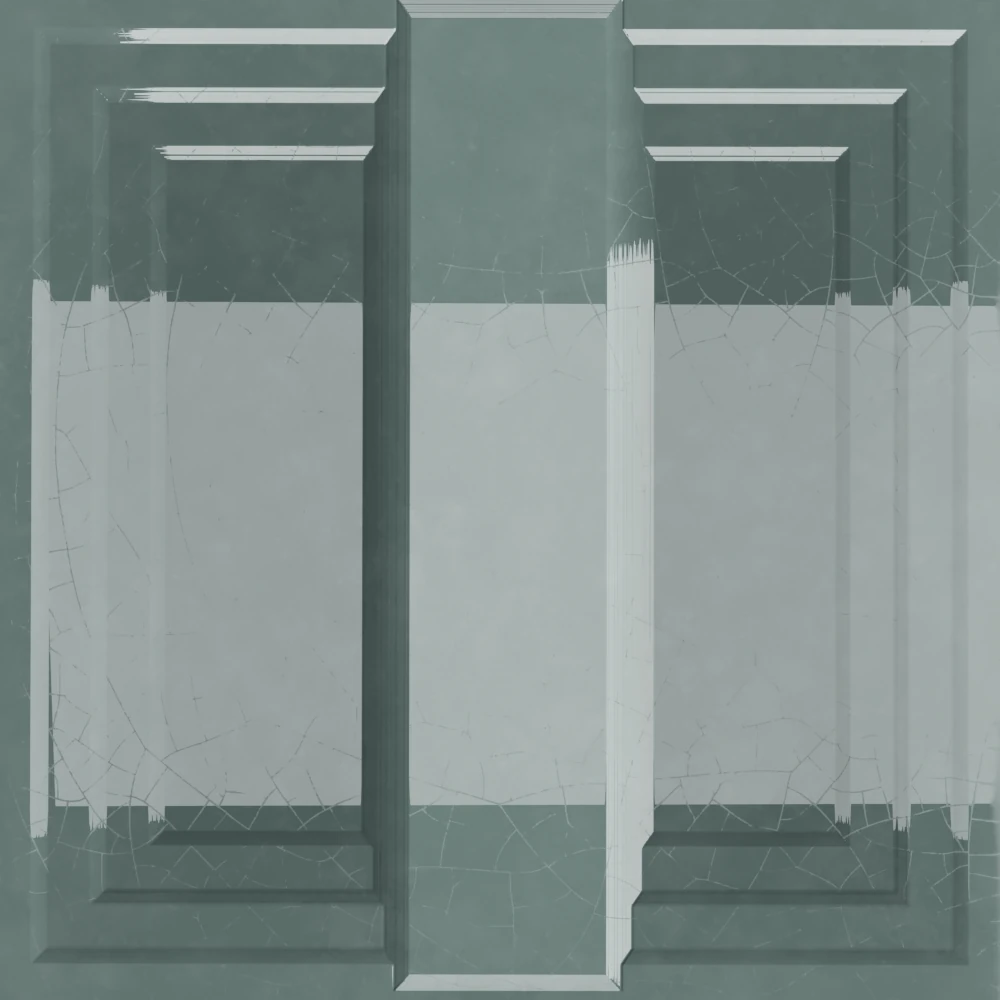
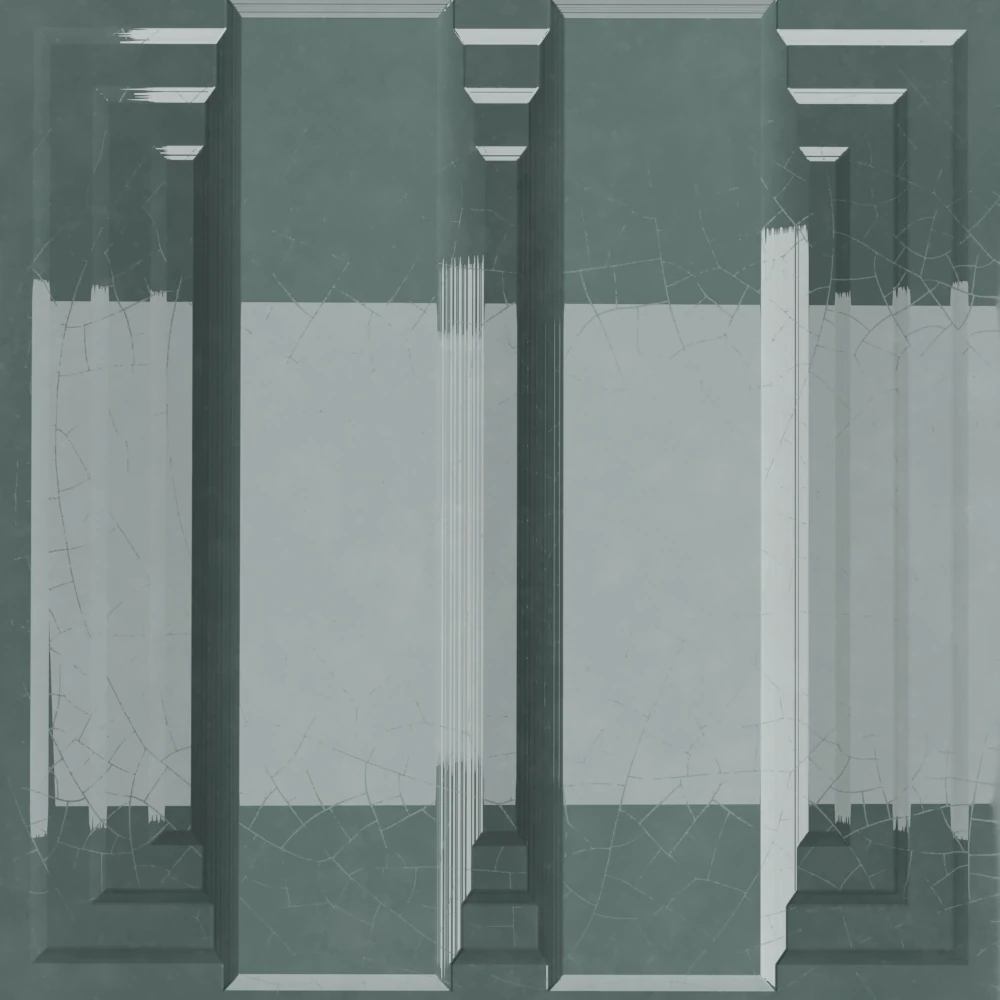
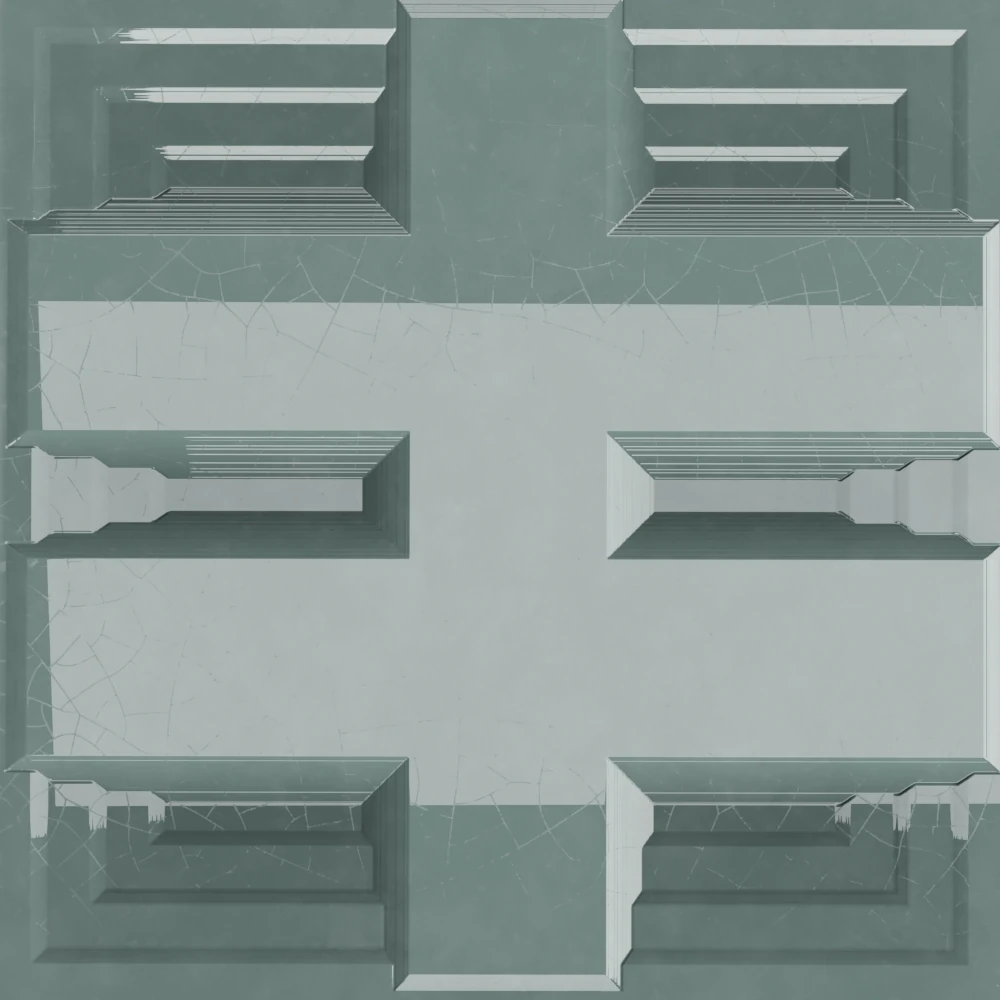
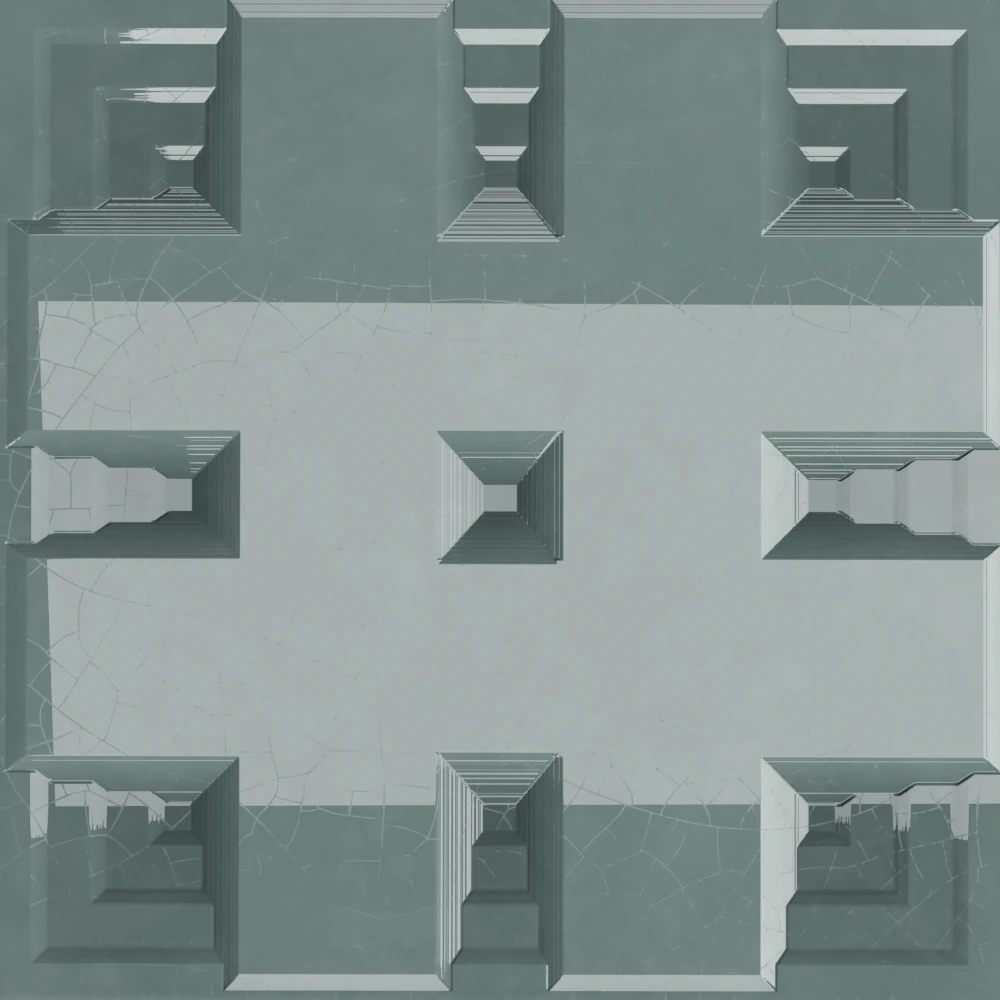
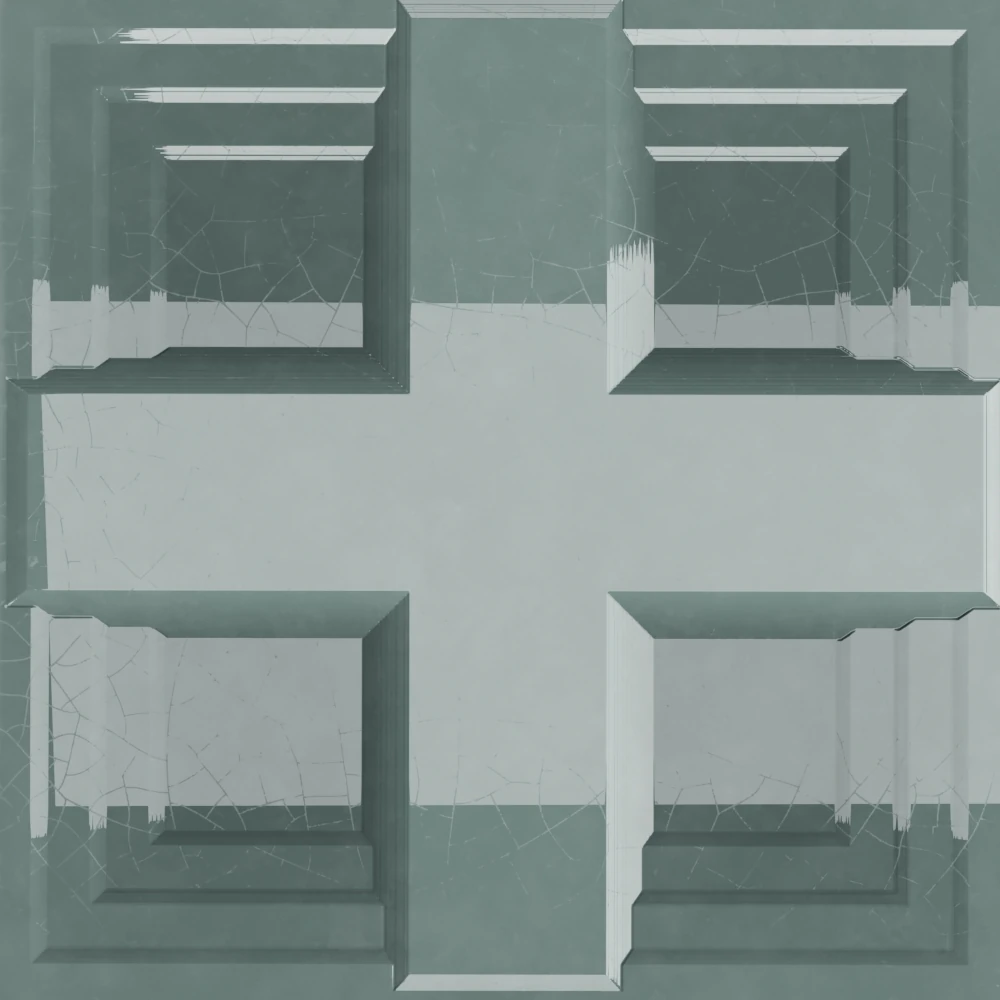
Carlo takes that idea into ceramic and allows it to spread. The stepped edge establishes a rhythm around each tile, while bridges reach across the surface towards the next. As more pieces come together, those connections become increasingly important. What appears to belong to one tile continues into another, and gradually the boundaries between individual pieces become less obvious.
I particularly like the contradiction in this kind of geometry. It is precise, ordered and unmistakably architectural, yet it produces something quite decorative. Carlo embraces both sides. The pattern has discipline, but it also has depth, shadow and the small variations that come naturally with glazed ceramic.
The translucent glaze settles into the relief rather beautifully, making the stepped geometry more apparent without needing to emphasise it. Colour shifts gently across raised and recessed areas, allowing the form to reveal itself as you move around the surface.
Perhaps this is what makes the stepped motif so enduring. It achieves quite a lot with remarkably little. Carlo follows the same principle, using a repeated edge and a series of connections to turn a simple ceramic tile into part of a much larger architectural pattern.
The Surfaces
Tiles
