
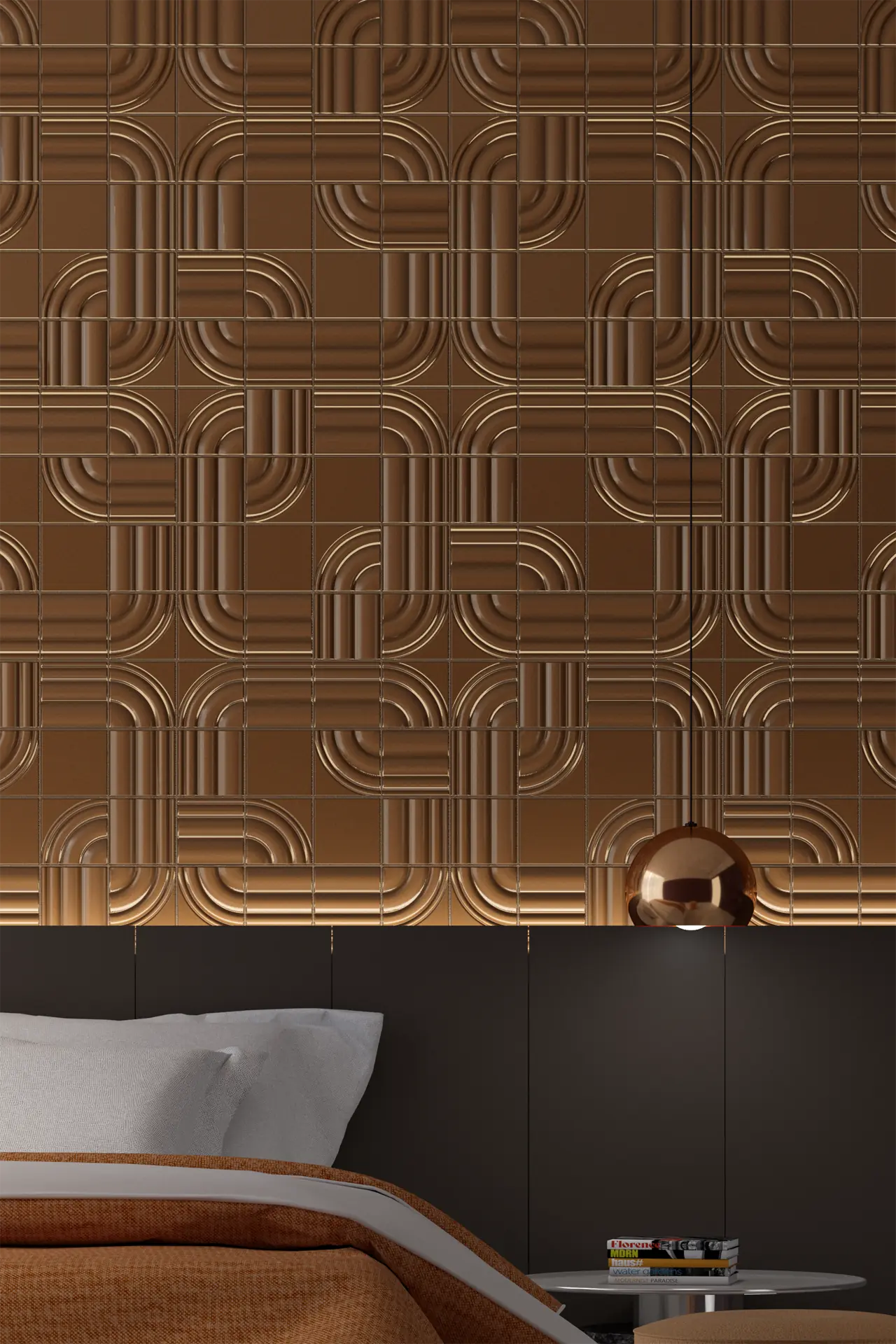
Circle Line
Wall Tiles
Circle Line
Circle Line owes something to the great ceramic murals of mid-century architecture. They appeared in reception areas, entrance halls and public buildings, occupying that interesting territory between art and architecture. A wall was no longer simply a backdrop. Relief, repetition and glaze gave it a presence of its own.
There is something wonderfully optimistic about those surfaces. Pattern was allowed to be bold, texture was celebrated and decoration had an architectural scale. Ceramic suited the mood perfectly. It could be repeated like a building material while retaining all the colour, variation and character associated with something much more individual.
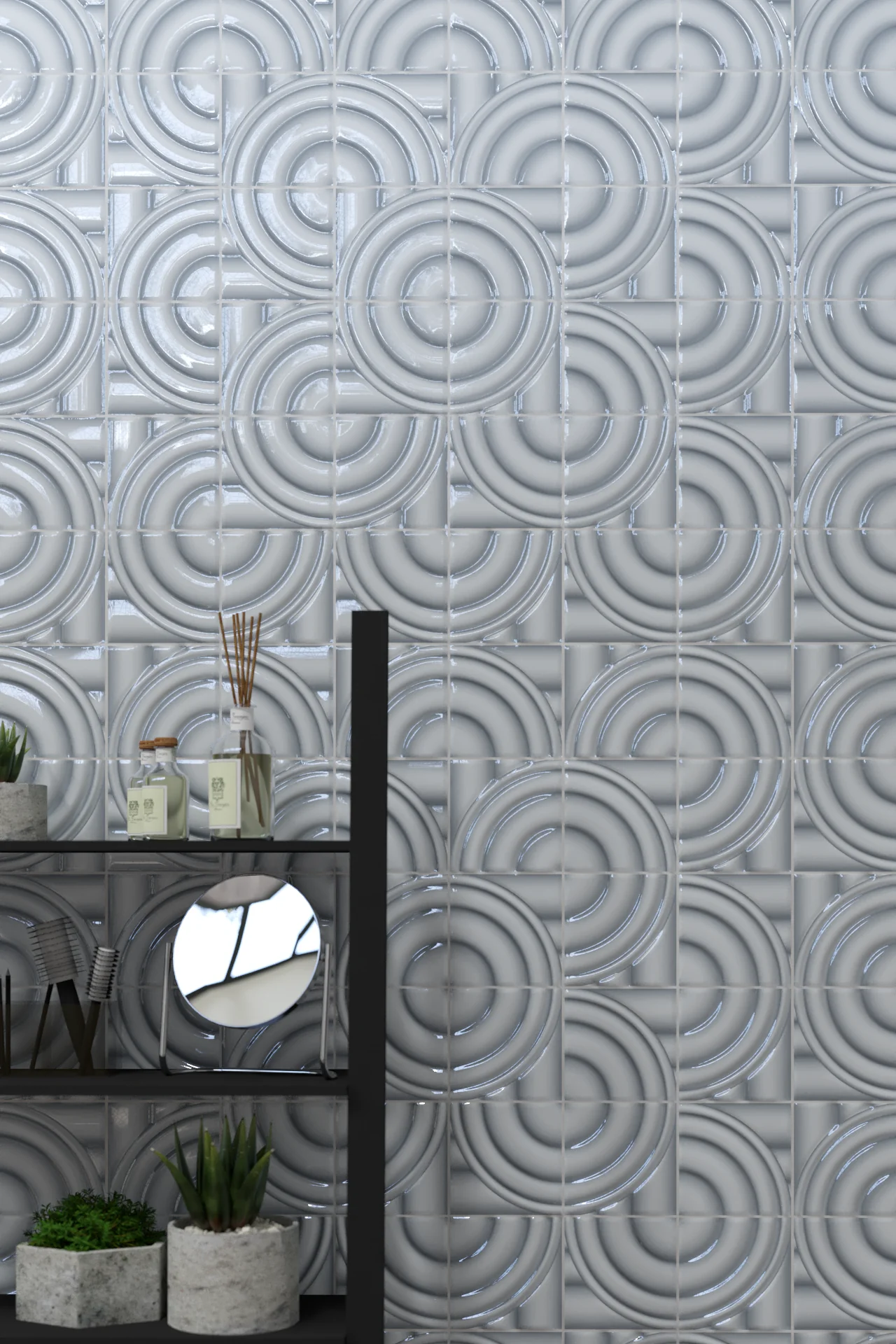

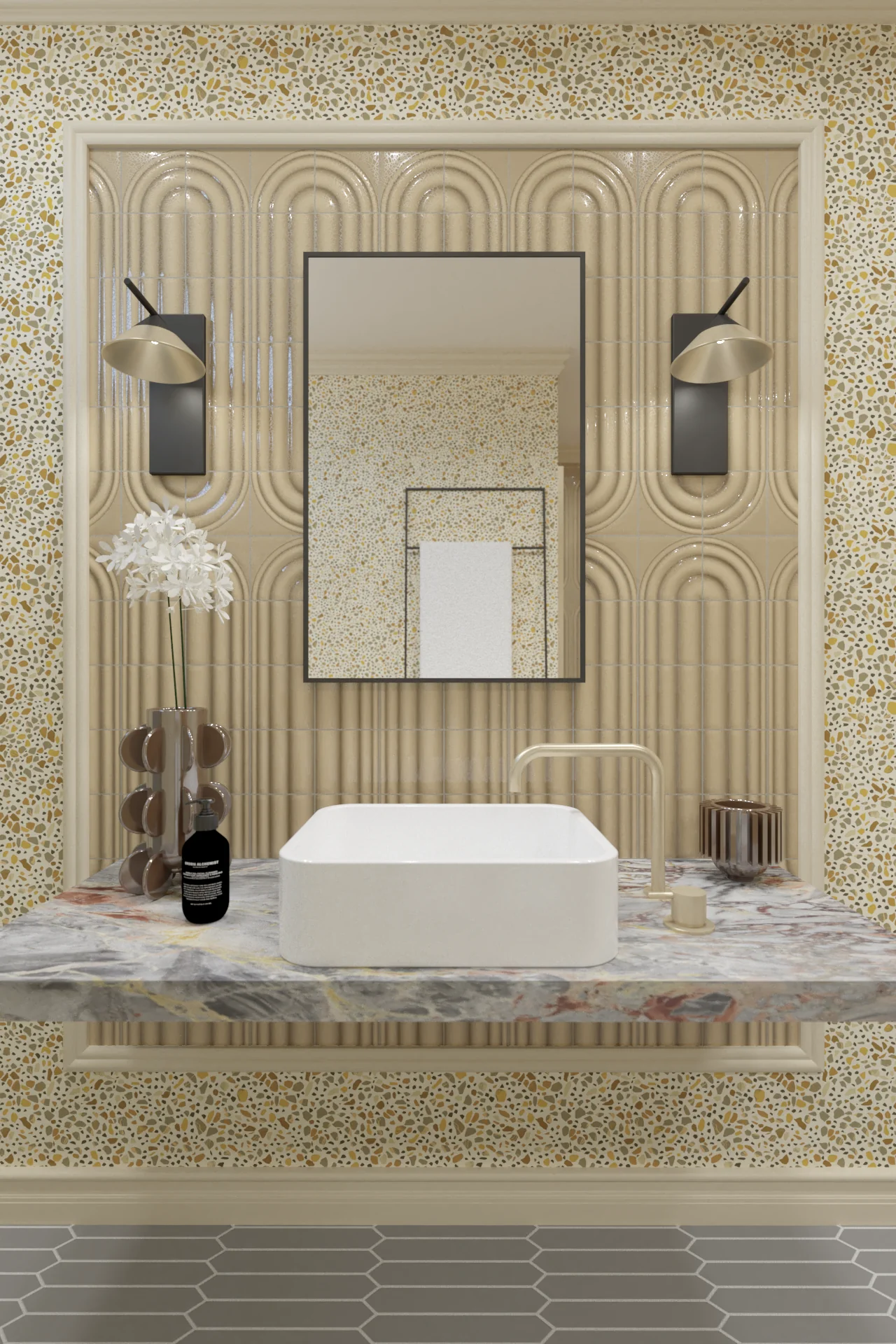
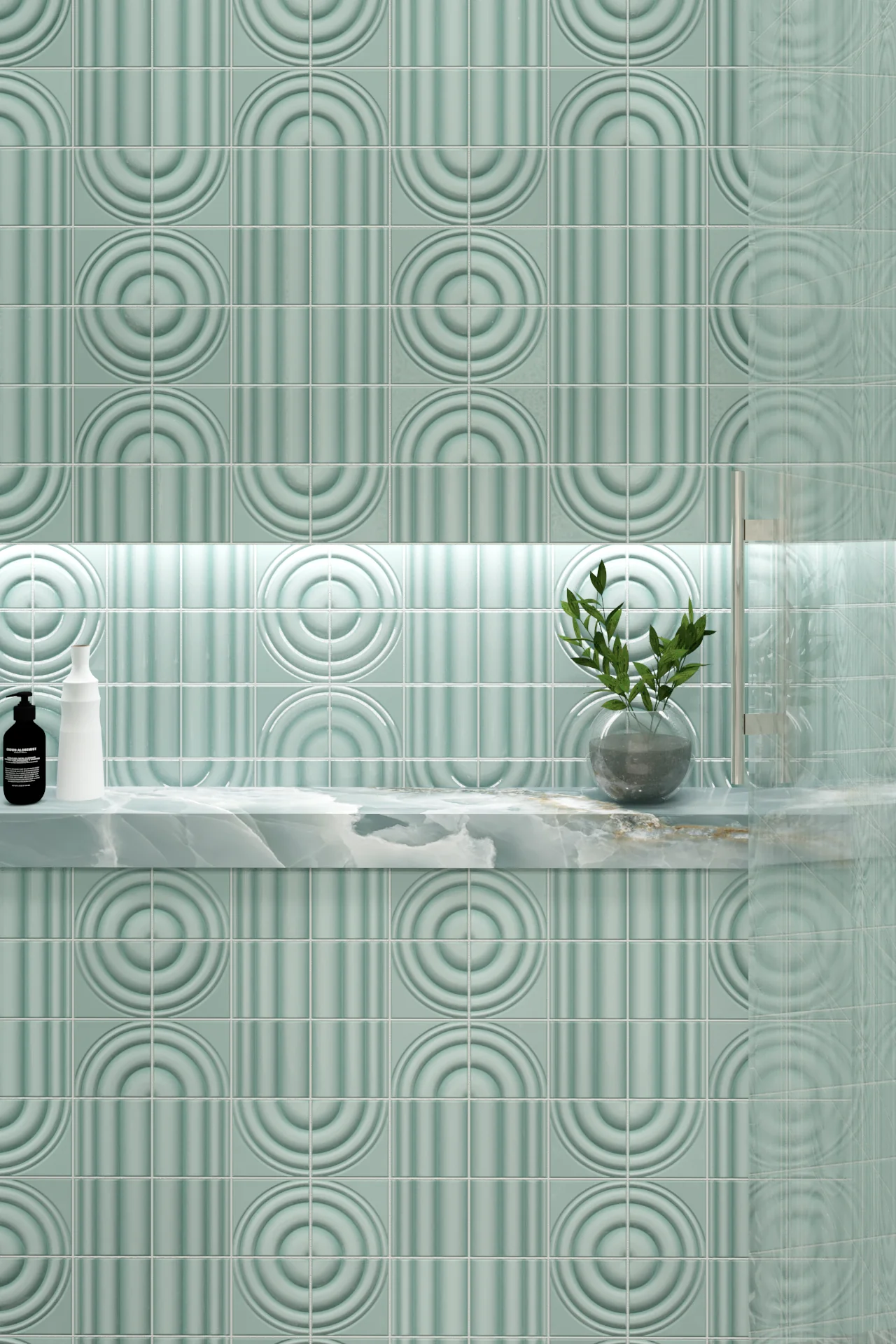
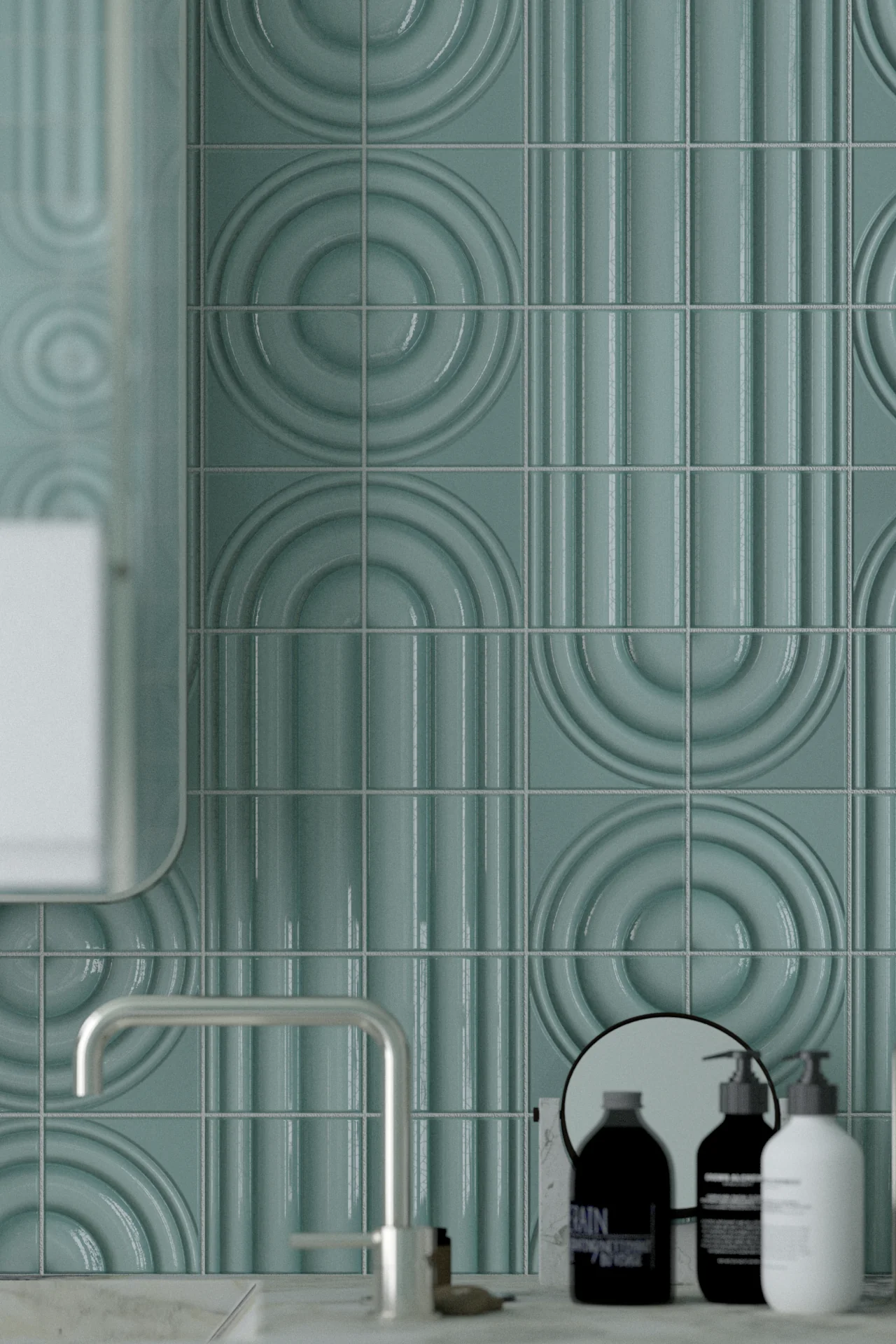
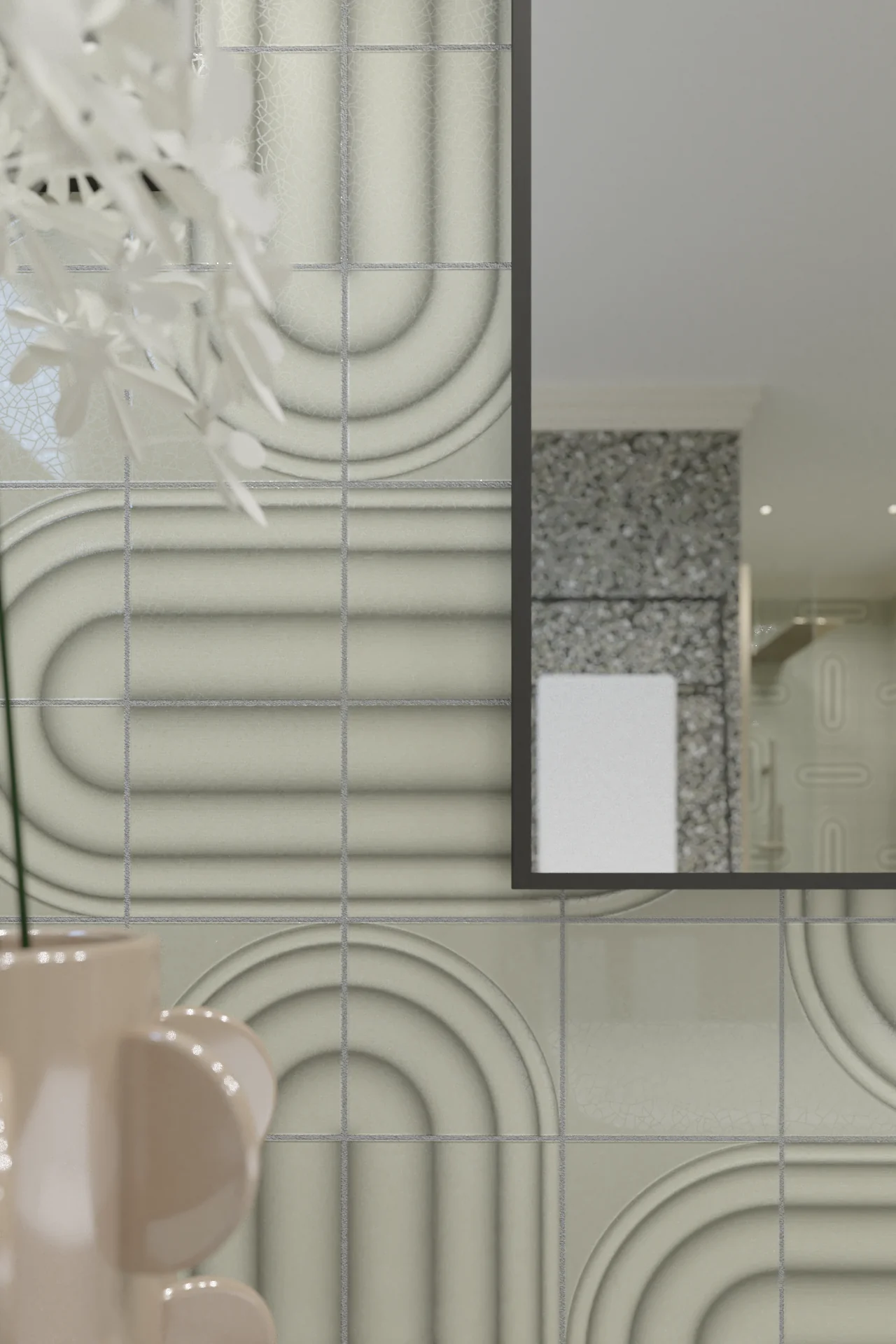
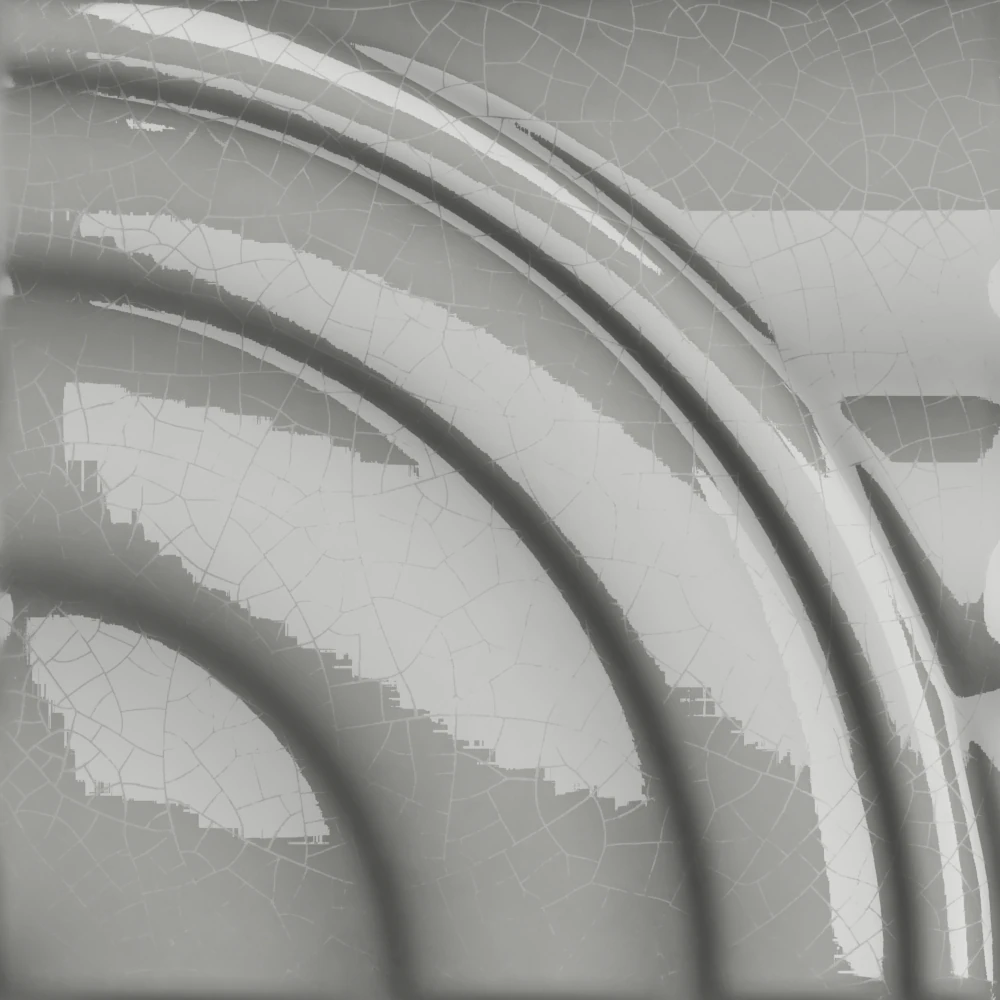
Circle Line was my first wall tile design and grew from much the same fascination. Three profiles interlock across the wall, each carrying only part of the eventual pattern. Curves continue into neighbouring pieces, lines meet and separate, and the individual tile gradually gives way to a much larger composition.
I like the idea that these are less a collection of tiles and more the components of a ceramic mural. There is no single image to assemble and no prescribed point where the pattern has to finish. Instead, repetition allows the geometry to keep travelling, with the three profiles introducing enough variation to prevent the surface becoming predictable.
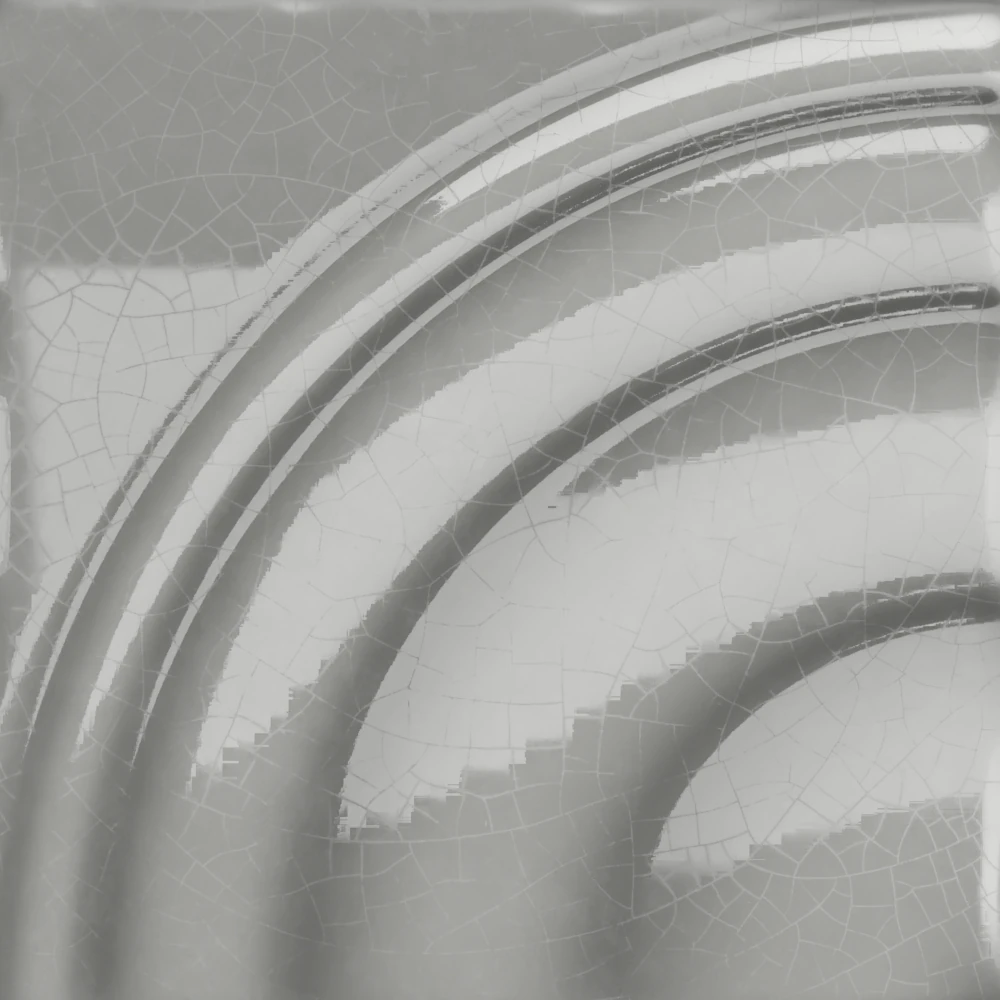
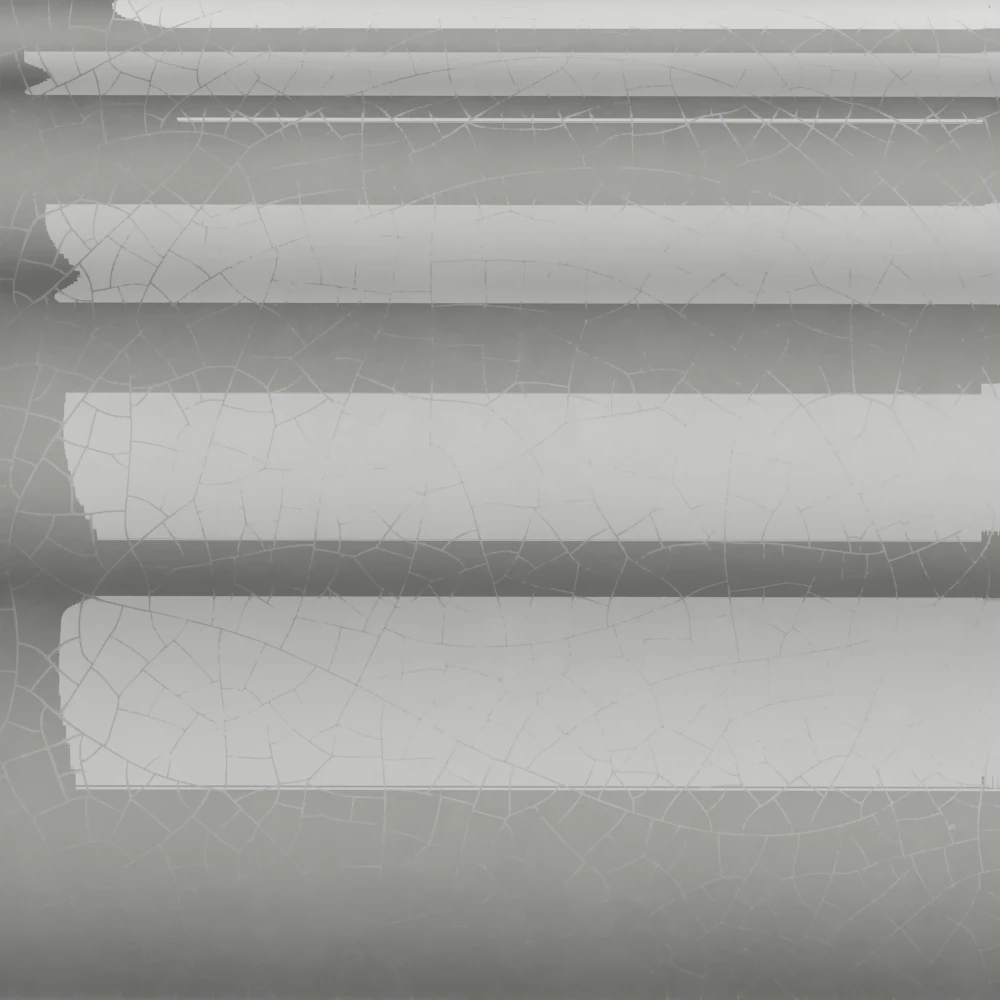
Relief gives that geometry a physical presence. The pattern projects from the wall rather than simply sitting on it, while translucent glaze gathers differently across the raised and recessed areas. These small changes are part of the pleasure of ceramic. However controlled the original geometry might be, clay and glaze always introduce a little character of their own.
The ceramic murals of modernism understood that a wall could contribute far more to a building than enclosure. Circle Line revisits that idea at a smaller, more adaptable scale, using three interconnected pieces to create a surface that sits somewhere between pattern, relief and architecture.

The Surfaces
Tiles