
Dimension
Wall Tiles
The Material
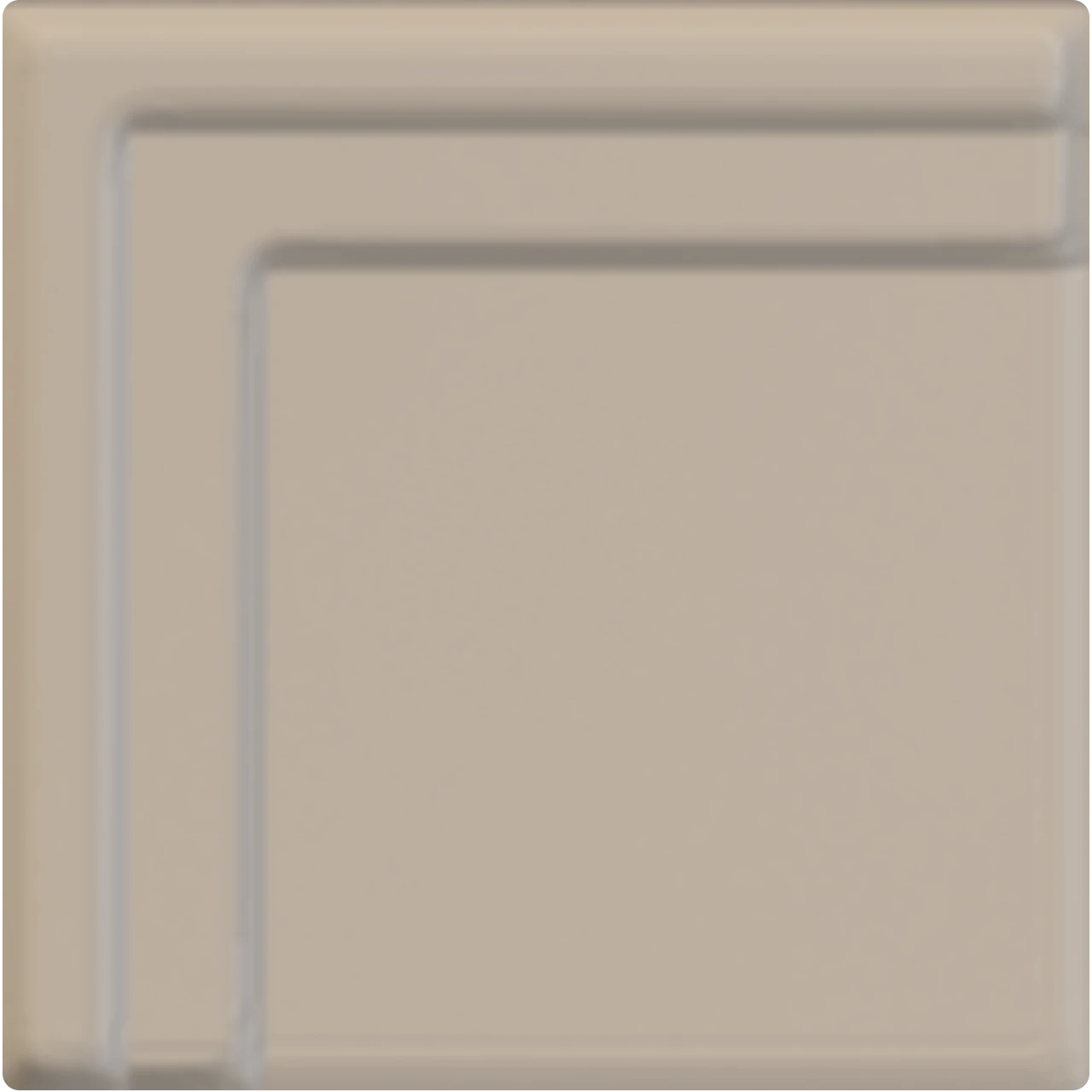
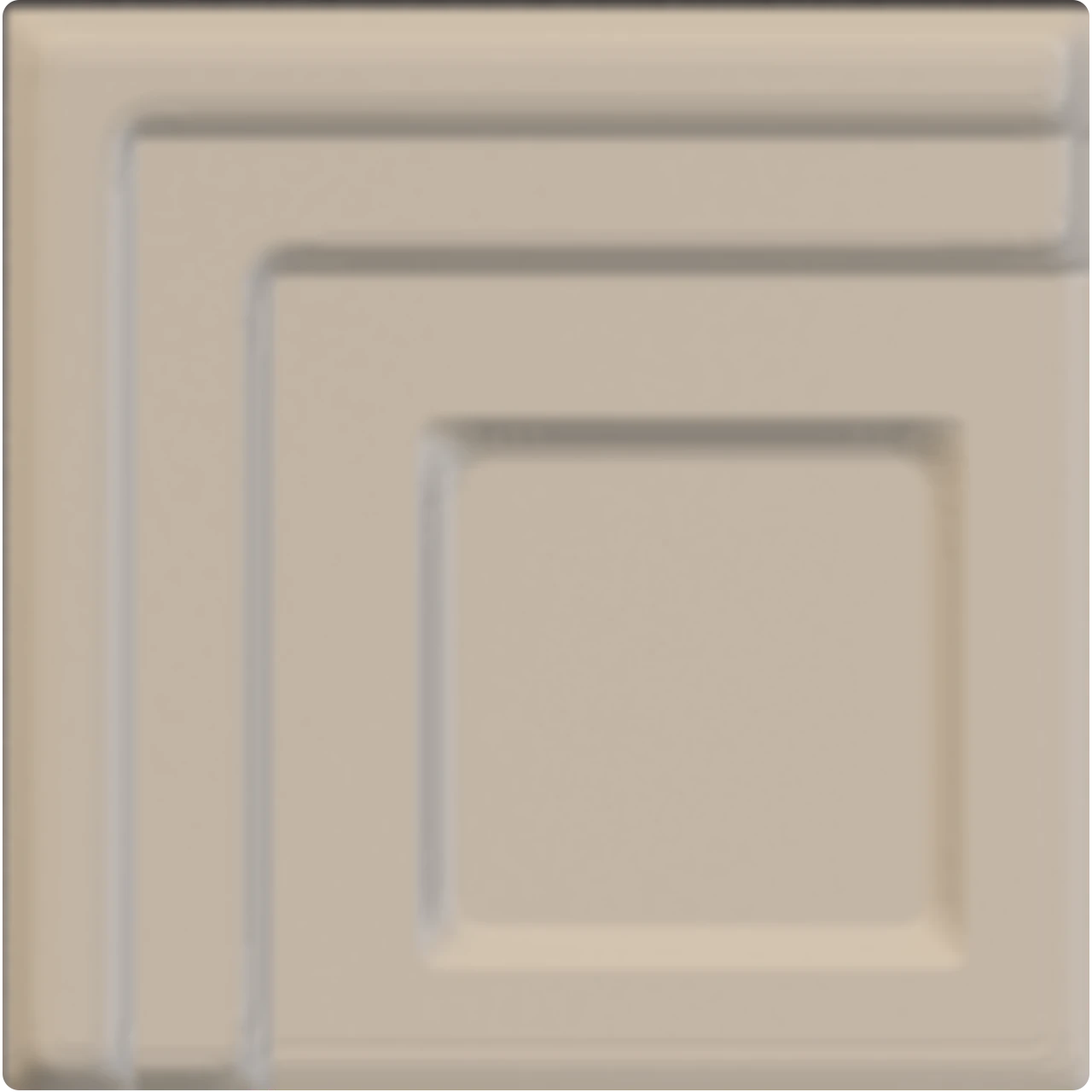
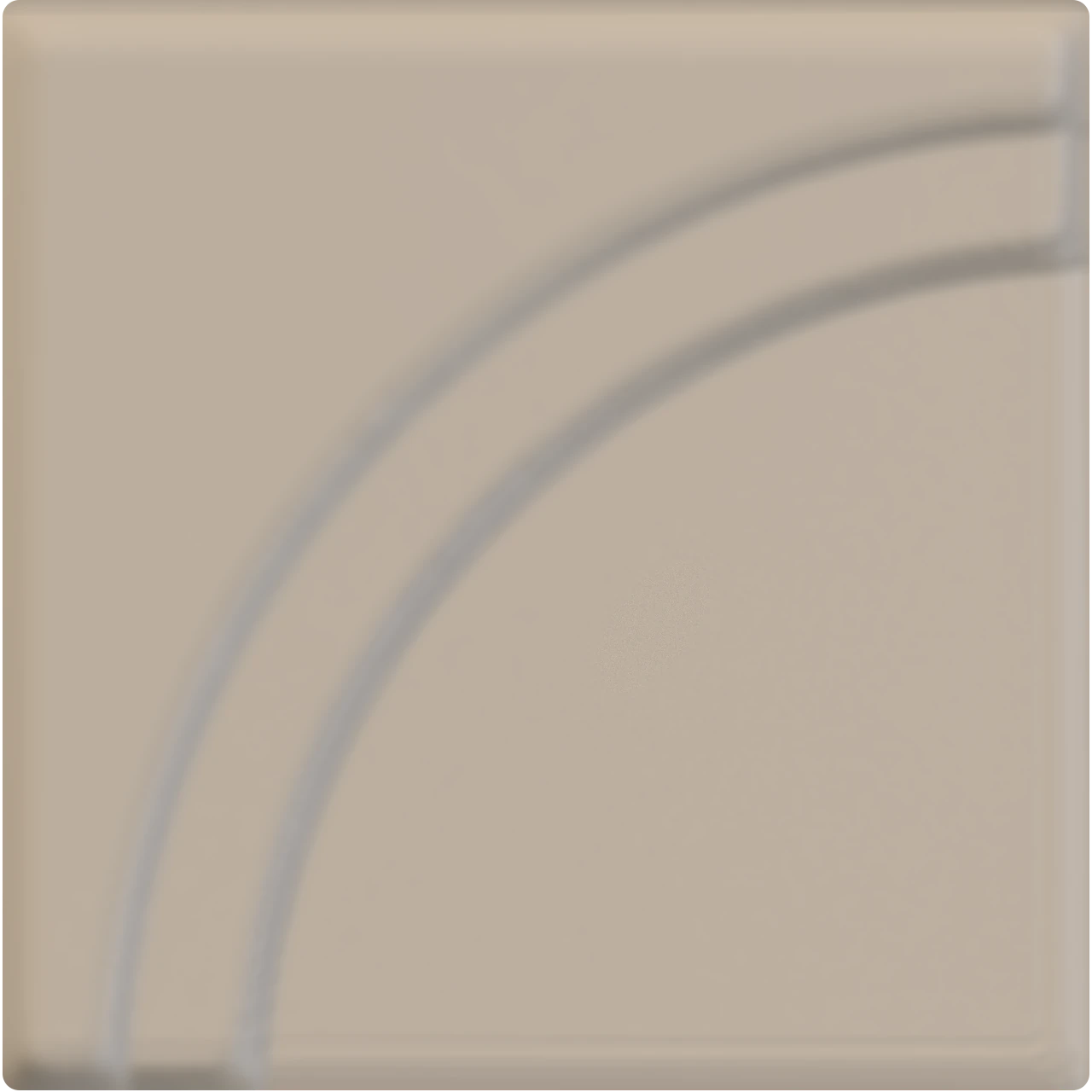
Dimension comes from an affection for the bold geometric prints of the mid-century, when abstract shapes appeared across textiles, graphics and interiors with remarkable confidence. These patterns were rarely complicated, but they understood the pleasure of scale, repetition and a really good shape.
Taking that language from fabric and giving it physical depth changes things considerably. A printed form becomes a projection, an overlap becomes a change of level, and geometry that once relied on colour begins to work through relief. There is something wonderfully direct about it, almost as though the pattern has been pulled out from the surface and given a structure of its own.
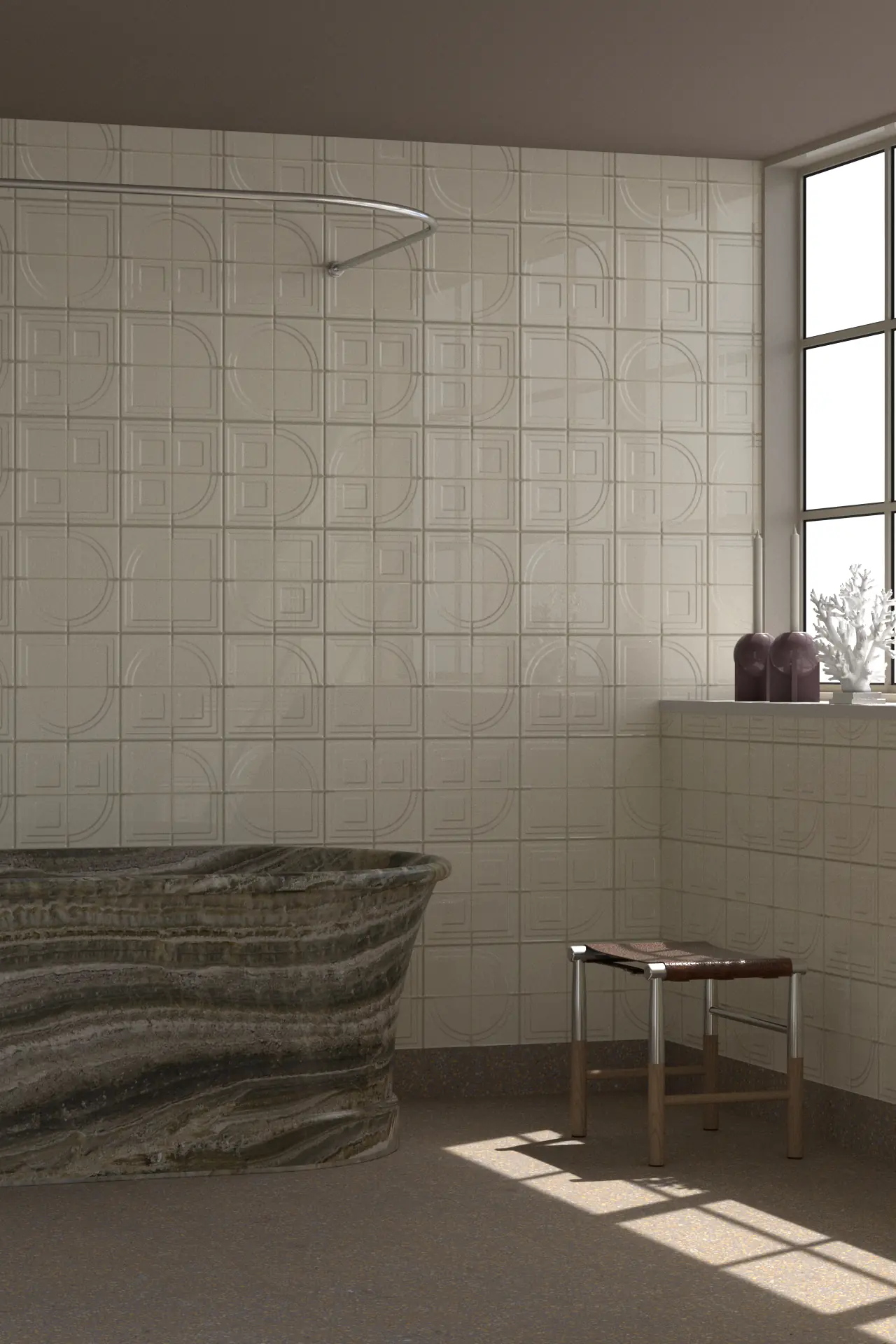
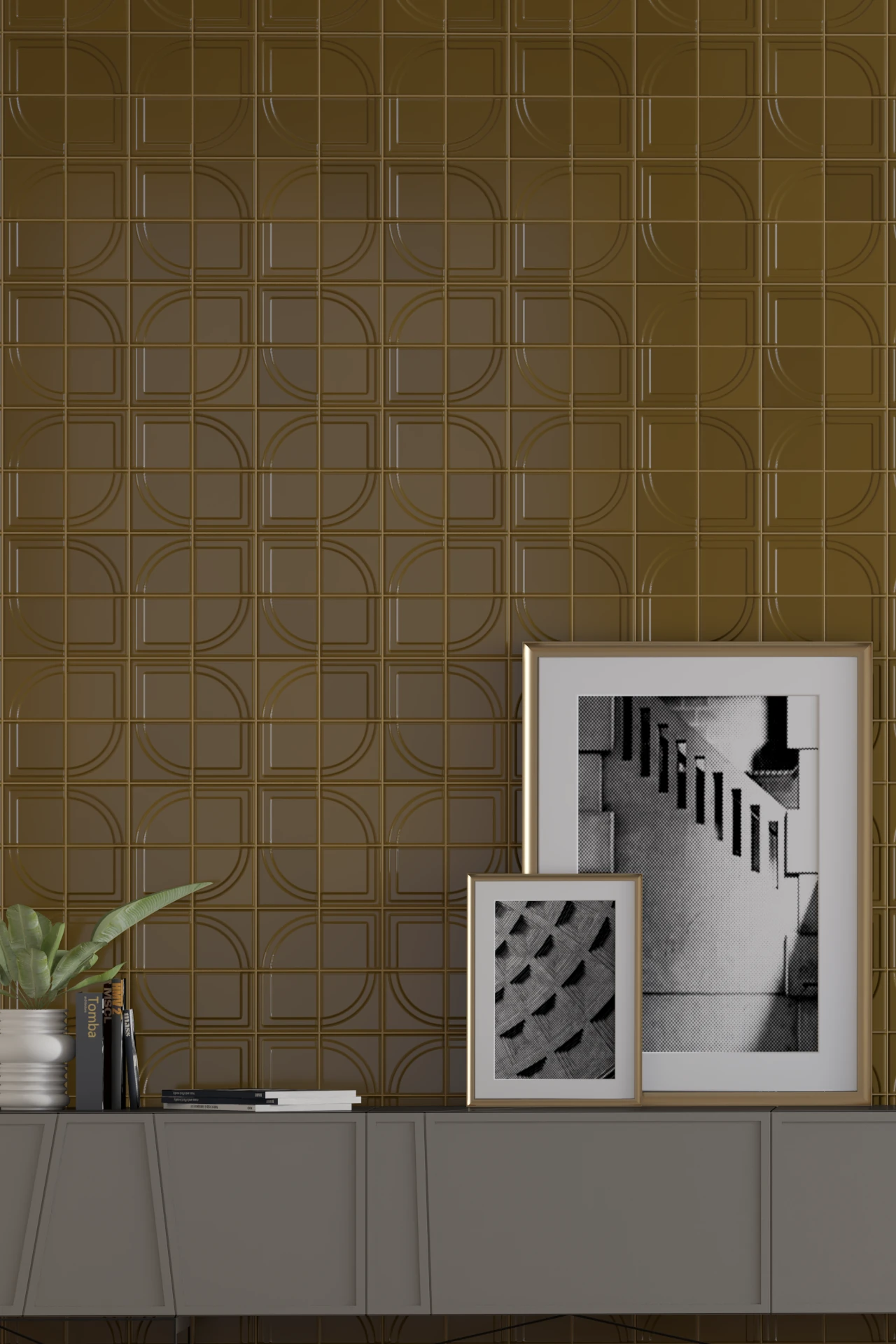

That shift brings Dimension closer to the great architectural murals of the same period. Their appeal was often less about depicting something than simply allowing form to occupy a wall. Abstract geometry could be large, decorative and unapologetically present, becoming part of the architecture rather than something hung upon it.
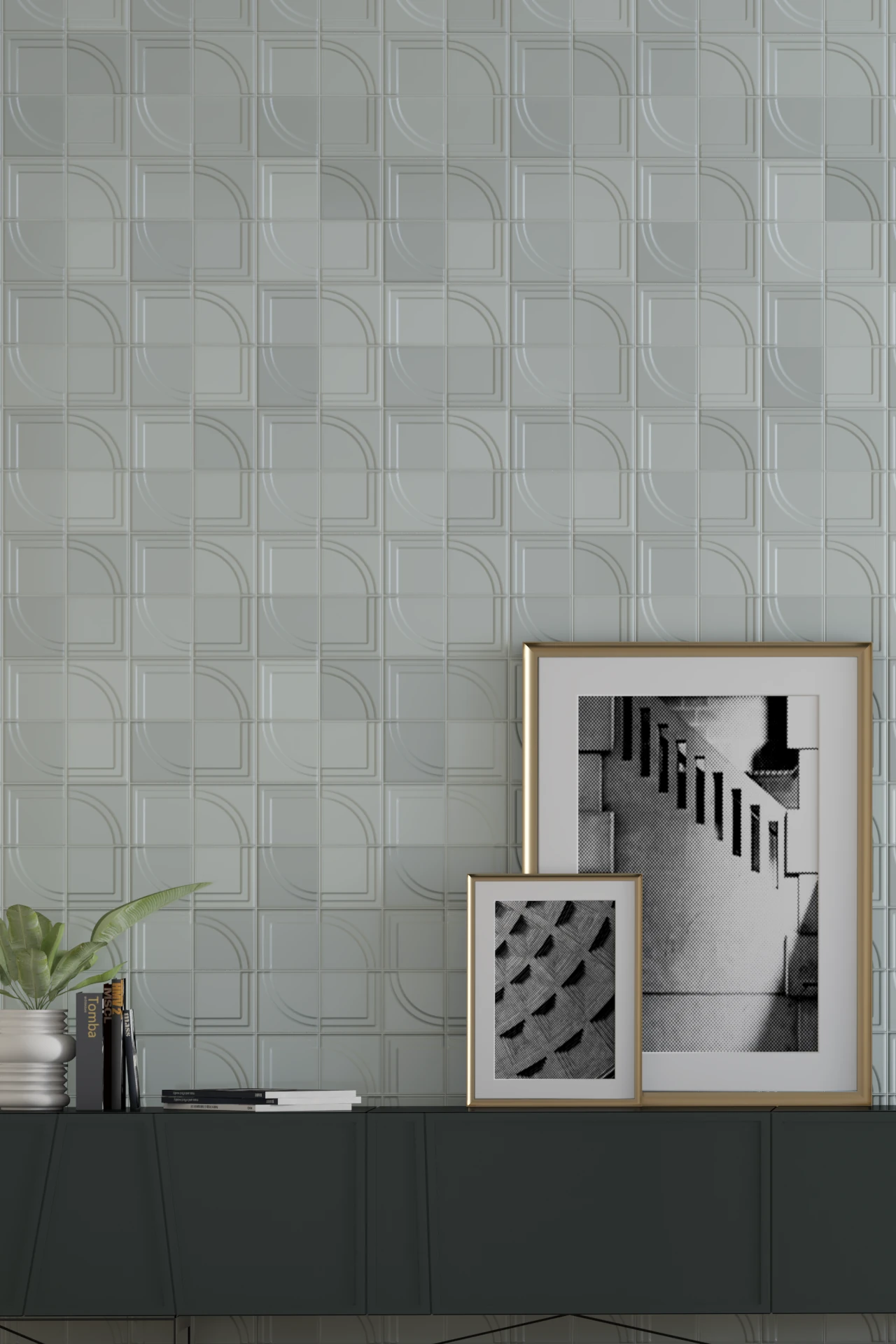
Dimension works with that same freedom. Its three motifs belong together, but they don’t insist on a particular order. They can settle into a recognisable rhythm or interrupt one another, allowing the composition to become looser as it develops. What matters is less the individual tile than the conversation that emerges between them.
I particularly like the way ceramic changes this kind of modernist geometry. The original idea may be precise, but clay introduces a slight softness and glaze brings its own variation. The forms remain strong without becoming hard, retaining the character of something made rather than manufactured into absolute uniformity.
Dimension sits somewhere between textile pattern and architectural relief. That ambiguity is really the point. It takes the freedom of a mid-century print, gives it the physical presence of a mural, and lets the geometry find its own way across the wall.


The Surfaces