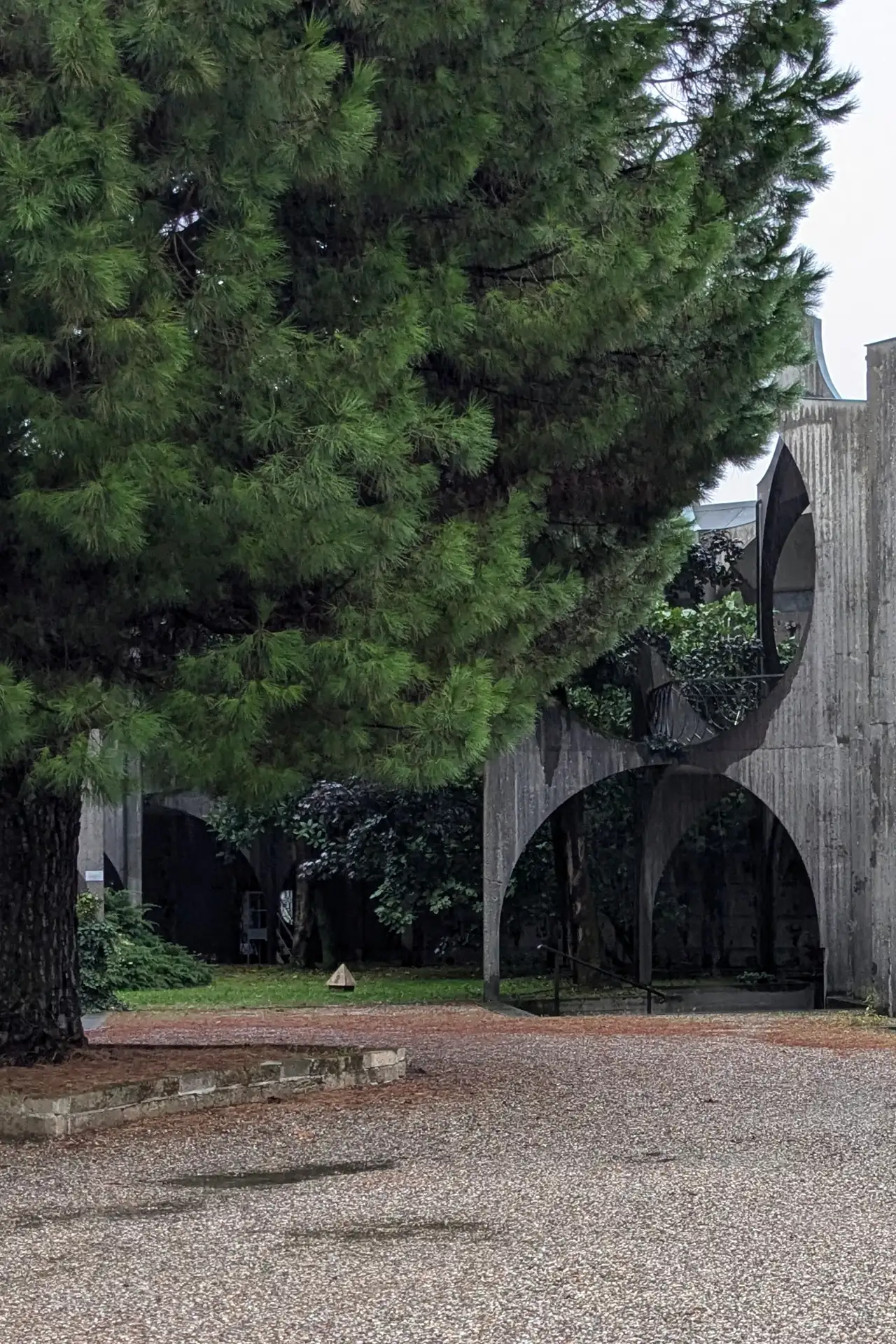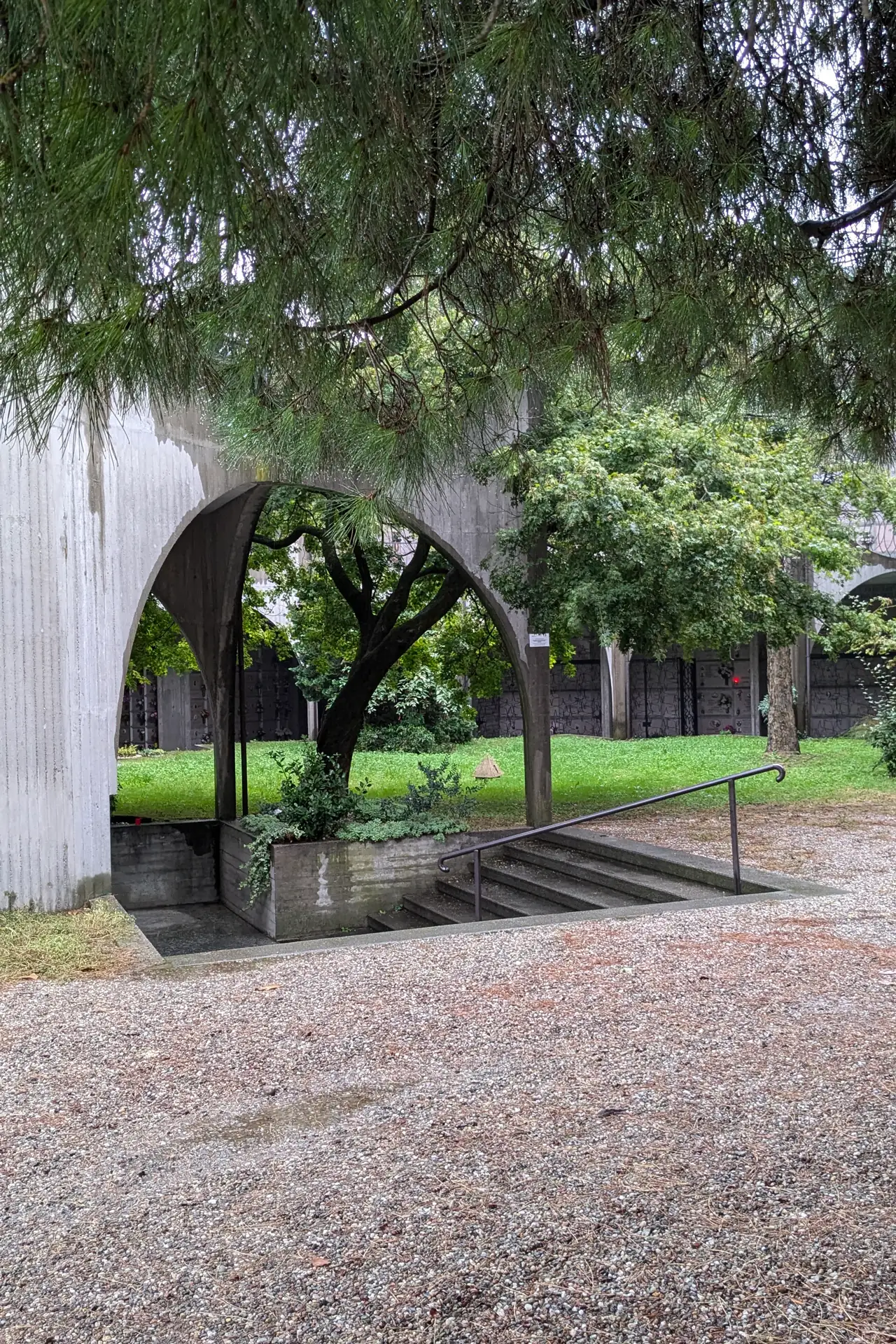
I came across the cemetery at Busto Arsizio while looking for places to visit during work trips. If I have a few hours free, I usually try to find something interesting nearby. The bold geometry of Luigi Ciapparella’s 1971 cemetery extension was enough to make the journey.
I knew very little about the building before visiting. I had seen photographs online and wanted to experience it for myself. Sometimes that is enough of a reason to go somewhere.
The arrival is quite strange. You approach along a quiet road and suddenly meet a long, monolithic concrete wall. There is very little context. It is simply there, and the exterior gives almost nothing away.
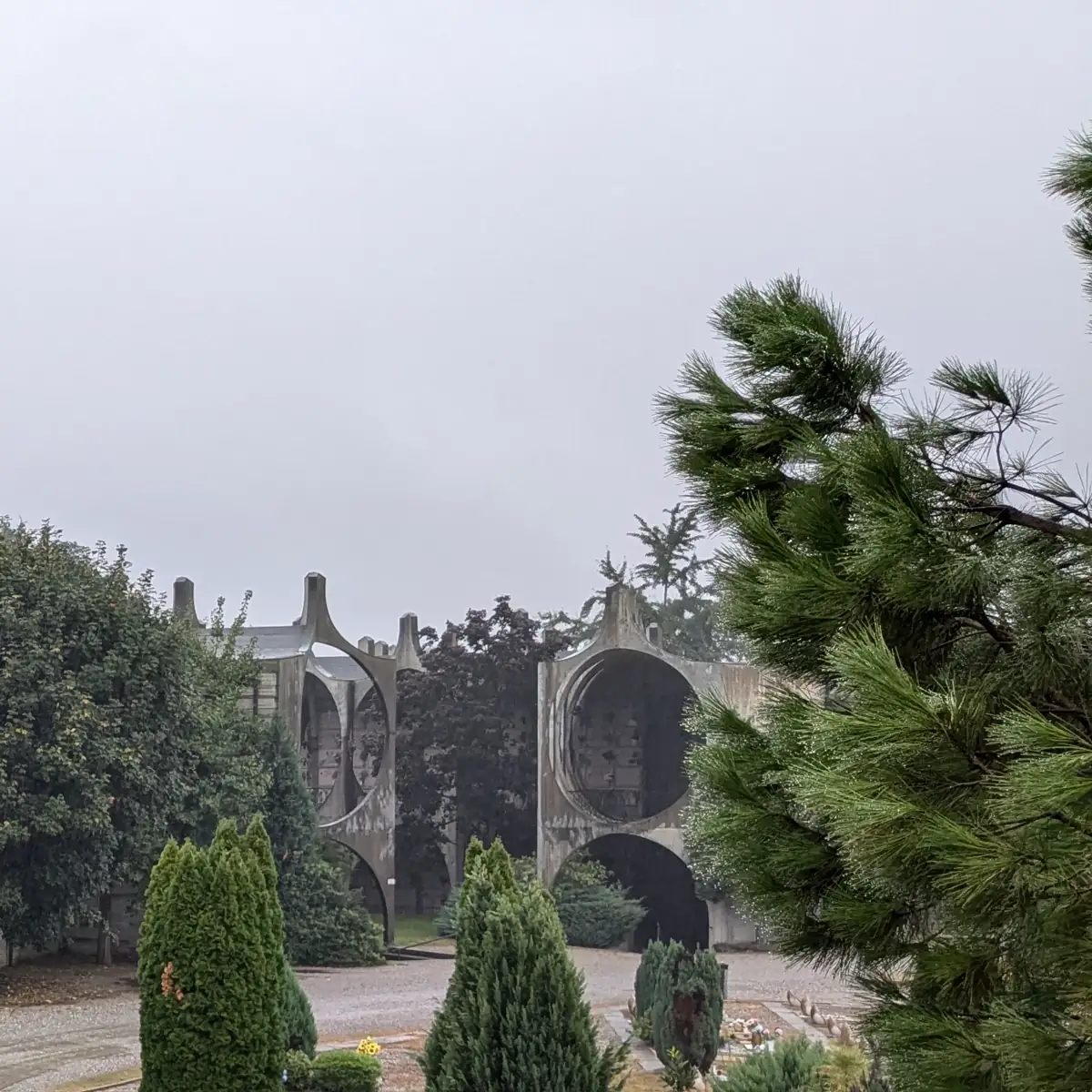
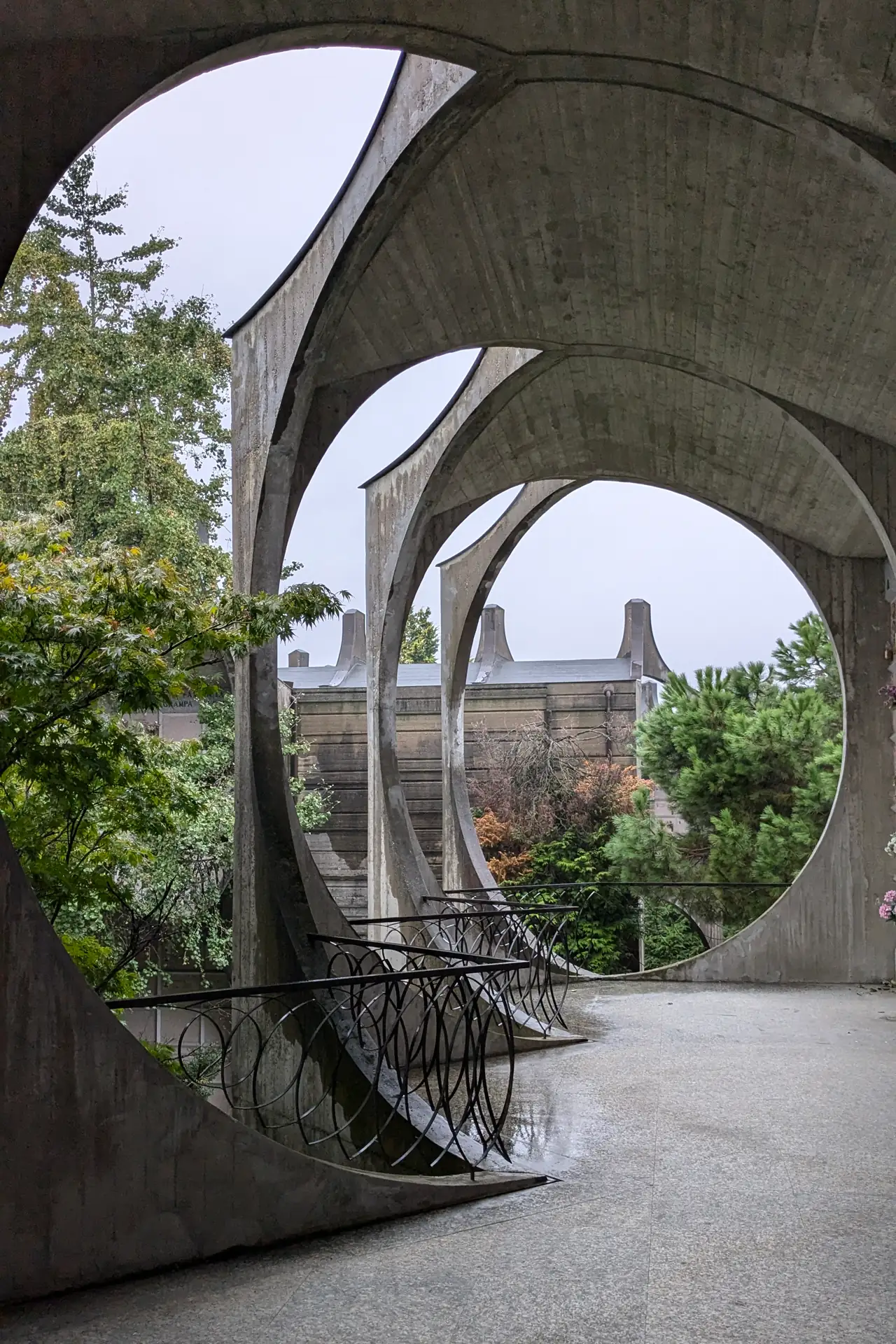
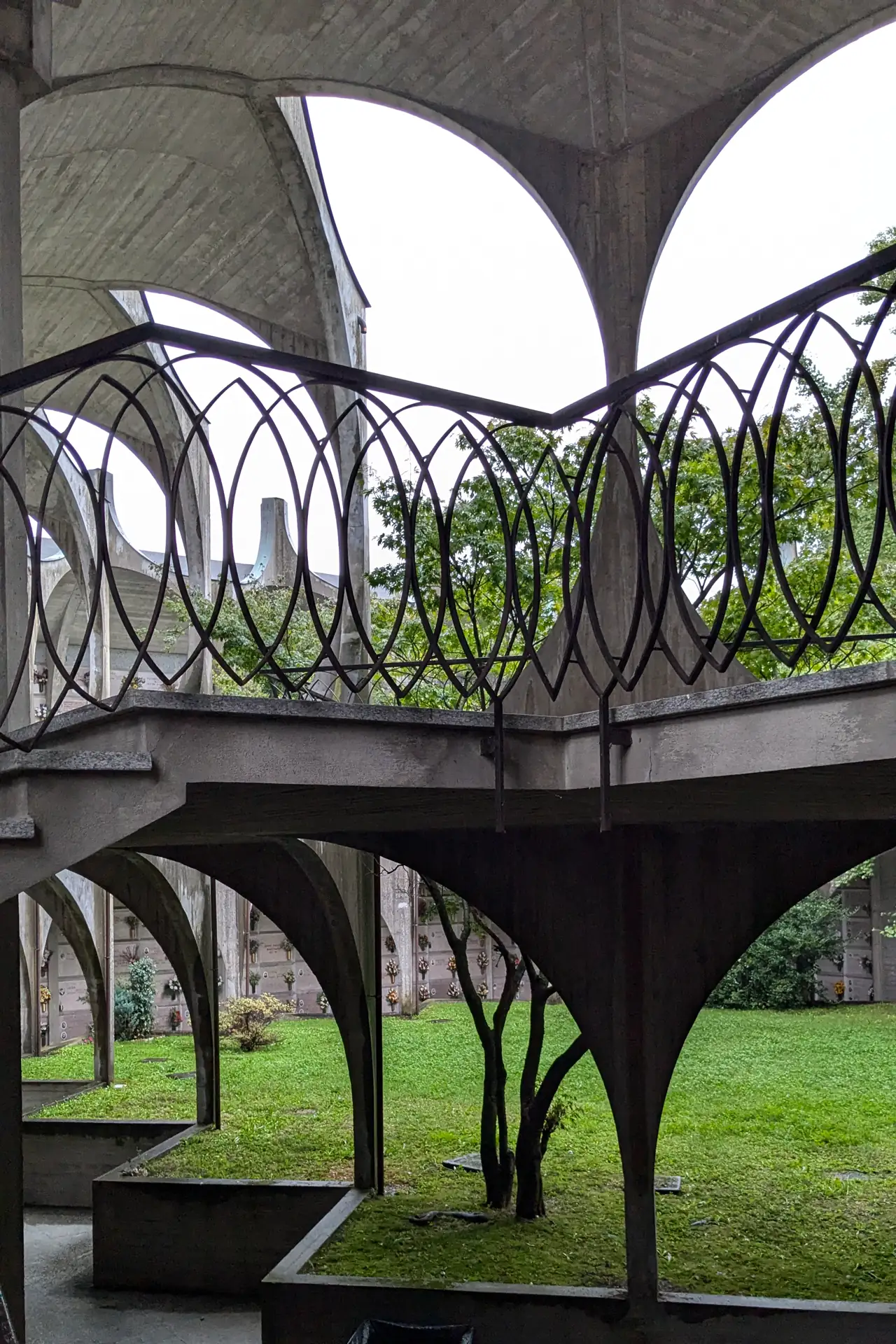
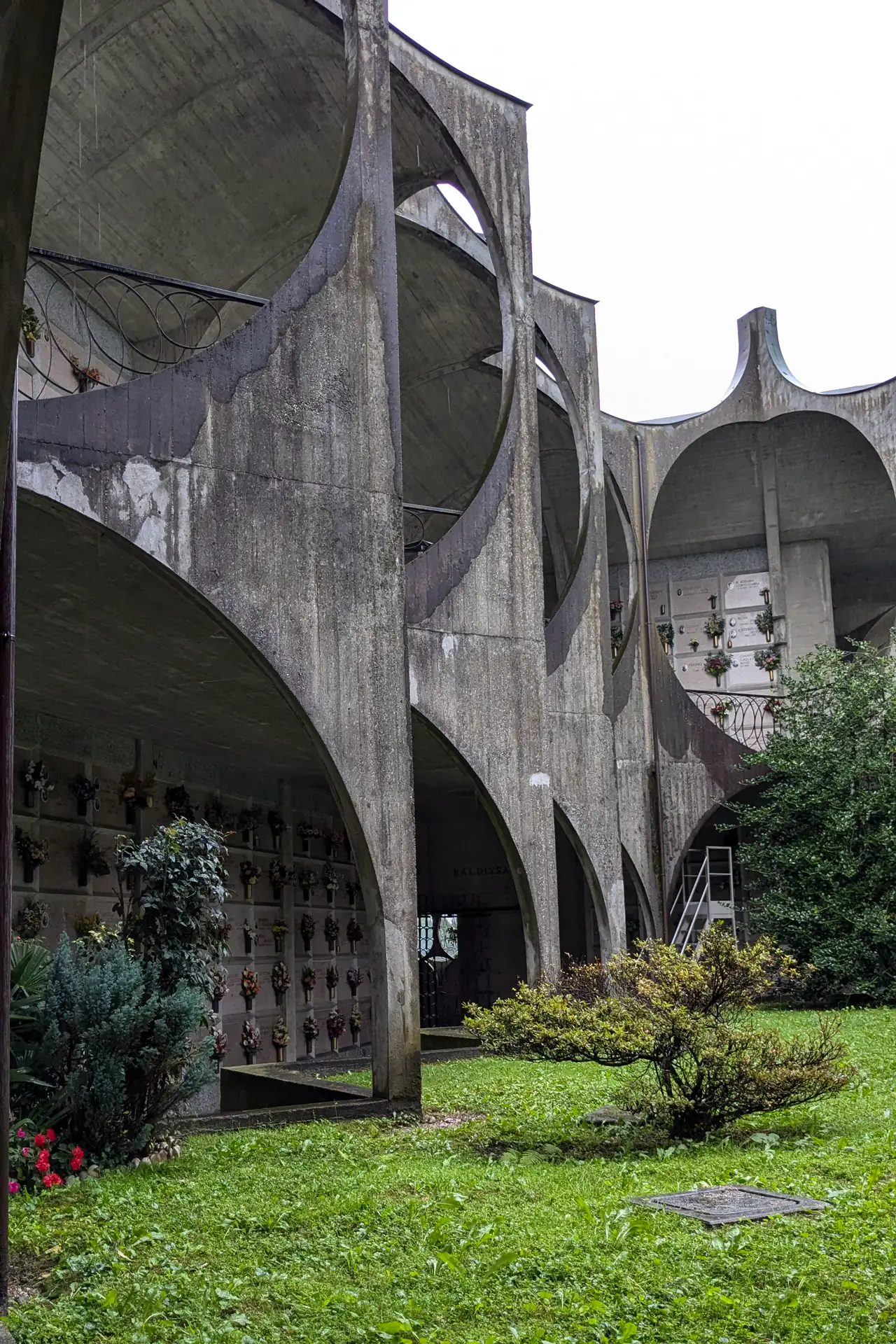
Walking inside changes everything. Huge circular openings punch through concrete walls. Curved structures repeat across different levels, while walkways cross above and around you. It immediately transported me back to the architecture that excited me as a child.
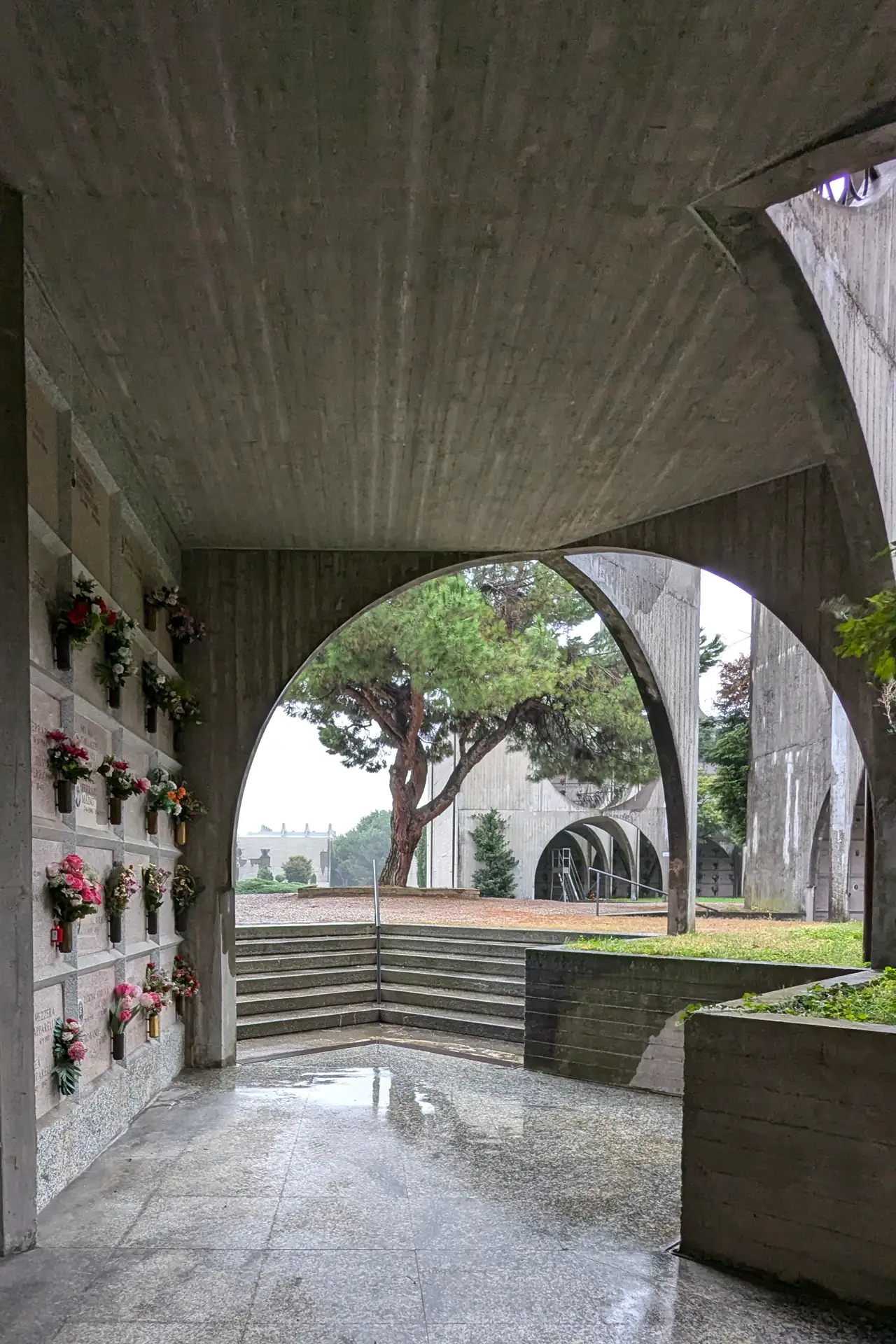
I have always liked buildings where you can understand something about their construction just by looking at them. Busto Arsizio has that quality everywhere. The concrete is heavy and direct, but Ciapparella does surprisingly playful things with it. Circles cut through walls, curves become supports, and repeated forms create views into other parts of the cemetery.
The ironwork caught my attention too. Railings follow the curves of the concrete using much finer lines. There is something almost mechanical about the combination. The two materials speak the same geometric language without trying to look alike.
It is also a building that rewards wandering around. A circular opening becomes a window onto a garden. Turn a corner and several arches suddenly line up. Move upstairs and the same forms appear from completely different angles. I spent much of the visit simply looking through things.
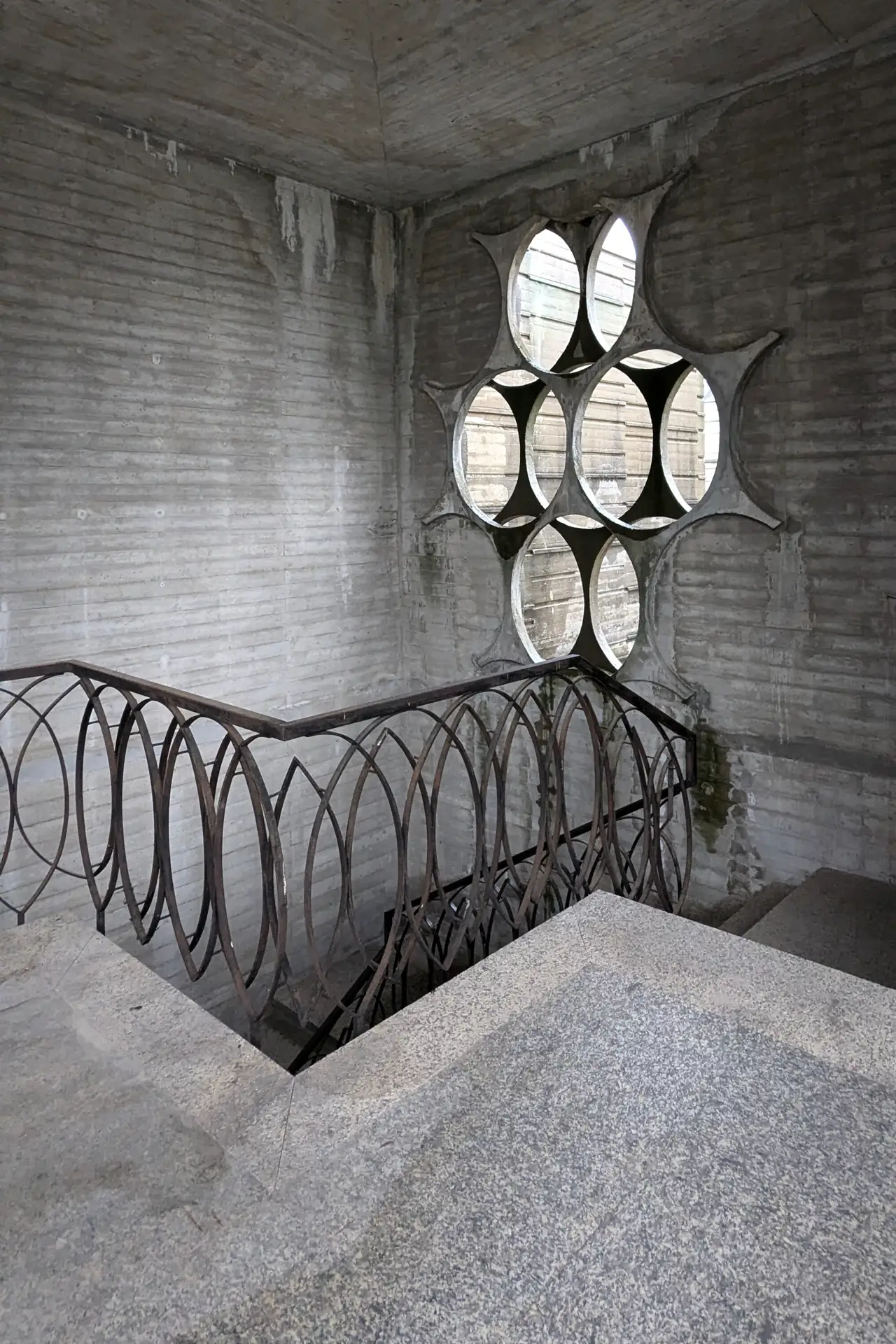
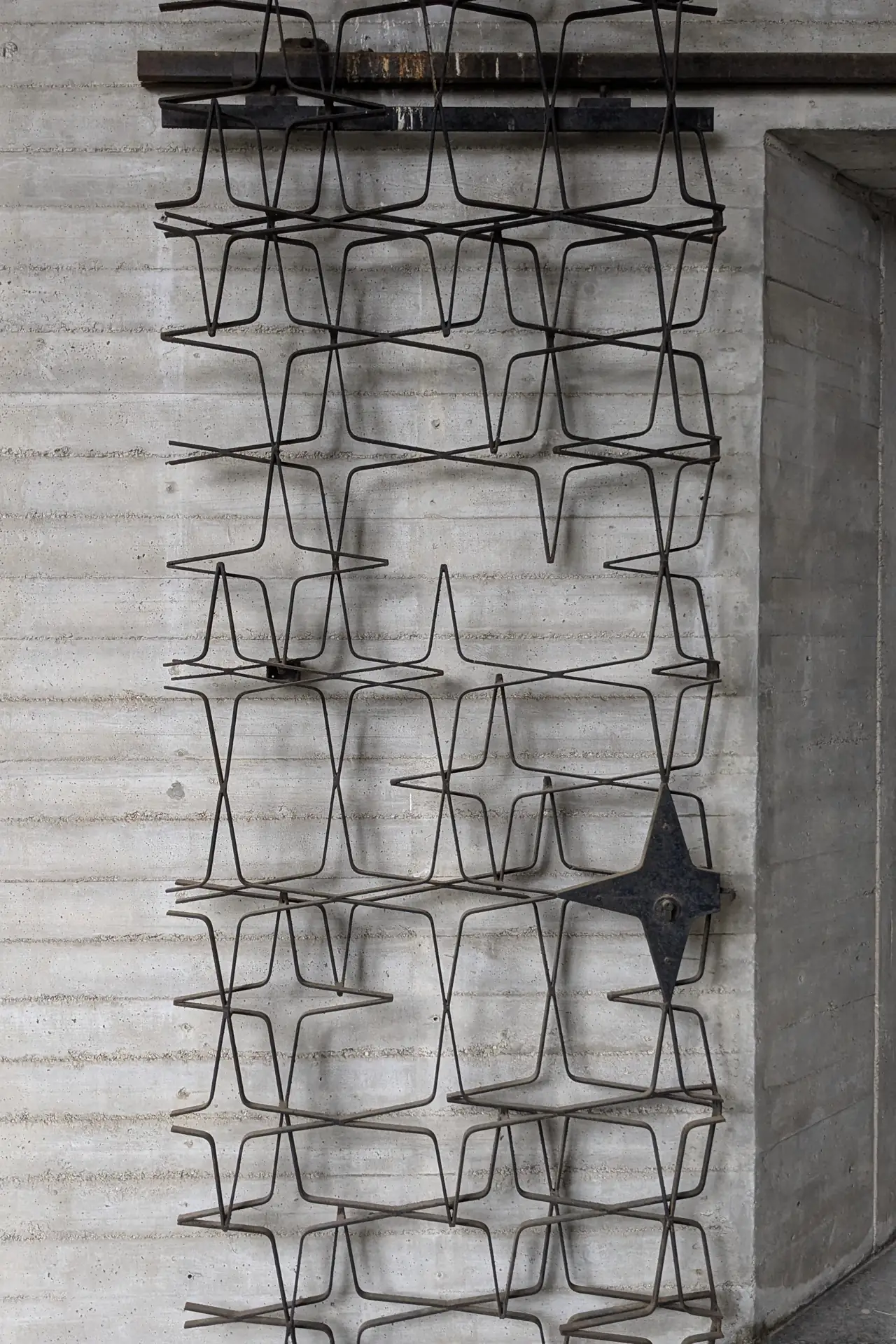
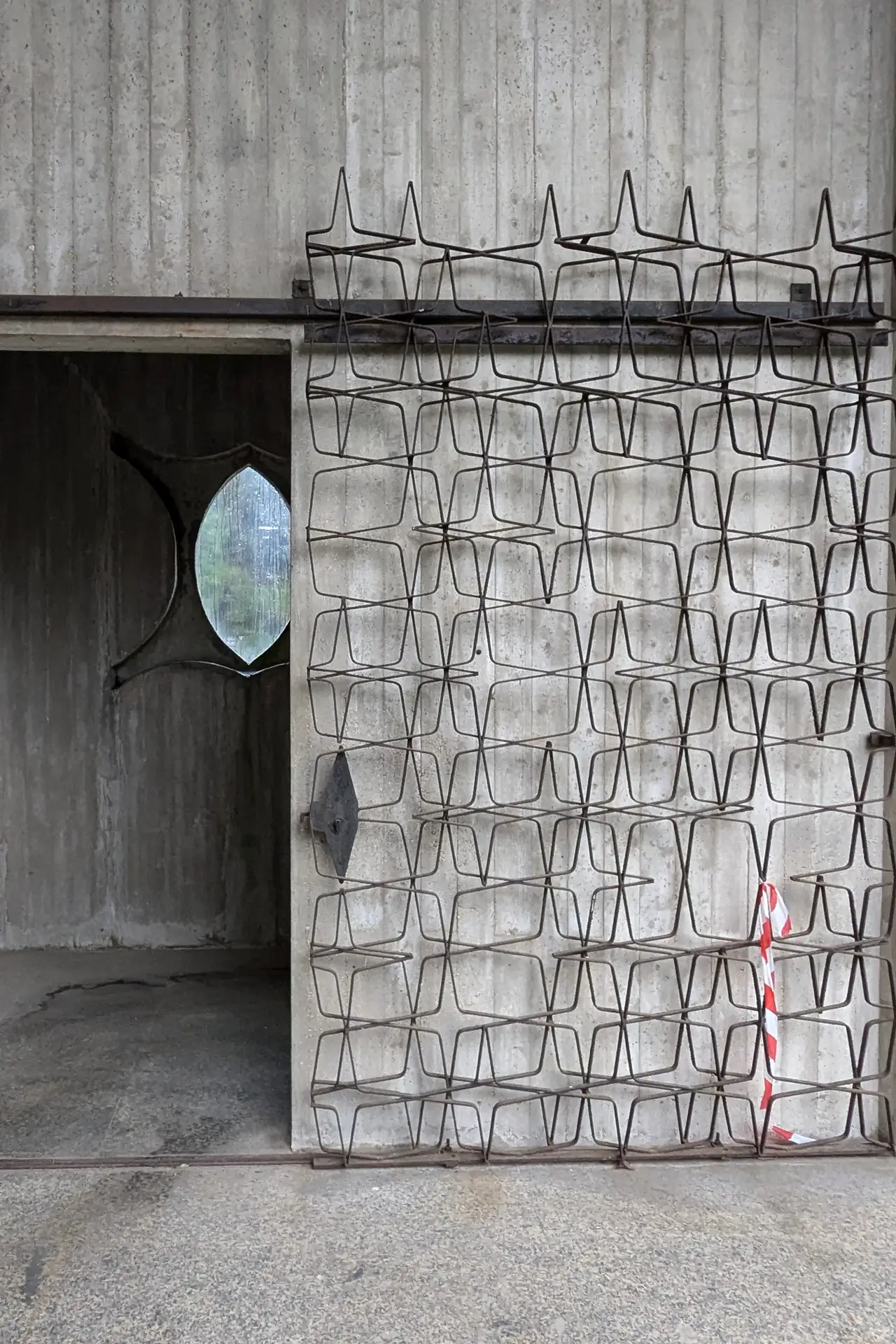
Perhaps what surprised me most was how decorative it all felt. From photographs, I had expected the concrete to dominate. In person, there is much more going on. Circles overlap, ironwork creates repeating patterns, and planting has grown into the spaces between everything.
More than fifty years of weather have also left their mark. The concrete has stained and changed colour, while trees and shrubs have softened parts of the structure. I liked that. The building doesn’t need to look pristine to retain its impact.
What stayed with me most was the confidence of the architecture. Ciapparella took a small group of strong forms and repeated them relentlessly. Yet walking around never became predictable. There was always another opening, junction or view to find.
This is exactly why I look for places like Busto Arsizio when I travel. I spend enough time away with work that I want to use some of it to feed my eyes. Sometimes that means a museum or exhibition. Sometimes it means driving down a quiet road north of Milan to look at a concrete cemetery from 1971.