
Neoclassic
The Colours



About Neoclassic Mosaic
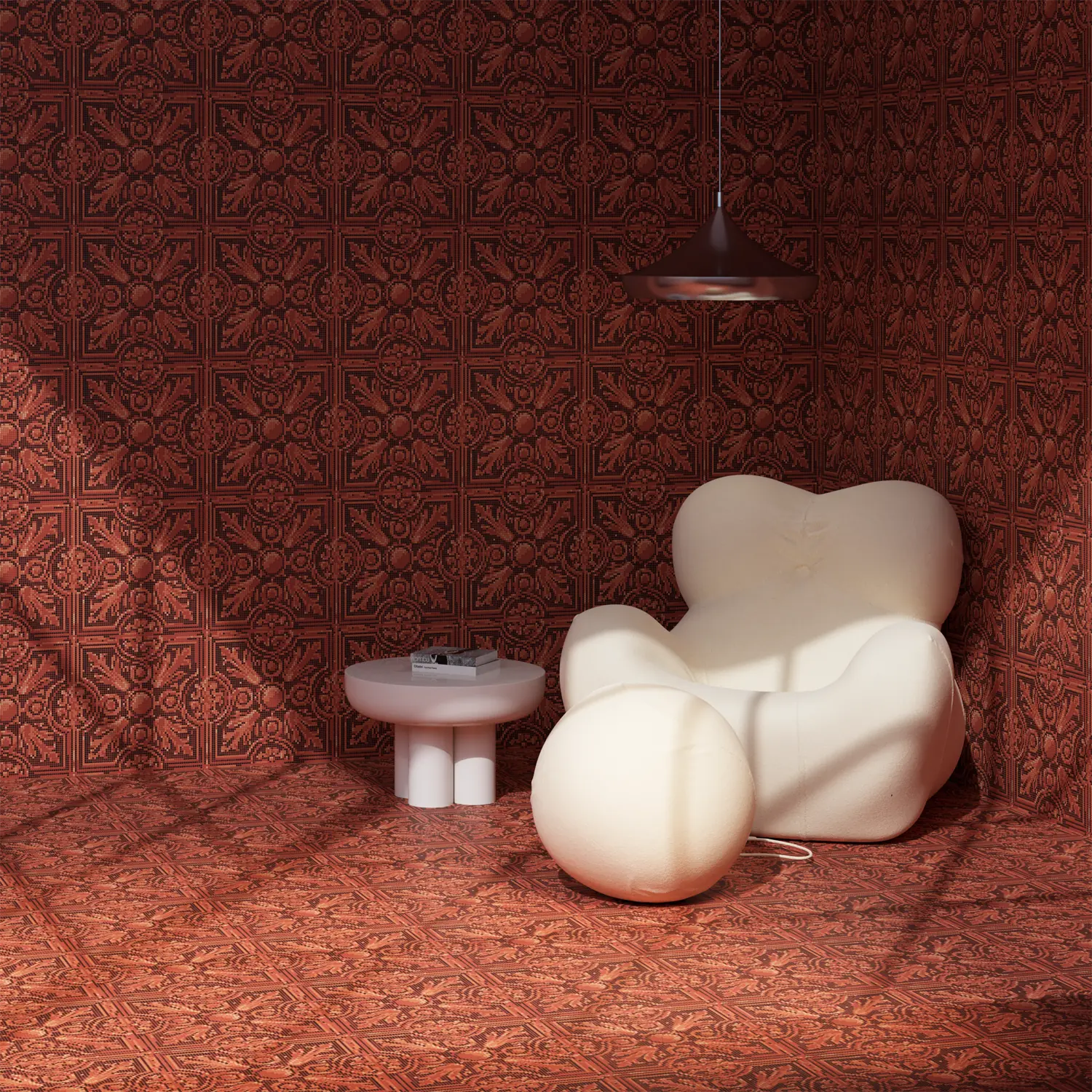
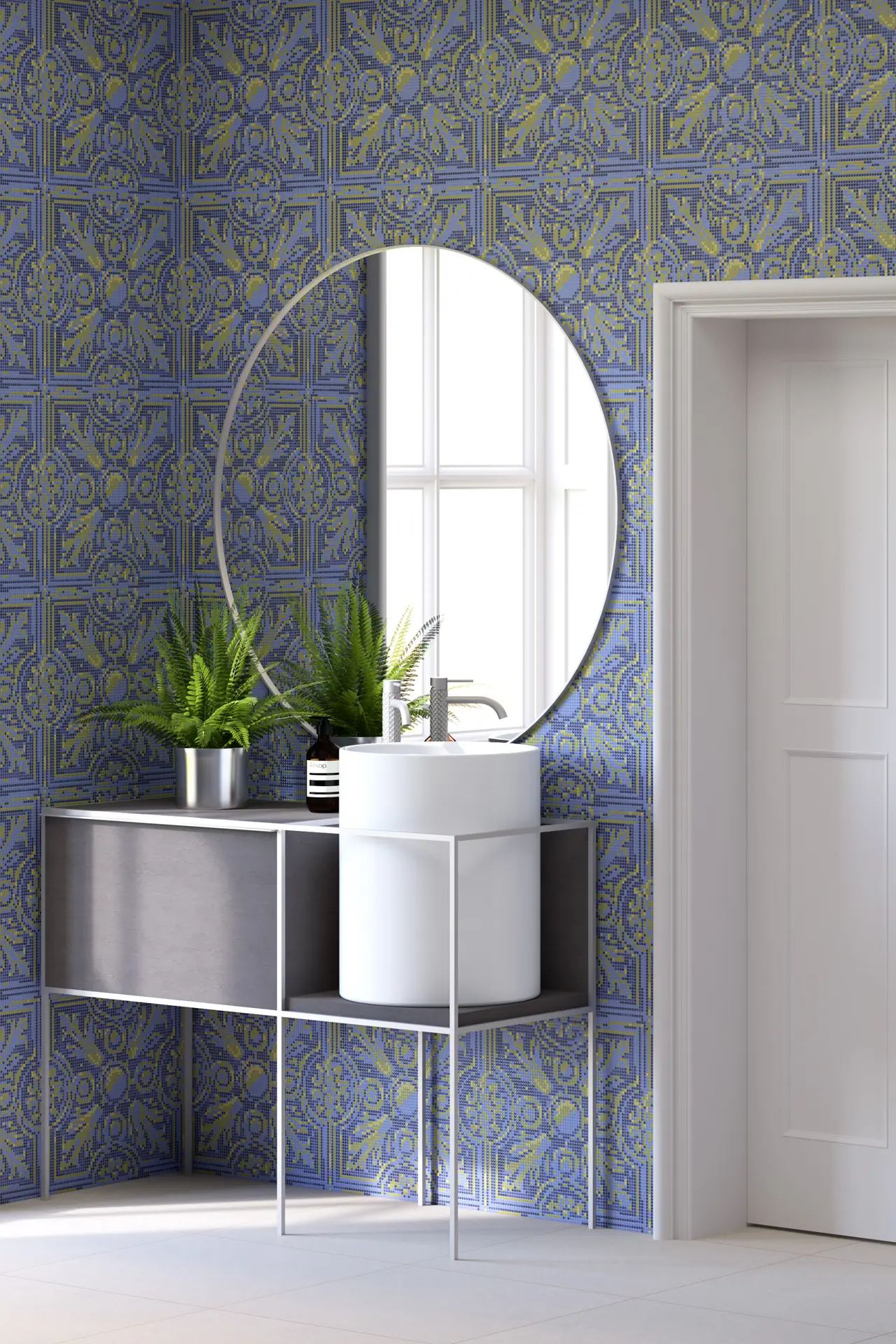
Neoclassic takes the acanthus leaf, one of decoration’s great survivors, and gives it room to expand. The motif has passed remarkably easily between ancient architecture, Renaissance ornament, Georgian plasterwork and countless decorative arts. Its longevity comes partly from its adaptability. It can be formal or exuberant, delicate or monumental, yet remains instantly familiar.
Here, the starting point is the classical decorative tile, but the expected scale has been disrupted. Enlarging the composition changes its relationship with the original reference. What might once have been read as a contained piece of ornament becomes a much broader decorative gesture.
That shift feels particularly relevant to the neoclassical tradition. Classical motifs have rarely remained fixed. Successive generations have borrowed them, adjusted their proportions and placed them in new contexts. Reinvention is part of their history.
There is also pleasure in allowing ornament to be this generous. The acanthus was never intended to disappear politely into the background. Its curling leaves have decorated capitals, friezes, furniture, textiles and plaster ceilings precisely because they bring life to otherwise ordered geometry.
Neoclassic continues that conversation at an unexpected scale. The language is old, but enlargement gives it a different presence. Familiar ornament stops behaving like a historical detail and becomes pattern once again.
Availability and Sales enquiries to Tessere Mosaico
Burano 4.8mm Mosaic