I had wanted to visit Rocchetta Mattei for nearly twenty years. Somehow, it never quite happened. Work regularly took me within reasonable distance of the castle. However, opening days, appointments and travel plans never lined up. It became one of those places I kept meaning to visit. Eventually, a cancelled plan worked in my favour. Last year, I couldn’t get a suitable flight from Gatwick to Bologna. Instead, I flew to Florence and drove north. Suddenly, Rocchetta Mattei was on the way.
The castle sits in the hills of the northern Apennines, between Florence and Bologna. Cesare Mattei began building it during the nineteenth century. He used the ruins of the medieval Rocca di Savignano as his starting point. Mattei and his heirs continued changing the building, creating the extraordinary collection of spaces that survives today.
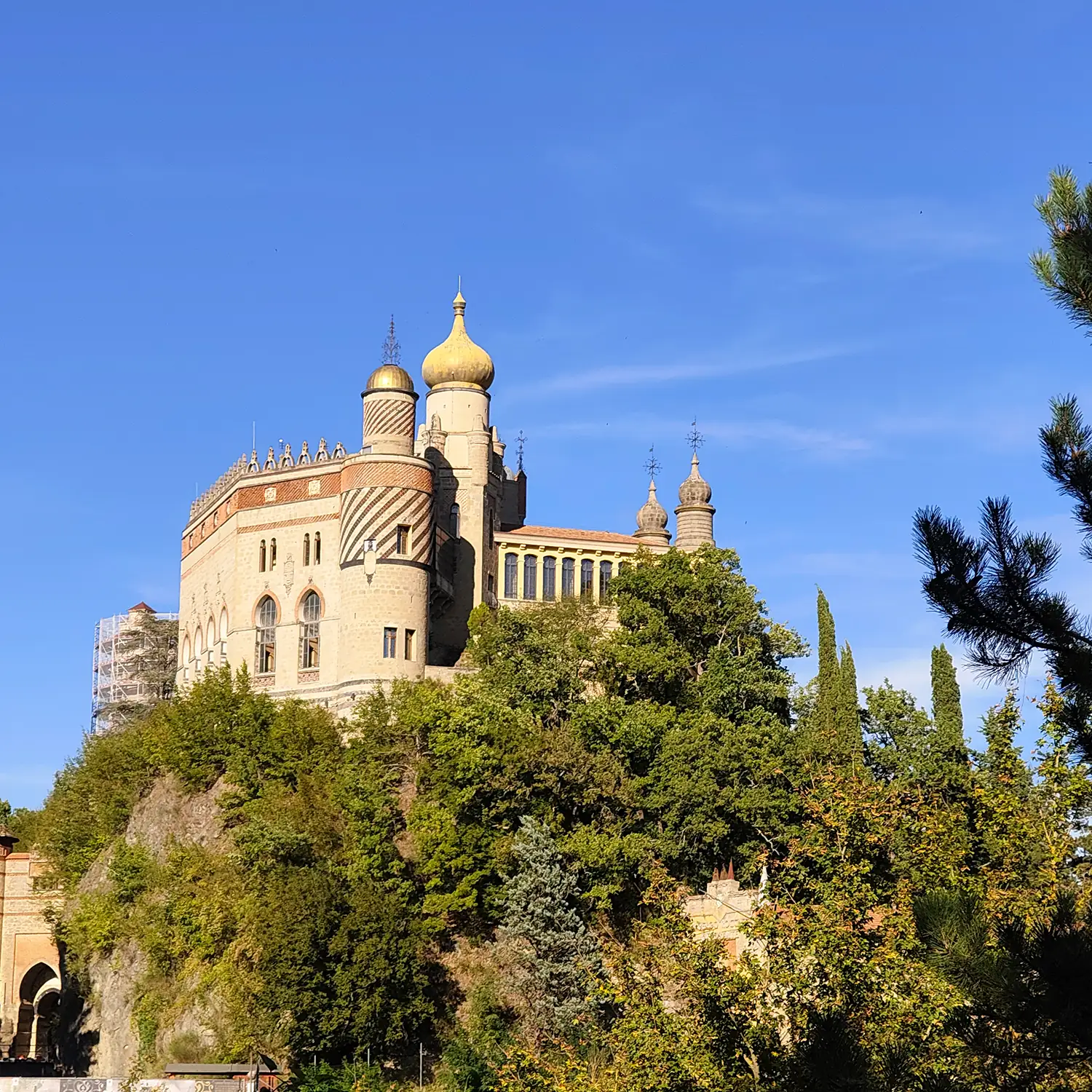
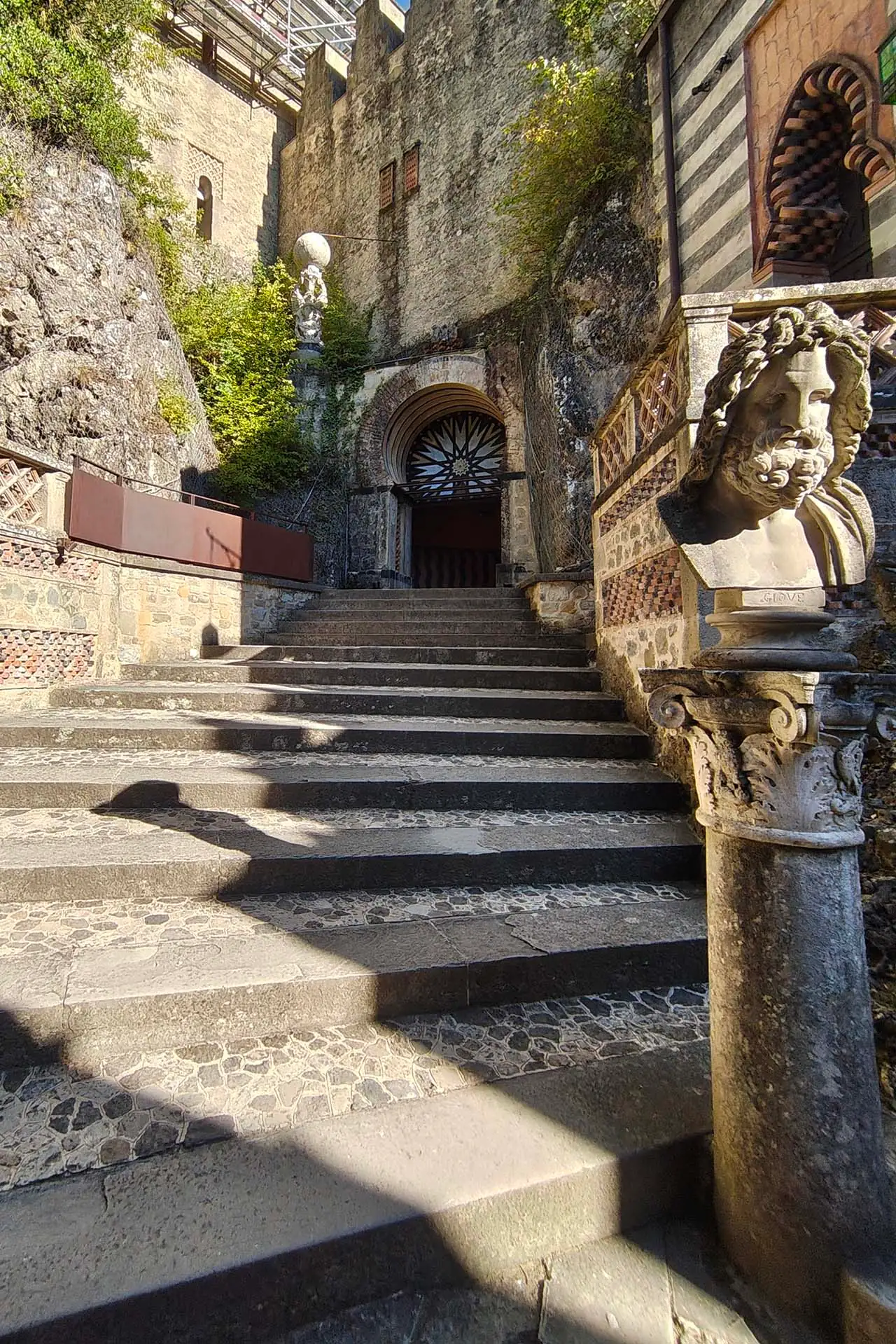
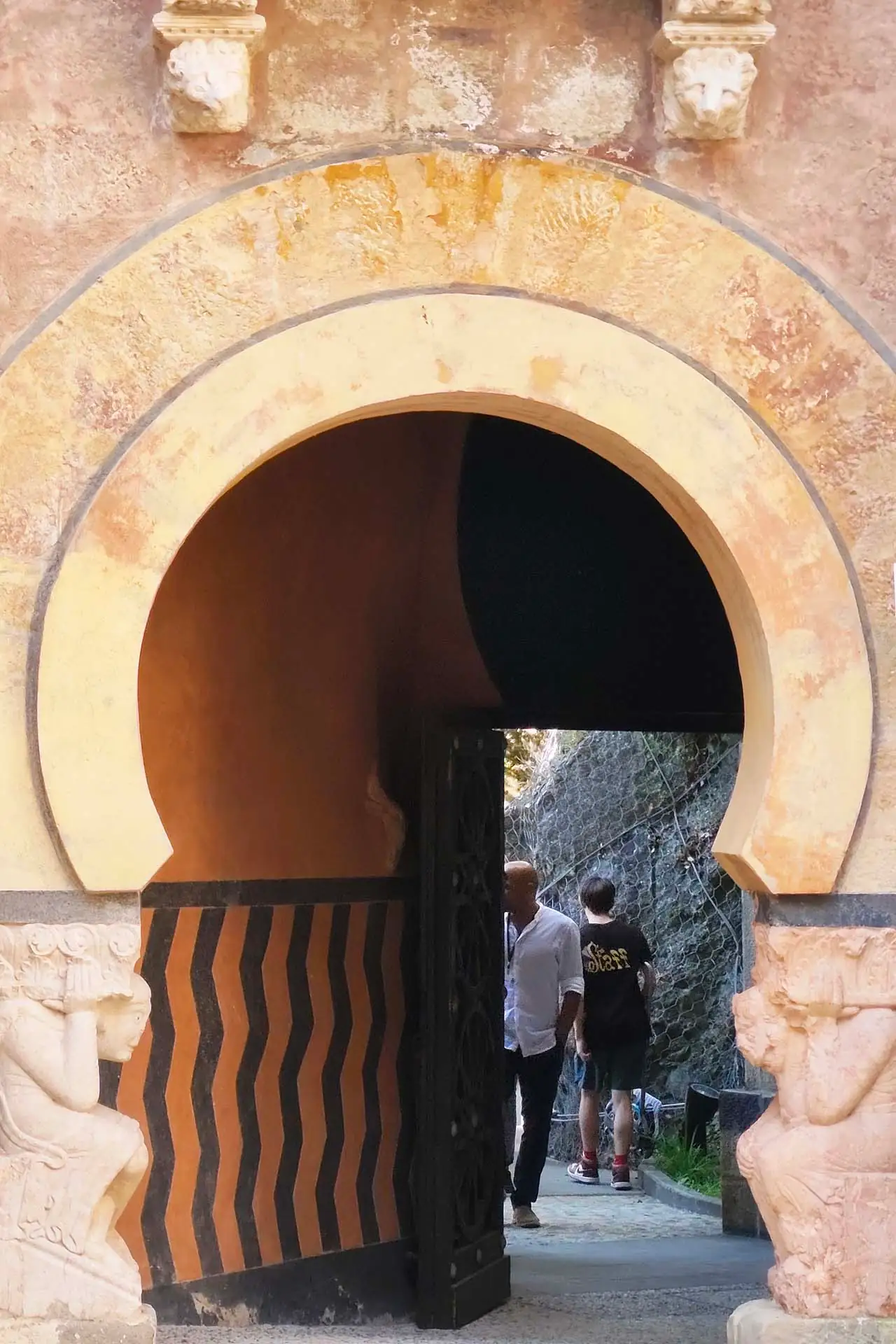
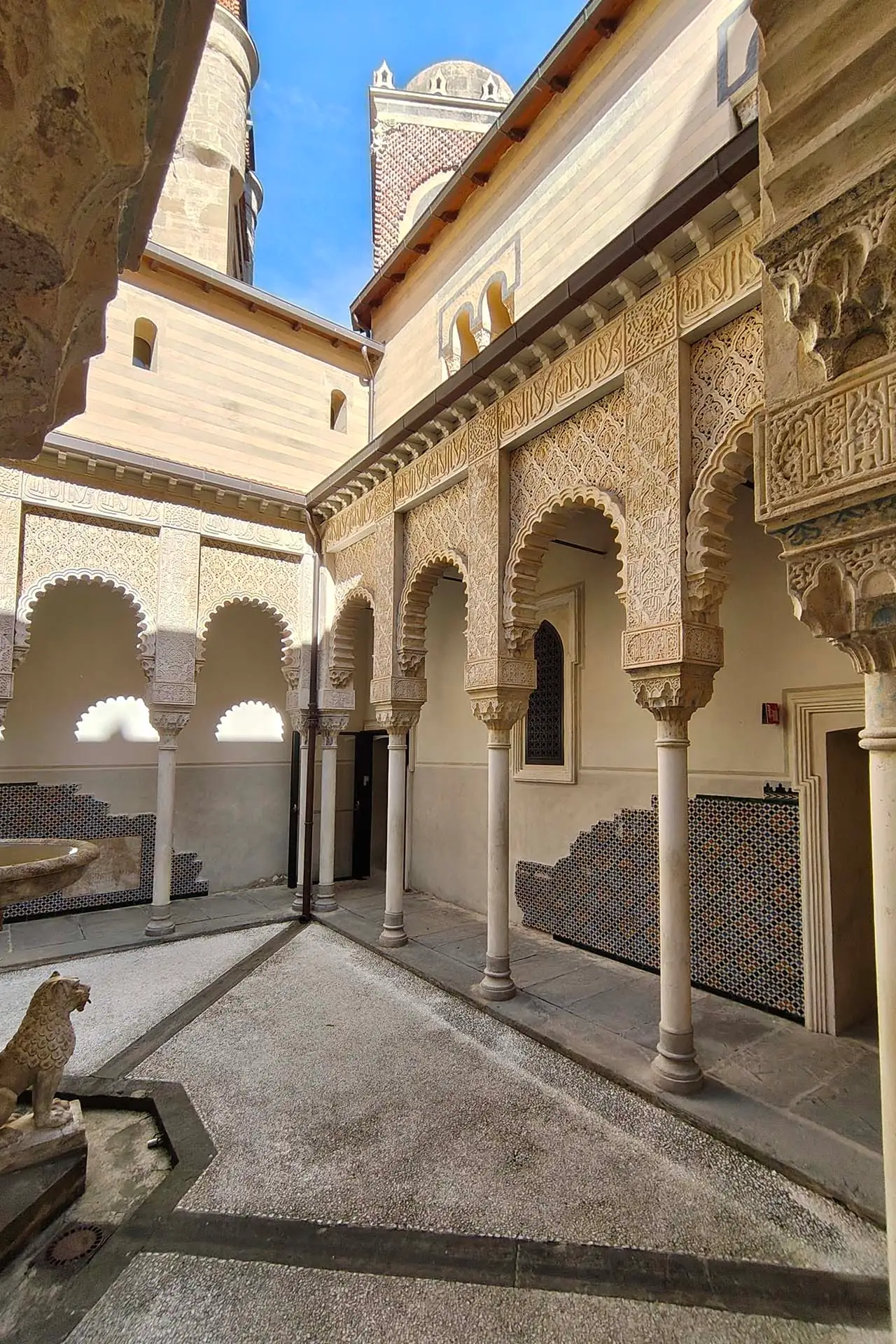
Rocchetta Mattei is a complete melting pot of ideas. Towers, courtyards, staircases and private rooms seem to borrow freely from different periods and cultures. Moorish decoration sits alongside medieval references, Renaissance ideas and touches of Art Nouveau. Normally, that combination might sound like a mess. Somehow, that is part of its charm.
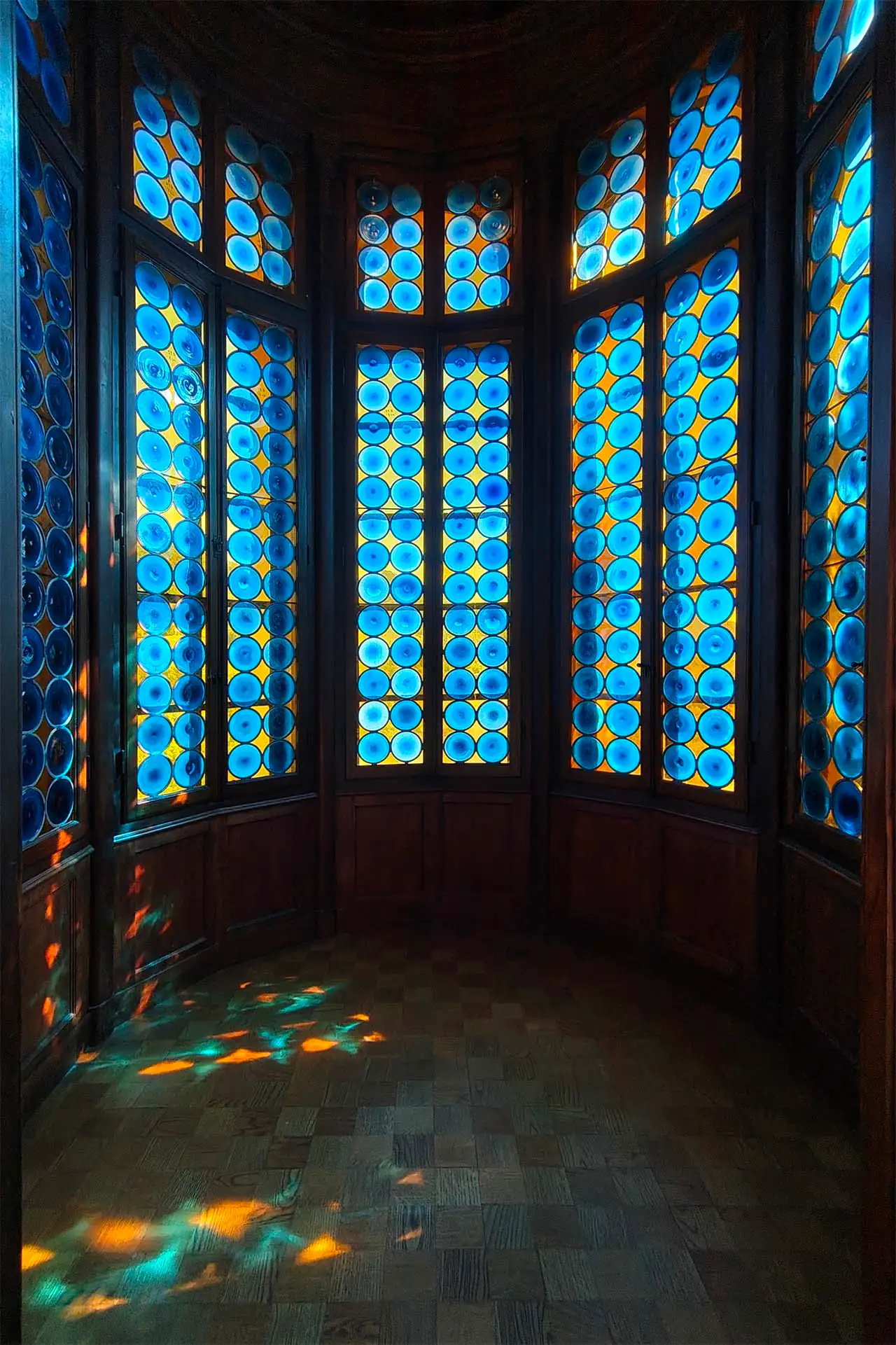
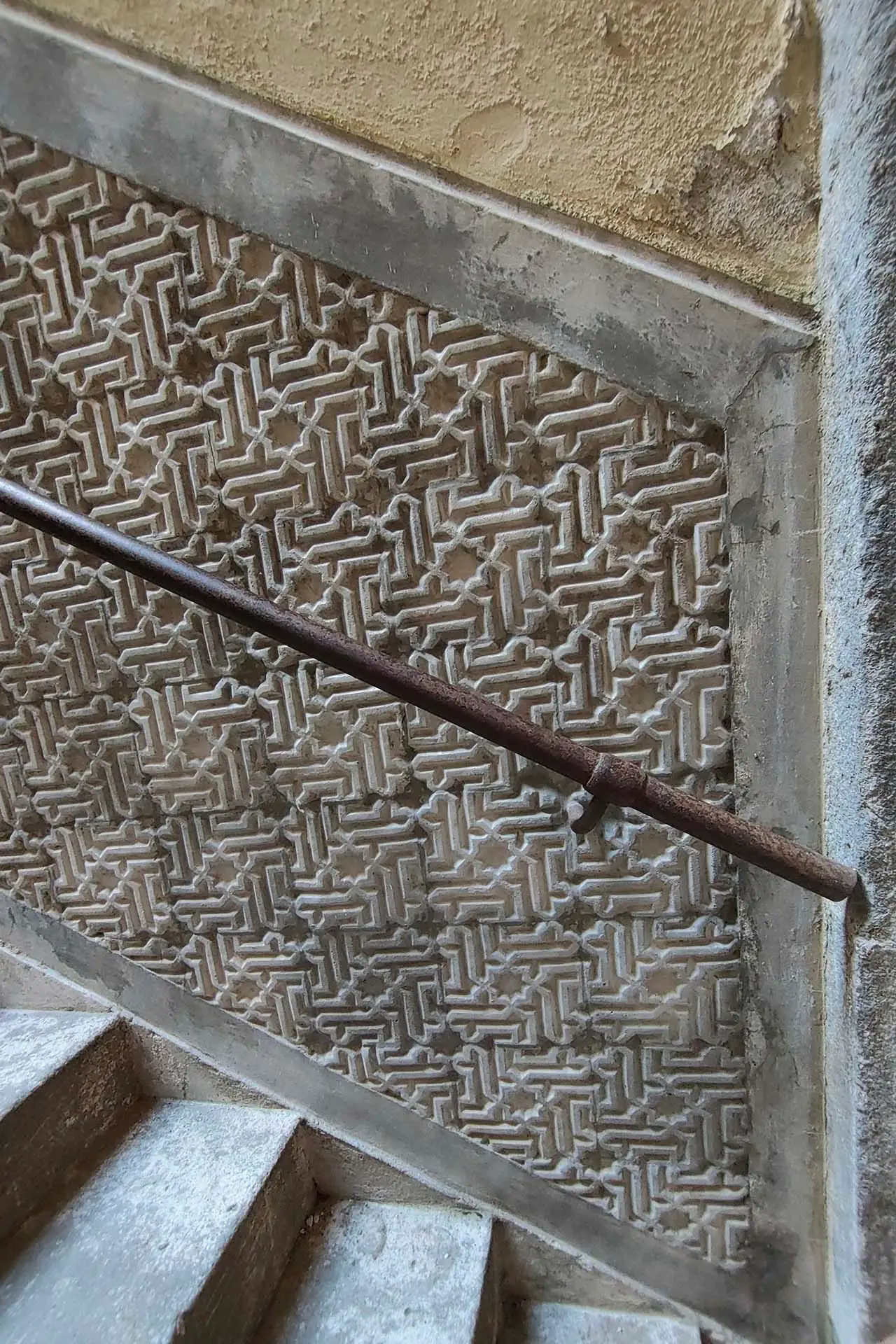
Every room feels like another discovery. You move from intricate Moorish decoration into spaces dominated by bold black and white geometry. Elsewhere, striped walls, patterned floors and painted surfaces compete for attention. The changes can feel quite abrupt, but that unpredictability makes exploring the castle so enjoyable.
The stripes particularly stayed with me. They appear everywhere, changing scale and direction as you move through the building. Sometimes they frame arches and openings. Elsewhere, they take over entire rooms. Some monochrome spaces feel almost Escher-like, with stairs, arches and alternating bands confusing your sense of perspective.
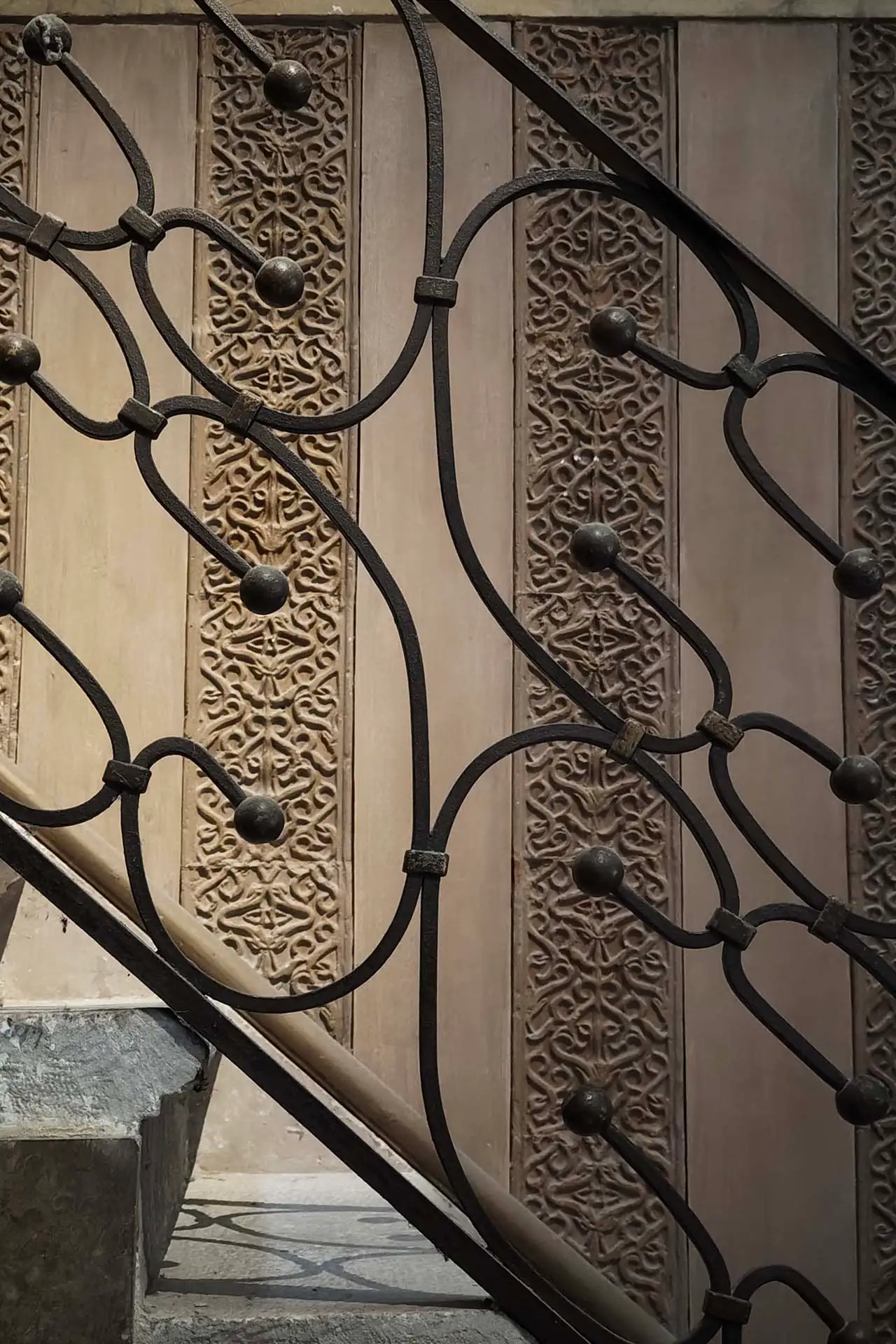
Decoration covers almost everything. Ceilings, columns, walls, arches, windows and floors all get involved. Yet it doesn’t feel like someone carefully assembled a collection of historical styles. The castle feels much more personal and eccentric. Mattei seems to have simply followed ideas that interested him.
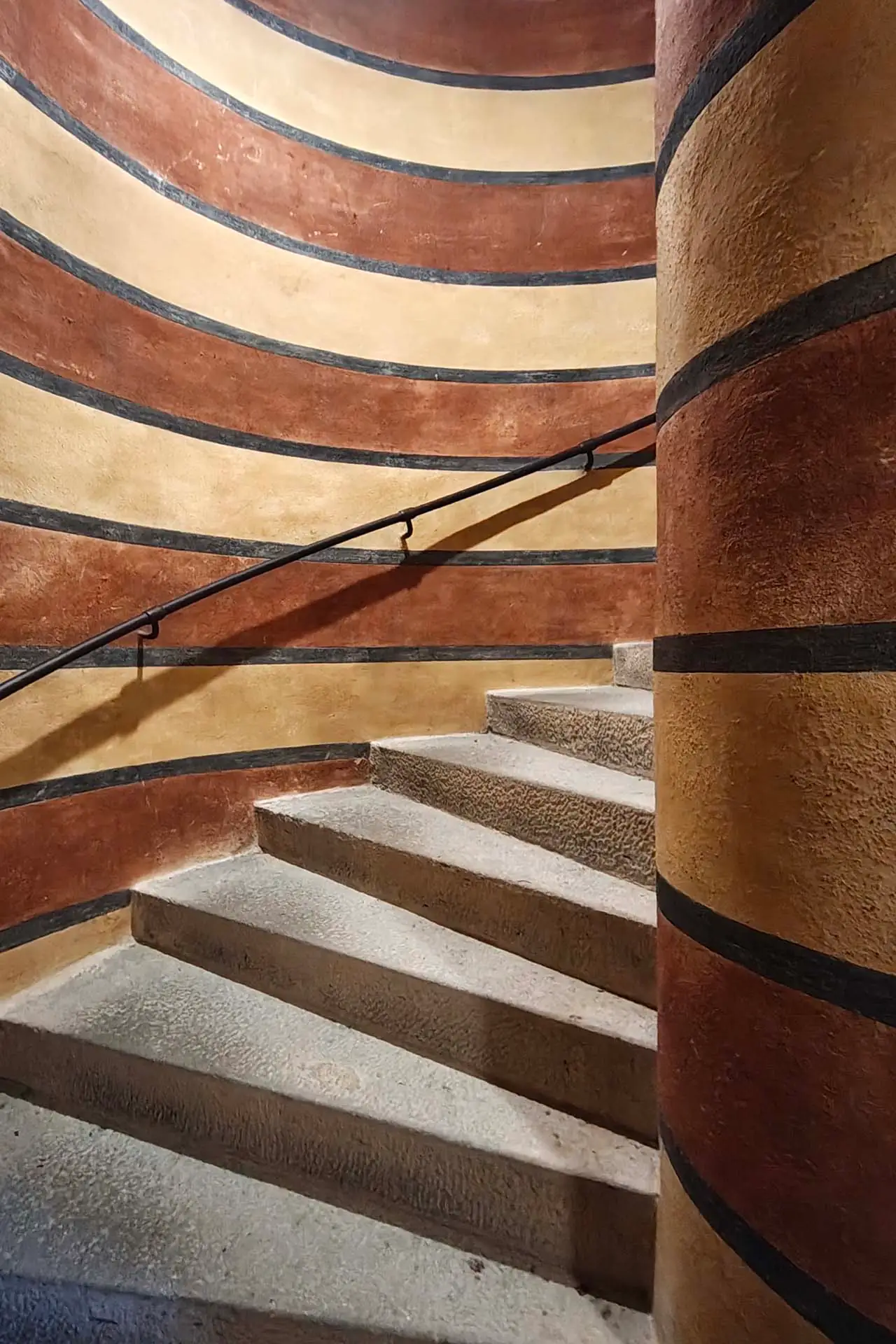
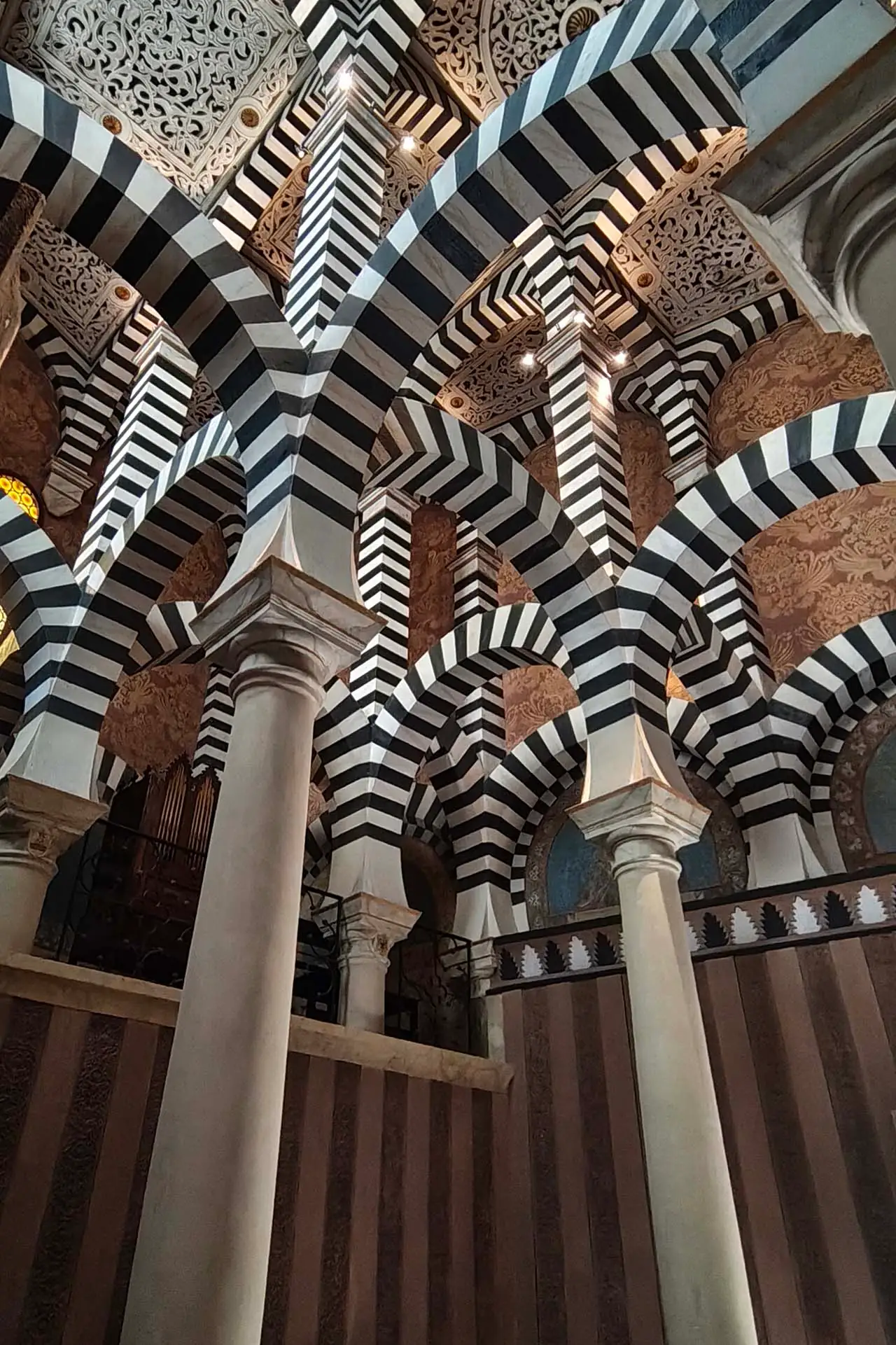
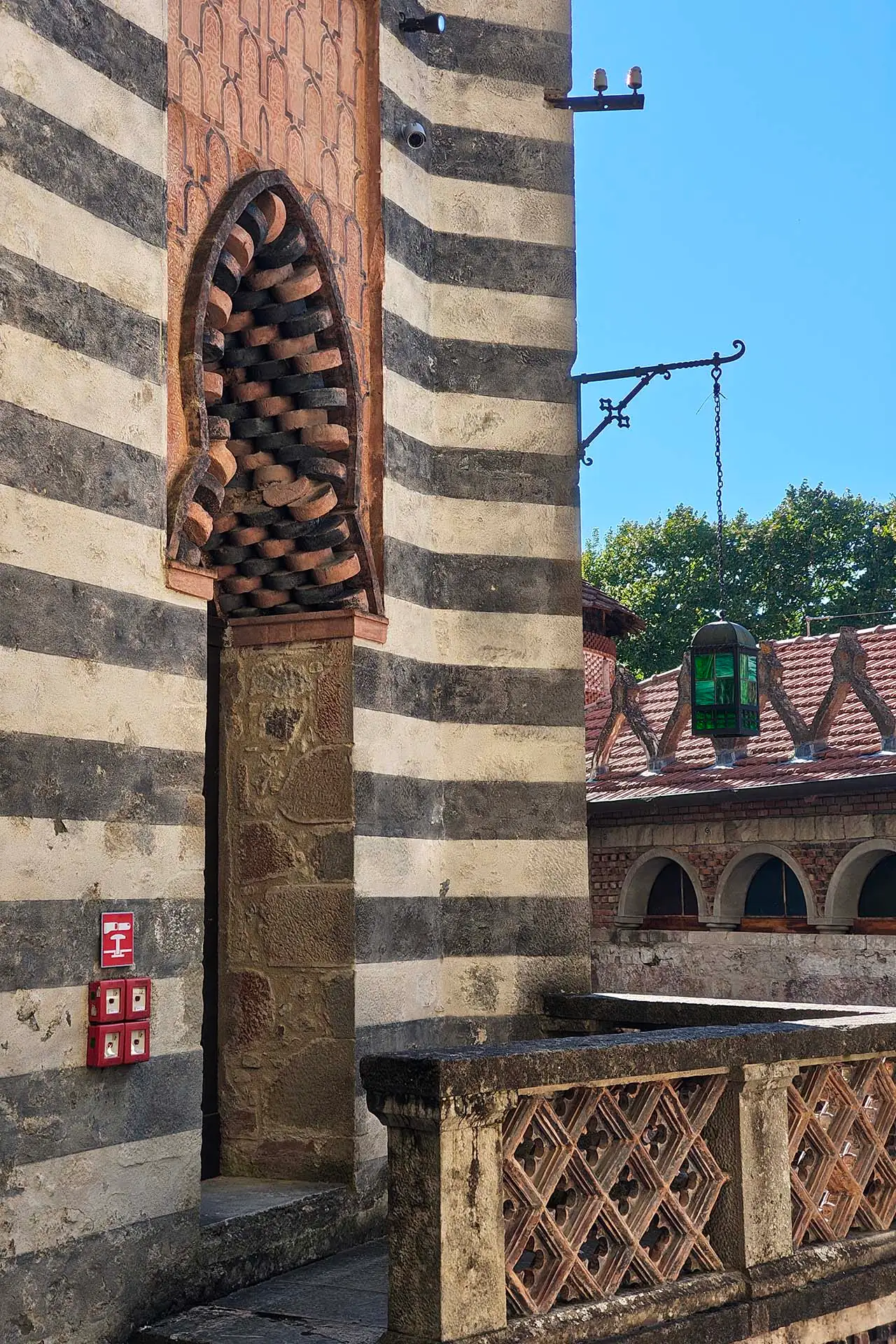
That freedom is probably what I enjoyed most. One influence doesn’t need to agree neatly with the next. Moorish intricacy can sit beside bold monochrome geometry without anyone trying to make sense of the combination.
For someone interested in pattern, colour and decoration, there is almost too much to look at. I photographed small sections of walls as often as entire rooms. A border, stripe or unexpected colour combination could hold my attention as easily as the architecture itself.
After nearly twenty years of trying to visit, I probably arrived with unreasonable expectations. Rocchetta Mattei exceeded them. It is eccentric, excessive and occasionally bewildering, but above all, it is enormous fun to explore. It really is a feast for the eyes.