

Stitch
Porcelain Tiles
Stitch Porcelain Tiles
Stitch began with textile pattern. Not one particular fabric or period, but the enormous vocabulary of shapes that has developed through weaving, stitching, printing and piecing cloth together. Look closely at many of these patterns and beneath all the softness of the material there is often a surprisingly rigorous piece of geometry. That geometry translates beautifully into porcelain.
There is an appealing contradiction in taking something associated with cloth and reconstructing it in a hard architectural material. Lines that might once have been woven become joints between pieces. Curves suggest loops and connections, while small repeated shapes gather into patterns that can have something of the rhythm of a printed or woven textile.

The Patterns

1985

Bakewell

Cricket

Curtain

Duomo

Duomo Facade

Facade
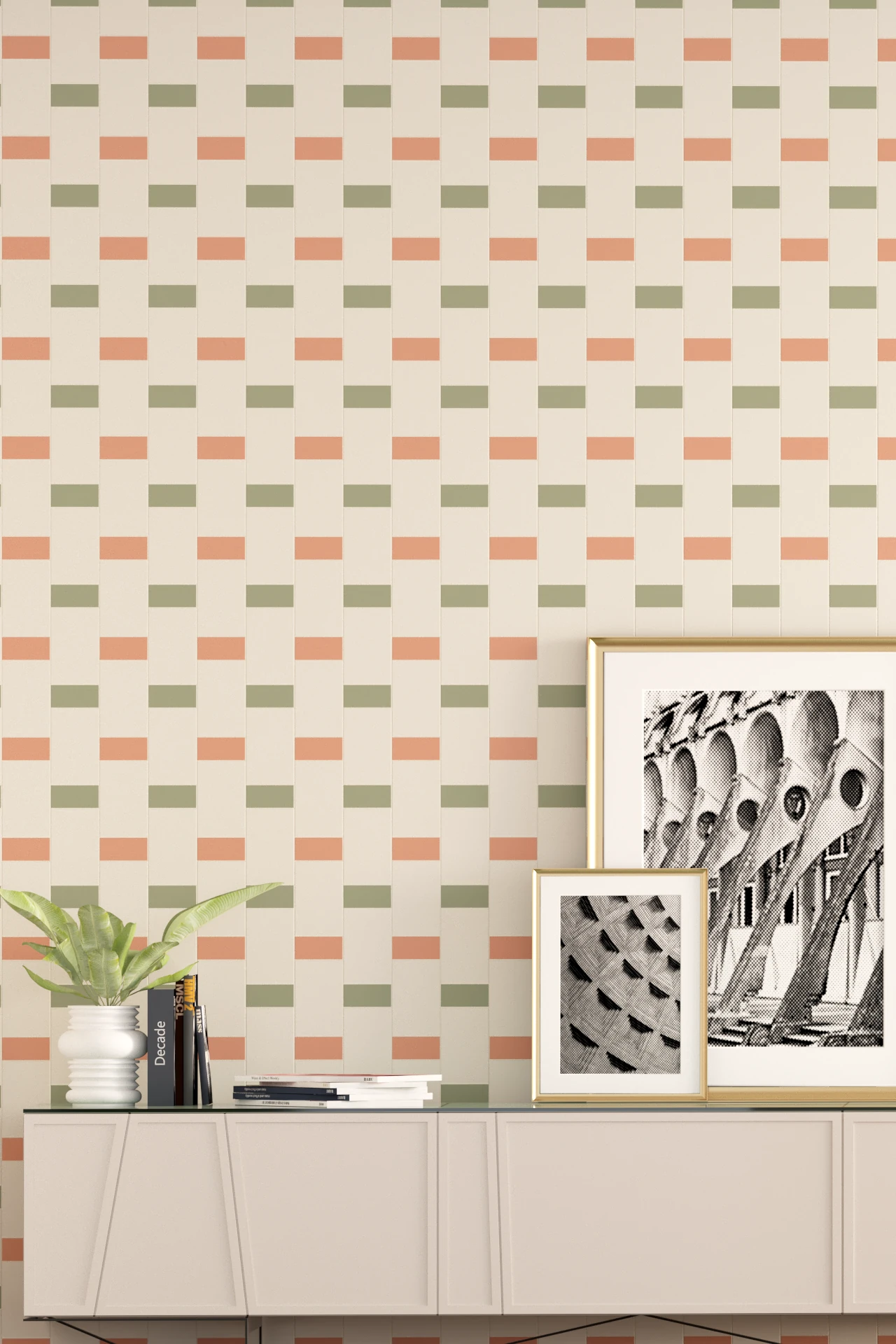
Flemish Bond

Flemish Warp
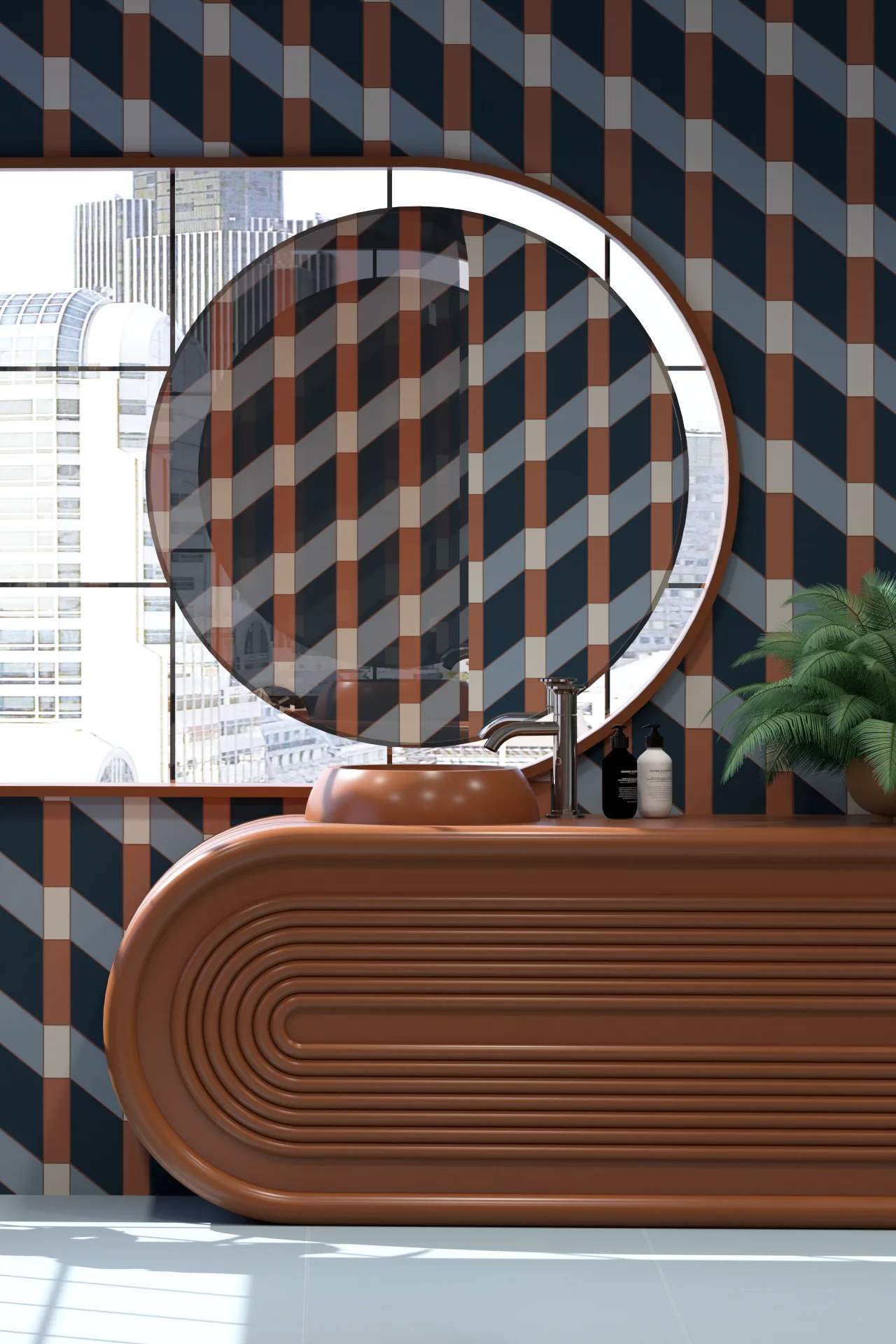
Isometric
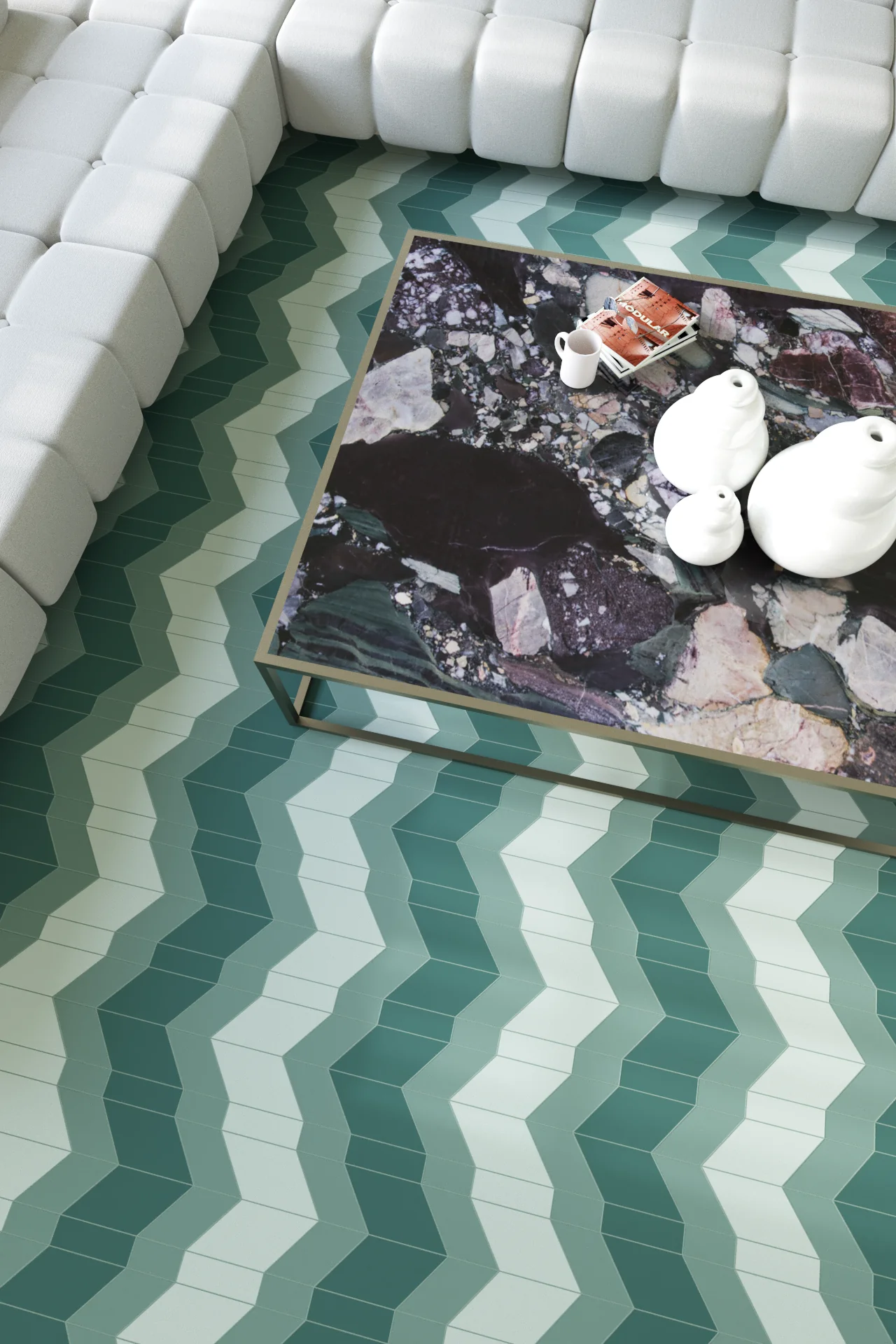
Mission
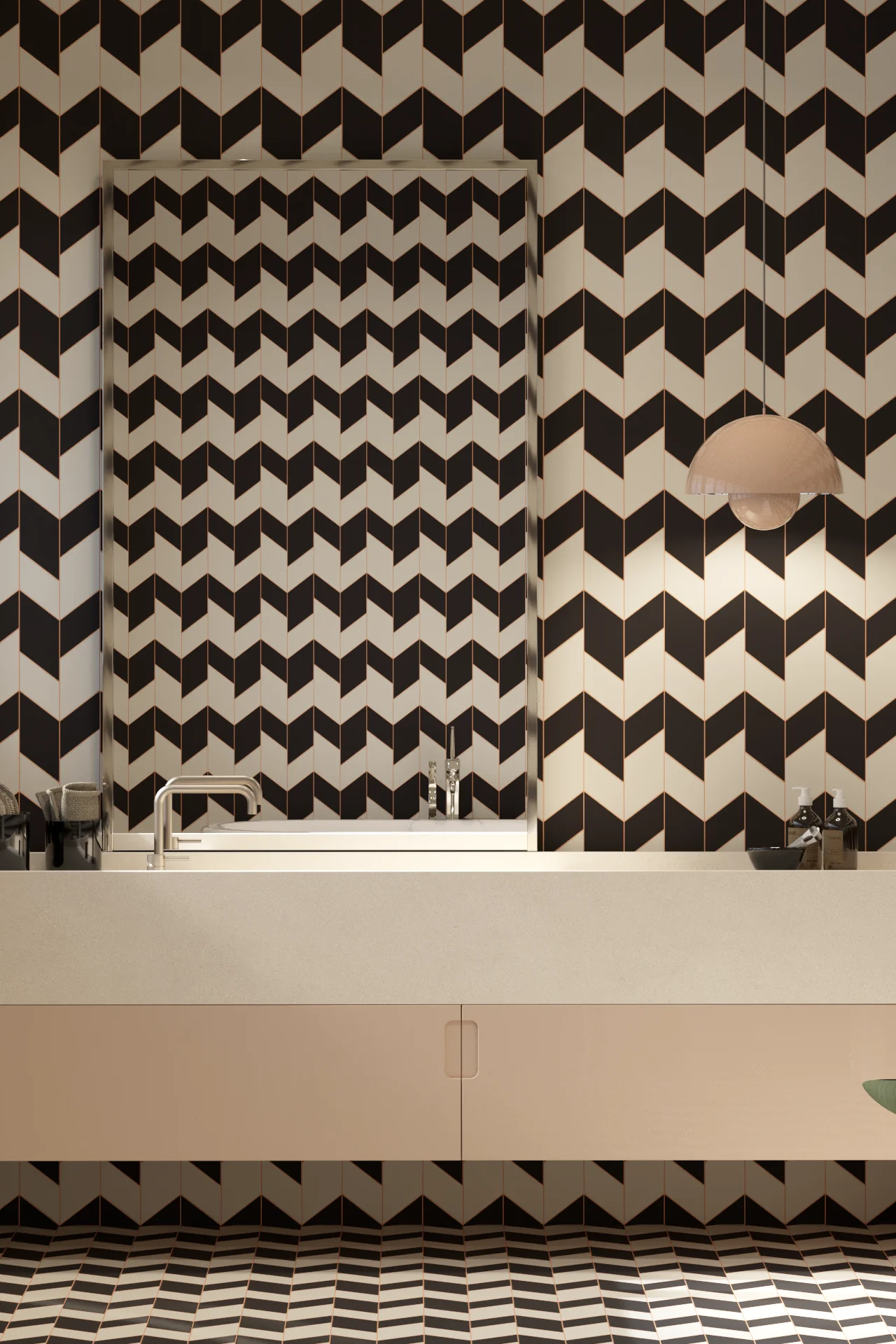
Off Step
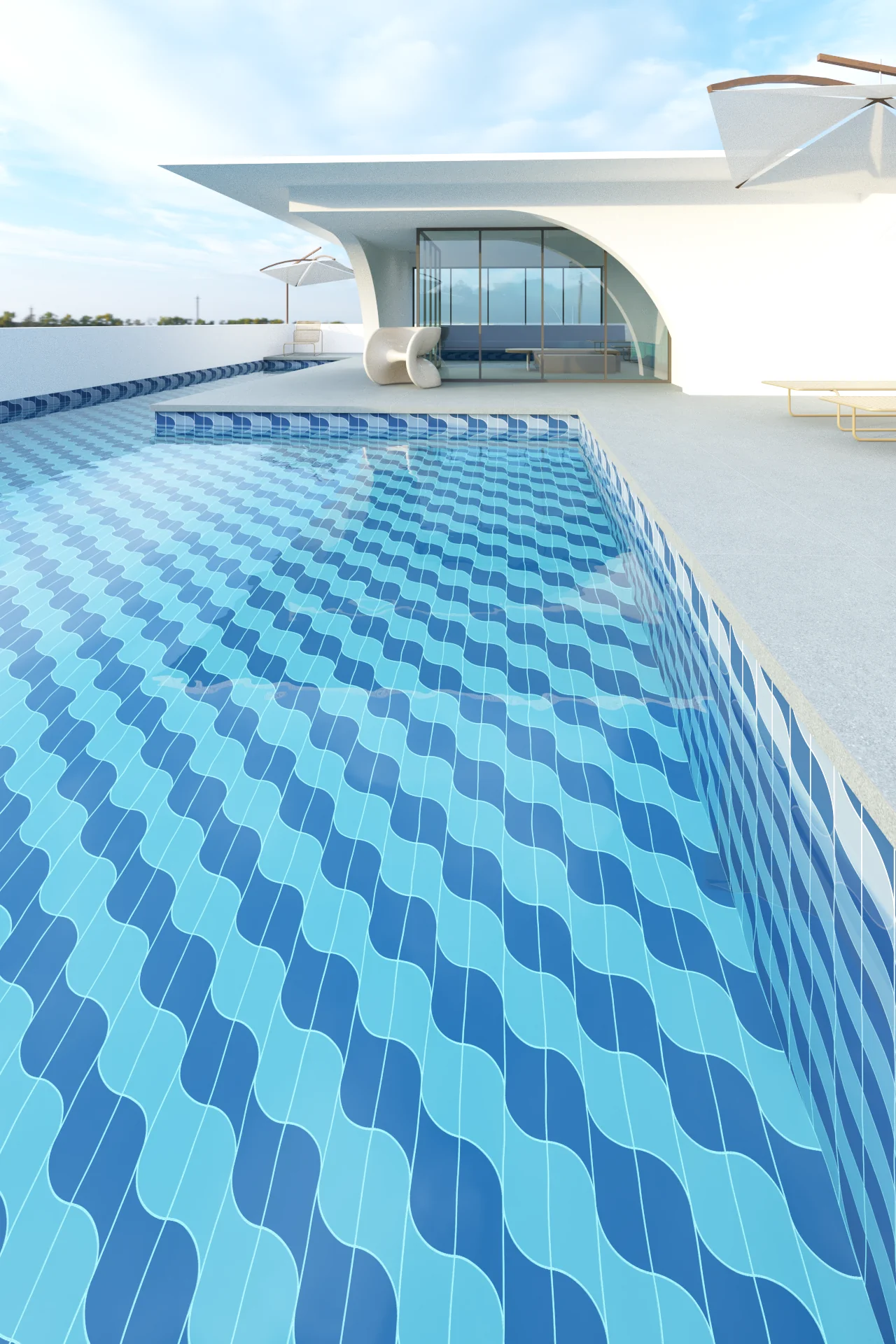
Ribbon
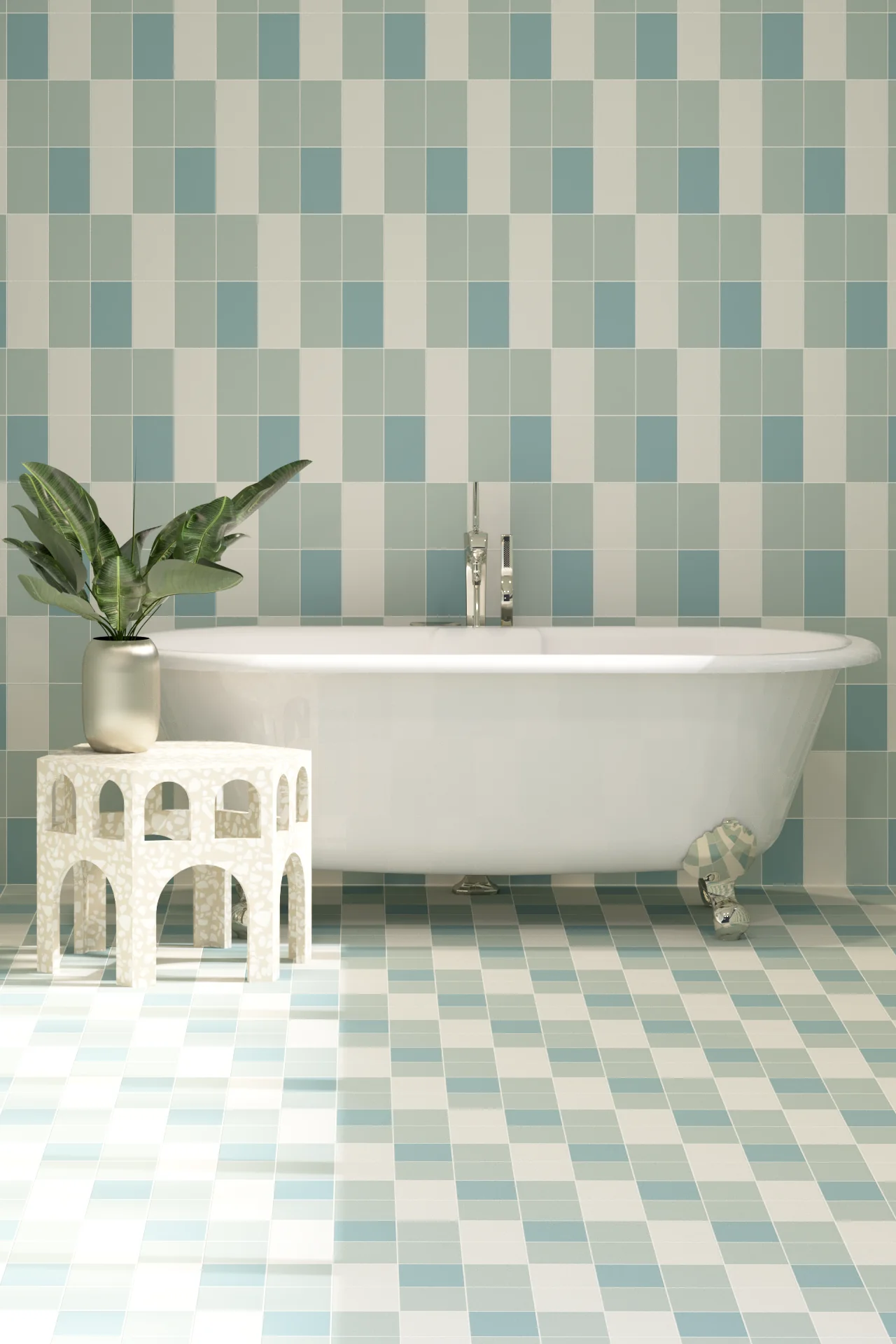
Squat
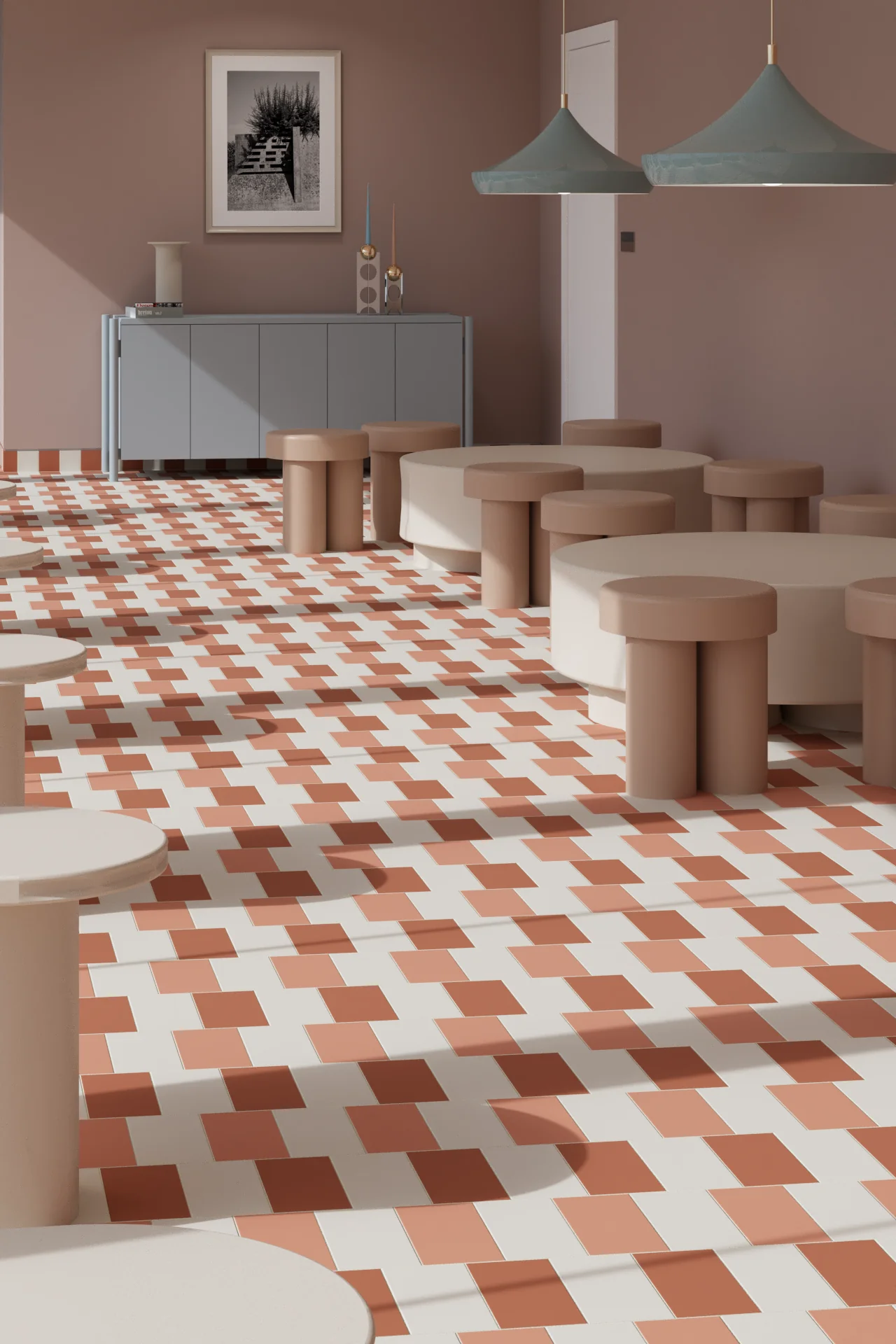
Squat Brick
Stitch explores this idea through a family of geometric forms rather than a single repeat. Some patterns retain an obvious textile character, while others become more abstract as they extend across the surface. The source gradually becomes less important than the geometry it has provided.
This is something textiles have always done particularly well. A relatively modest shape can become extraordinarily rich through repetition. Turn it, mirror it or place it beside another and the eye starts finding larger forms that were never particularly obvious in the individual component. Pattern develops through relationships rather than complexity for its own sake.
Moving those ideas into porcelain changes their character again. What might have been a continuous printed line becomes fragmented by the construction of the floor. The joints are no longer something to hide; they become part of the drawing, tracing the edges of each component and helping the larger pattern emerge.
There is still something textile-like in the finished surfaces, although it is more a memory than an imitation. Stitch borrows the logic of fabric pattern and allows it to become architectural, taking geometry from something soft and pliable and giving it the permanence of a floor.
Tiles
